


Comprehensive Fiber Optic Solutions for Modern Network Infrastructure
Delivering Excellence Across Energy, Enterprise, Industrial, Service Provider, and Hyperscale Markets


Introduction: The Evolution of Fiber Optic Network Architecture

In an era defined by exponential data growth, cloud computing proliferation, and the relentless pursuit of network performance optimization, fiber optic solutions have emerged as the cornerstone of modern telecommunications infrastructure. The global digital transformation, accelerated by artificial intelligence, Internet of Things (IoT) deployments, and 5G wireless networks, demands robust, scalable, and future-proof connectivity solutions that only advanced fiber optic components can deliver.
The fundamental architecture of contemporary fiber optic networks relies on six critical component categories: fiber optic patch cords, optical splitters, fiber optic adapters, fiber distribution boxes, fiber optic hardware fittings, and fiber optic connectors. Each component plays an indispensable role in creating seamless, high-performance network ecosystems that serve diverse market segments with unique requirements and challenges. Understanding how these components integrate into comprehensive fiber optic solutions enables organizations to build networks that deliver superior performance, exceptional reliability, and outstanding return on investment.
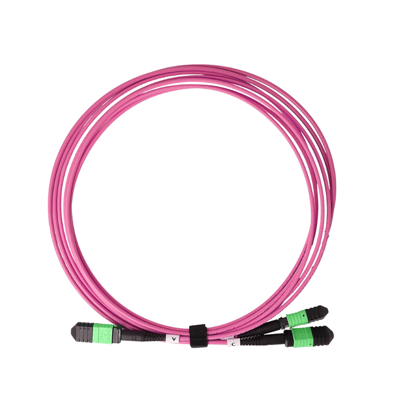
Core Fiber Optic Network Components
| Component Category | Primary Function | Key Market Applications |
|---|---|---|
| Fiber Optic Patch Cords | Connect network devices, equipment, and distribution points | Data centers, enterprise LANs, telecom central offices |
| Optical Splitters | Divide optical signals for point-to-multipoint architectures | FTTH networks, PON systems, CATV distribution |
| Fiber Optic Adapters | Enable connection between different connector types | Industrial control systems, field deployments, test equipment |
| Fiber Distribution Boxes | Aggregate, manage, and protect fiber connections | Outside plant, campus networks, smart grid installations |
| Hardware Fittings | Support and protect cable installations | Aerial deployments, underground networks, industrial facilities |
| Fiber Optic Connectors | Terminate fiber cables for device connections | High-speed transceivers, server interfaces, test equipment |
Energy Solutions: Powering the Smart Grid Revolution
Addressing Critical Infrastructure Challenges
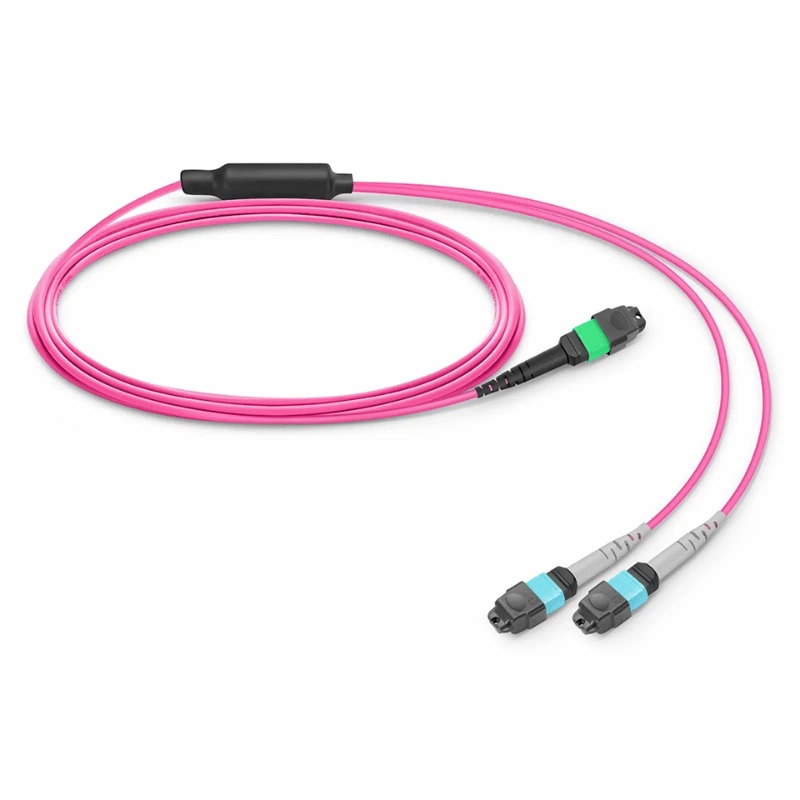
The energy sector faces unprecedented challenges in modernizing aging infrastructure, integrating renewable energy sources, and implementing smart grid technologies. Traditional copper-based communication systems cannot meet the demanding requirements of modern utility operations, which require real-time monitoring, bidirectional communication, and robust data transmission across vast geographic areas. Fiber optic solutions provide the technological foundation for next-generation energy networks, offering immunity to electromagnetic interference, superior bandwidth capacity, and exceptional durability in harsh environmental conditions.
Fiber Optic Patch Cords for Substation Connectivity
Within electrical substations and generation facilities, fiber optic patch cords serve as the critical linkage between protective relays, supervisory control and data acquisition (SCADA) systems, and communication equipment. These specialized patch cords must withstand extreme temperature fluctuations, electromagnetic interference from high-voltage equipment, and mechanical stress from operational vibrations. Advanced fiber optic solutions designed for energy applications feature ruggedized constructions with reinforced aramid yarn strength members, flame-retardant low-smoke zero-halogen (LSZH) jackets, and precision-polished connectors that ensure optimal insertion loss and return loss performance.


High-performance fiber optic patch cords enable utilities to implement differential protection schemes across multiple substations, facilitating instantaneous fault detection and isolation. The multimode and single-mode variants accommodate various transmission distances, from short equipment interconnections to long-haul inter-substation links spanning dozens of kilometers. By deploying industry-leading fiber optic solutions, utility companies achieve millisecond-level response times critical for grid stability and protection coordination.
Optical Splitters for Distribution Automation
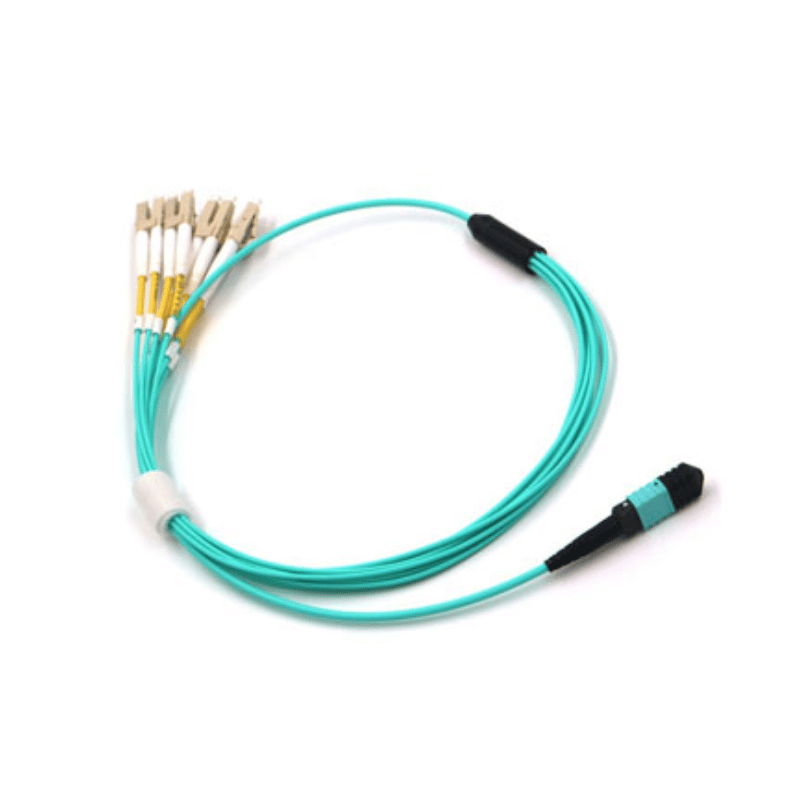
Distribution automation initiatives require extensive fiber network architectures that connect thousands of field devices, including reclosers, voltage regulators, and capacitor banks. Optical splitters enable efficient point-to-multipoint network topologies, allowing a single fiber from the control center to serve multiple remote terminal units (RTUs) throughout the distribution system. Advanced passive optical network (PON) architectures utilizing 1:8, 1:16, or 1:32 split ratios dramatically reduce fiber infrastructure costs while maintaining adequate bandwidth for telemetry, control commands, and high-resolution fault recording.
Planar lightwave circuit (PLC) splitters provide superior performance characteristics compared to fused biconical taper (FBT) alternatives, offering uniform split ratios across all output ports, excellent wavelength stability, and compact form factors ideal for space-constrained cabinet installations. These robust fiber optic solutions withstand the thermal extremes of outdoor equipment enclosures, maintaining performance specifications across temperature ranges from -40°C to +85°C.
Fiber Optic Adapters and Distribution Boxes for Field Deployments
Field deployments in energy networks demand rugged fiber optic solutions capable of surviving challenging environmental conditions. Sealed fiber optic adapters with IP67 or IP68 ratings protect critical connection points from moisture ingress, dust contamination, and corrosive atmospheric conditions common in coastal or industrial environments. These precision-aligned adapters accommodate various connector interfaces, including LC, SC, FC, and ST configurations, ensuring compatibility with diverse equipment portfolios.


Fiber distribution boxes serve as strategic aggregation points throughout the energy network, providing secure splice storage, cable management, and flexible fiber routing capabilities. Modern fiber optic solutions incorporate modular architectures supporting scalable capacity expansion, allowing utilities to initially deploy conservative fiber counts and economically add capacity as smart grid initiatives expand. Wall-mounted, pole-mounted, and underground vault-installable variants address diverse deployment scenarios, each engineered with cable strain relief, bend radius protection, and organized splice tray systems.
Hardware Fittings for Aerial and Underground Installations

The physical infrastructure supporting fiber optic cables throughout energy networks requires specialized hardware fittings designed for utility-specific deployment methods. All-dielectric self-supporting (ADSS) fiber optic cable installations utilize dedicated suspension hardware, including helical tensioners, vibration dampers, and dead-end grips that accommodate the mechanical loads imposed by wind, ice, and thermal expansion. These critical fiber optic solutions prevent cable damage from excessive tension or dynamic stress, ensuring long-term network reliability.
Optical ground wire (OPGW) installations integrate fiber optic cables within overhead ground conductors, requiring specialized hardware including tangent suspension clamps, angle strain assemblies, and grounding kits. Advanced fiber optic solutions for OPGW applications feature innovative designs that facilitate lightning protection while maintaining optimal fiber transmission characteristics. Underground installations benefit from specialized pulling grips, duct sealing systems, and vault cable management hardware that protect fiber assets throughout their operational lifecycle.

Electromagnetic Immunity
Fiber optic solutions eliminate interference from high-voltage equipment, ensuring reliable communication in substation environments.

Extreme Temperature Tolerance
Components operate reliably from -40°C to +85°C, suitable for diverse climate conditions.

Long-Distance Transmission
Single-mode fiber supports inter-substation links spanning dozens of kilometers without signal degradation.
Key Advantages for Energy Sector Applications


Enterprise Solutions: Enabling Digital Business Transformation
Meeting the Demands of Modern Data Centers

Enterprise organizations operating on-premises data centers confront escalating bandwidth requirements driven by virtualization, hyper-converged infrastructure, and artificial intelligence workloads. Traditional copper-based interconnects cannot satisfy the 100 Gigabit, 400 Gigabit, and emerging 800 Gigabit Ethernet standards that define contemporary data center architectures. Fiber optic solutions provide the only viable pathway for achieving these data rates while maintaining acceptable link distances and power efficiency.
High-Density Fiber Optic Patch Cords and Trunk Assemblies
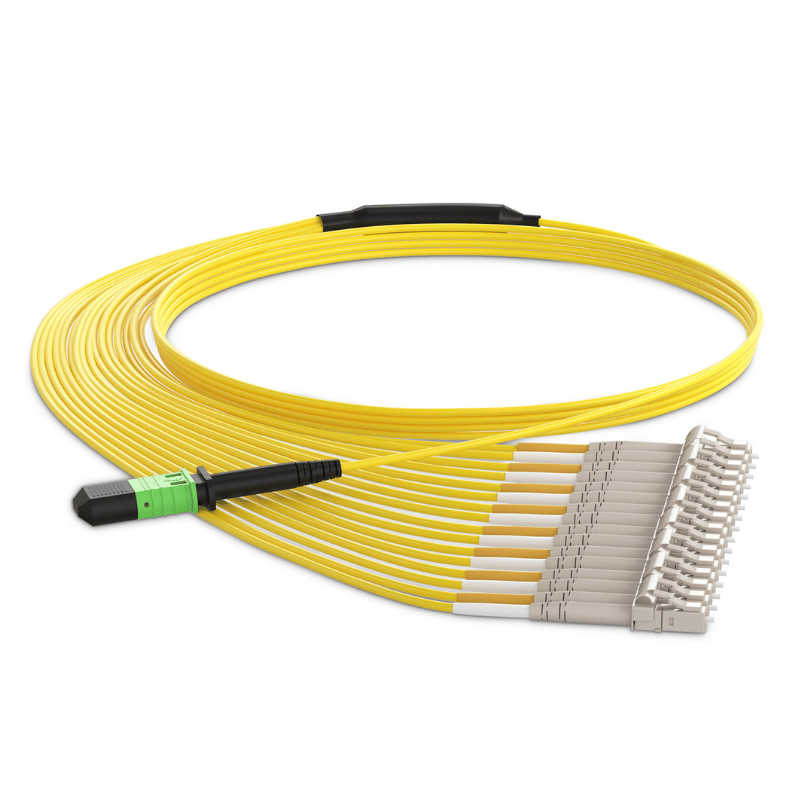
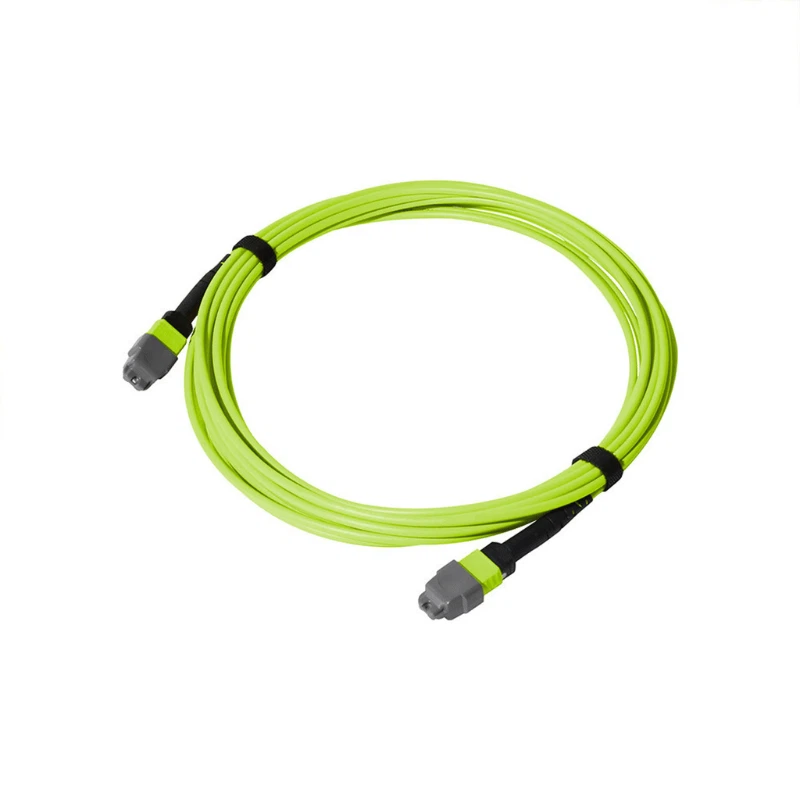
Modern data center designs prioritize space efficiency, thermal management, and operational flexibility. High-density fiber optic patch cords utilizing small form-factor connectors such as LC duplex and multi-fiber push-on (MPO/MTP) interfaces enable dramatically increased port densities compared to legacy SC or ST connections. Advanced fiber optic solutions featuring ultra-low-loss connector technology achieve insertion losses below 0.15 dB, maximizing optical link budgets and supporting extended reach applications critical for distributed data center architectures.
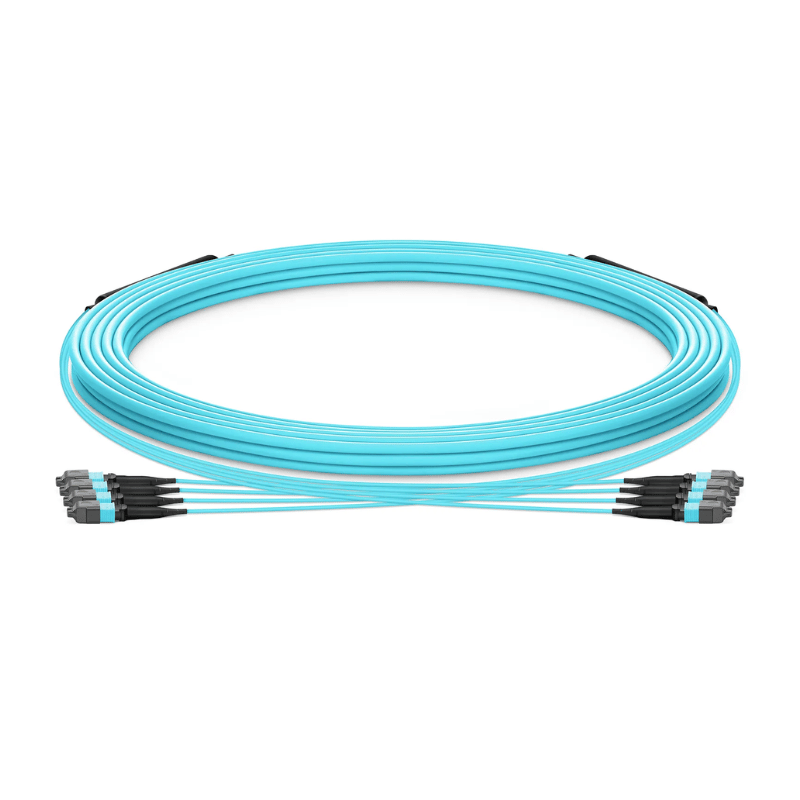
Pre-terminated trunk assemblies revolutionize data center deployments by eliminating time-consuming field terminations and ensuring factory-certified performance. These comprehensive fiber optic solutions include multi-fiber MPO backbone cables with breakout modules that fan out to individual LC duplex connections at equipment interfaces. Available in 8-fiber, 12-fiber, 24-fiber, and higher-count configurations, trunk assemblies dramatically accelerate deployment schedules while delivering guaranteed performance that meets stringent Tier 1 certification requirements.

Fiber Distribution Boxes for Structured Cabling Systems

Enterprise structured cabling architectures require strategic fiber aggregation points that support flexible cross-connection capabilities and organized cable management. Wall-mounted and rack-mounted fiber distribution boxes provide these critical functions, incorporating splice cassettes, adapter panels, and cable routing guides within compact, professionally finished enclosures. Advanced fiber optic solutions feature modular designs accommodating mixed connector types, enabling seamless integration of legacy equipment alongside modern infrastructure.
High-density fiber distribution panels utilizing LC quad adapters achieve port densities exceeding 144 connections per standard 1U rack space, maximizing utilization of precious equipment room real estate. These sophisticated fiber optic solutions incorporate color-coded adapter configurations, clear labeling systems, and intelligent cable management features that simplify troubleshooting and reduce mean time to repair during network incidents.
Optical Splitters for Passive Optical LAN Architectures
Progressive enterprise organizations increasingly adopt passive optical LAN (POL) architectures that leverage PON technology traditionally deployed in service provider access networks. These innovative fiber optic solutions eliminate active electronics from telecommunications closets throughout campus environments, consolidating all switching intelligence within centralized data centers. This architectural transformation dramatically reduces power consumption, cooling requirements, and maintenance overhead while improving network security and management simplification.
POL implementations require carefully engineered splitter cascades that distribute bandwidth from core optical line terminals (OLTs) to optical network terminals (ONTs) at user workstations. Advanced fiber optic solutions incorporate precisely characterized PLC splitters with uniform split ratios and minimal insertion loss variation, ensuring consistent network performance across all connected endpoints. Multi-stage splitting architectures utilizing 1:4 and 1:8 splitters provide deployment flexibility, allowing network designers to optimize fiber utilization while accommodating future capacity expansion.

Fiber Optic Connectors Supporting Diverse Applications

Enterprise environments encompass diverse application requirements, from short-reach interconnections within equipment racks to campus backbone links spanning multiple buildings. Comprehensive fiber optic solutions portfolios include field-installable connectors supporting rapid deployment scenarios where pre-terminated cabling proves impractical. Modern mechanical splice connectors and fusion splice-on connectors deliver reliable performance comparable to factory-terminated assemblies while providing the flexibility of custom length fabrication.
Specialized connector technologies address unique enterprise challenges. Angled physical contact (APC) connectors minimize back reflection for sensitive applications including coherent optical transmission and distributed antenna systems. Expanded beam connectors provide superior contamination resistance for outdoor campus interconnections and harsh industrial environments. By selecting appropriate fiber optic connector technologies, enterprise network architects optimize performance for specific application requirements.

Future-Proof Bandwidth
Supports 100G, 400G, and emerging 800G Ethernet standards for long-term infrastructure viability.
Space Optimization
High-density MPO/LC solutions reduce rack space requirements by up to 70% compared to traditional cabling.

Rapid Deployment
Pre-terminated assemblies cut installation time by 50% while ensuring consistent performance.
Key Advantages for Industrial Applications
Industrial Solutions: Connecting the Smart Factory
Navigating Harsh Environmental Challenges

Industrial facilities present uniquely demanding environments for network infrastructure, characterized by extreme temperatures, chemical exposure, mechanical vibration, and electromagnetic interference. Manufacturing automation systems, process control networks, and safety instrumented systems require deterministic, ultra-reliable communication that continues operating despite environmental adversity. Fiber optic solutions engineered specifically for industrial applications provide the ruggedness and performance industrial operations demand.
Ruggedized Fiber Optic Patch Cords and Assemblies
Industrial fiber optic patch cords incorporate specialized design features addressing harsh environmental exposures. Heavy-duty jacketing materials including thermoplastic polyurethane (TPU) provide exceptional abrasion resistance, chemical compatibility, and flexibility across extreme temperature ranges. Reinforced strain relief boots protect cable-to-connector transitions from mechanical stress induced by equipment vibration or accidental cable movement. These purpose-built fiber optic solutions maintain optical performance specifications despite environmental conditions that would rapidly degrade standard telecommunications-grade components.
Industrial Ethernet protocols including PROFINET, EtherNet/IP, and EtherCAT increasingly rely on fiber optic media to achieve the deterministic timing and electromagnetic immunity required for precision motion control and safety applications. Specialized fiber optic solutions supporting these industrial protocols incorporate certification for relevant standards including ODVA, PROFIBUS International, and IEC specifications, providing assurance of protocol compatibility and interoperability.

Sealed Fiber Optic Adapters and Industrial Connectors

Connection points represent critical vulnerability points where environmental contaminants can compromise network integrity. Industrial-grade fiber optic adapters incorporate sealed designs with IP65, IP67, or IP68 ratings providing comprehensive protection against moisture, dust, oil, and chemical exposure. Threaded coupling mechanisms ensure secure mating even under vibration conditions, preventing accidental disconnection during equipment operation. These robust fiber optic solutions enable reliable connectivity in punishing environments including steel mills, chemical processing plants, and automotive manufacturing facilities.
Specialized industrial fiber optic connectors designed for repetitive mating cycles feature enhanced durability compared to standard telecommunications connectors. Bayonet-style coupling mechanisms enable rapid connection and disconnection during equipment maintenance procedures. Keyed connector designs prevent incorrect mating and potential equipment damage. By deploying industrial-grade fiber optic solutions, facility operators achieve reliable network performance throughout equipment lifecycles typically spanning decades.
Fiber Distribution Boxes for Zone Segregation
Industrial network architectures implement zone segregation principles separating control networks from information technology networks, enhancing both operational security and network determinism. Fiber distribution boxes provide strategic demarcation points between network zones, incorporating physical security features and organized fiber management supporting clear network documentation. Wall-mounted enclosures with lockable covers prevent unauthorized access while providing convenient connectivity for authorized maintenance personnel.
Industrial fiber optic solutions often incorporate modular panel systems supporting mixed media types, enabling seamless integration of copper-based field device connections alongside fiber backbone infrastructure. This architectural flexibility simplifies network design while maintaining appropriate segregation between different network tiers. Integrated cable management systems accommodate the larger bend radii required by industrial-grade fiber cables, preventing stress-induced attenuation or mechanical damage.

Hardware Fittings for Plant-Wide Infrastructure

Plant-wide fiber optic networks require extensive physical infrastructure supporting cable pathways through manufacturing environments. Specialized hardware fittings including cable tray mounting brackets, conduit entry systems, and cable strain relief devices protect fiber assets from mechanical damage while facilitating organized, maintainable installations. Heavy-duty fiber optic solutions designed for industrial environments feature corrosion-resistant materials including stainless steel and powder-coated aluminum, ensuring long-term structural integrity despite exposure to aggressive atmospheric conditions.
Outdoor and inter-building connections benefit from armored fiber optic cables with rodent-resistant corrugated steel tape barriers and moisture-blocking water-swellable elements. Associated hardware including cable glands, grounding kits, and lightning protection systems ensure comprehensive infrastructure protection. These industrial-grade fiber optic solutions deliver reliable performance throughout decades-long operational lifespans typical of capital-intensive manufacturing facilities.
| Industrial Environment Challenge | Fiber Optic Solution Feature | Performance Benefit |
|---|---|---|
| Extreme Temperatures (-40°C to +85°C) | High-temperature materials, ruggedized construction | Uninterrupted operation in harsh climate conditions |
| Mechanical Vibration & Shock | Reinforced strain relief, secure coupling mechanisms | Maintained connections during equipment operation |
| Chemical Exposure | Chemical-resistant jackets, sealed enclosures | Component protection from oils, solvents, and corrosives |
| Electromagnetic Interference | Dielectric fiber construction, shielded enclosures | Immunity to industrial electrical noise |
| Dust & Moisture | IP65/IP67/IP68 rated components, sealed connectors | Contamination protection in harsh manufacturing areas |
Key Advantages for Industrial Applications


Service Provider Solutions: Enabling Next-Generation Access Networks
Meeting Explosive Bandwidth Demand

Telecommunications service providers confront relentless subscriber bandwidth demand growth driven by streaming video, online gaming, remote work, and emerging applications including virtual reality and telepresence. Legacy copper-based access technologies including digital subscriber line (DSL) and hybrid fiber-coaxial (HFC) architectures cannot economically deliver the multi-gigabit speeds subscribers increasingly expect. Fiber-to-the-home (FTTH) deployments utilizing passive optical network architectures represent the only sustainable pathway for meeting these bandwidth requirements while maintaining acceptable per-subscriber economics.
Fiber Optic Splitters Enabling PON Architectures
Passive optical splitters constitute the fundamental building blocks of efficient PON access networks, enabling a single fiber from the central office to serve 32, 64, or even 128 subscribers through cascaded splitting stages. Advanced fiber optic solutions incorporate PLC splitter technology delivering exceptional uniformity across output ports, ensuring consistent subscriber experience regardless of physical location within the splitting tree. Factory-installed pigtails with pre-connectorized interfaces accelerate field deployment while guaranteeing performance meeting stringent ITU-T G.671 and Telcordia GR-1209 specifications.
Service providers benefit from flexible splitter configuration options supporting diverse network architectures. Centralized splitting deployments concentrate splitters within controlled environment vaults near central offices, simplifying network management and enabling dynamic bandwidth allocation. Distributed splitting architectures position splitters throughout the access network in street-level cabinets and terminals, reducing fiber requirements in feeder segments. Comprehensive fiber optic solutions portfolios accommodate both architectural approaches, empowering network planners to optimize designs for specific geographic and demographic deployment scenarios.

Fiber Distribution Boxes and Terminals for Outside Plant Deployments

The physical infrastructure supporting fiber access networks requires extensive deployment of outside plant enclosures protecting fiber splices, splitter modules, and cable management hardware from environmental exposure. Aerial-mounted fiber distribution boxes feature weather-tight sealing systems, UV-resistant materials, and cable strain relief mechanisms accommodating the mechanical stresses imposed by wind loading and thermal cycling. Pedestal-mounted and below-grade vault installations provide alternative deployment options appropriate for buried and underground plant scenarios.
Modern fiber optic solutions incorporate tool-free entry systems enabling rapid access during installation and maintenance activities while maintaining environmental integrity. Organized splice trays with clearly marked fiber routing facilitate efficient splicing operations and simplified troubleshooting procedures. Modular architectures supporting capacity expansion from initial deployment through multiple growth phases protect capital investments and minimize truck rolls during network upgrades. By selecting proven fiber optic solutions, service providers achieve superior installation productivity and reduced operational expenses throughout network lifecycles.
Fiber Optic Connectors and Adapters for Drop Connections
Subscriber drop connections represent the most labor-intensive aspect of FTTH deployments, requiring technicians to establish reliable fiber connections at thousands of individual premises. Field-installable fiber optic connectors incorporating mechanical splice or pre-polished ferrule technologies enable rapid drop terminations without requiring expensive fusion splicing equipment or extensive technician training. These innovative fiber optic solutions achieve insertion losses below 0.5 dB and return losses exceeding 50 dB, ensuring reliable optical network terminal (ONT) activation and optimal subscriber experience.
Hardened fiber optic adapters protecting drop connection points utilize robust housings with secure latching mechanisms preventing accidental disconnection. Integrated splice protection provides strain relief for incoming drop cables while maintaining compact footprints suitable for installation on building exteriors. Weather-resistant designs withstand years of outdoor exposure including solar UV radiation, temperature cycling, and moisture exposure. Comprehensive fiber optic solutions addressing drop connection challenges dramatically reduce deployment costs while improving installation quality and long-term reliability.

Fiber Optic Patch Cords for Central Office Connectivity

Within central office environments, fiber optic patch cords provide flexible interconnection between optical line terminal (OLT) equipment, distribution frames, and backbone fiber termination panels. High-density connectivity solutions utilizing LC duplex or MPO interfaces maximize equipment utilization within space-constrained central office facilities. Color-coded jackets and clearly labeled connectors facilitate cable management and reduce troubleshooting time during network incidents.
Central office patch cords must accommodate frequent reconfiguration as service providers activate new subscribers, modify service configurations, and upgrade equipment. Durable fiber optic solutions designed for frequent mating cycles maintain optical performance throughout hundreds or thousands of connection cycles. Bend-insensitive fiber technology enables tight bend radii within congested cable pathways without inducing attenuation penalties or risking fiber damage. By deploying premium fiber optic solutions, service providers achieve maintainable, flexible central office infrastructure supporting agile network operations.
Cost-Effective Scaling
PON architectures reduce fiber deployment costs by serving up to 128 subscribers per feeder fiber.
Rapid Field Deployment
Field-installable connectors cut drop termination time by 70% compared to traditional fusion splicing.
Weather Resilience
Hardened outside plant components withstand decades of environmental exposure with minimal maintenance.
Key Advantages for Service Provider Networks

Telecommunications service providers selecting industry-leading fiber optic solutions gain multiple competitive advantages. First, proven reliability through millions of deployed units provides statistical confidence in long-term network performance. Second, compliance with relevant industry standards including ITU-T recommendations and Telcordia requirements ensures interoperability and regulatory acceptance. Third, comprehensive field installation support including training programs and technical documentation accelerates deployment schedules and improves installation quality.
Additionally, advanced fiber optic solutions address critical service provider pain points including deployment cost reduction, installation time compression, and network scalability. By partnering with suppliers offering comprehensive product portfolios spanning outside plant hardware through central office connectivity, service providers simplify procurement, reduce inventory complexity, and benefit from single-source accountability for network performance.

Hyperscale Solutions: Supporting Cloud Infrastructure Evolution
Meeting Unprecedented Density and Performance Requirements

Hyperscale data center operators supporting cloud computing platforms, content delivery networks, and artificial intelligence training infrastructure confront challenges of unprecedented scale and complexity. Individual facilities housing hundreds of thousands of servers generate aggregate bandwidth requirements measured in petabits per second. Relentless pressure to reduce cost per bit, power per bit, and space per bit drives continuous innovation in fiber optic interconnection architectures and component technologies.
Ultra-High-Density Fiber Optic Solutions
Hyperscale data center designs prioritize maximizing compute density within fixed building footprints, creating intense pressure on interconnection infrastructure to minimize space consumption while supporting explosive port count growth. Advanced fiber optic solutions incorporating 24-fiber, 48-fiber, and emerging 72-fiber MPO interfaces enable radical increases in connectivity density compared to traditional duplex fiber approaches. Single rack-unit panels supporting 576 or more fiber terminations dramatically reduce physical infrastructure requirements while enabling flexible network topologies.
Parallel optics architectures utilizing multi-fiber ribbon cables and MPO connectivity support 40 Gigabit, 100 Gigabit, 400 Gigabit, and emerging 800 Gigabit Ethernet standards essential for hyperscale network fabrics. These advanced fiber optic solutions achieve the port densities and performance characteristics required for spine-leaf architectures serving tens of thousands of compute servers. Factory-terminated assemblies with comprehensive performance characterization eliminate field termination challenges while ensuring reliable optical performance meeting stringent bit error rate requirements.

Fiber Optic Patch Cords Optimized for Operational Efficiency

Hyperscale data center operations emphasize automation, rapid provisioning, and efficient maintenance procedures. Specially designed fiber optic patch cords incorporating features including embedded RFID tags enable automated inventory management and network topology discovery. Color-coded jackets and laser-etched connector labels support rapid visual identification during troubleshooting procedures. These operationally optimized fiber optic solutions reduce mean time to repair during network incidents and improve overall operational efficiency.
Bend-insensitive fiber technology enables the tight bend radii inevitable in ultra-high-density interconnection scenarios without inducing attenuation penalties or risking fiber damage. Advanced fiber optic solutions achieve bend radii as tight as 7.5mm while maintaining insertion losses below specified maximums. This capability proves essential for navigating congested cable pathways within equipment racks and overhead cable tray systems characteristic of hyperscale facilities.
Fiber Distribution Systems Supporting Structured Architectures
Hyperscale data center architectures implement structured cabling hierarchies including permanent backbone infrastructure supporting evolution through multiple generations of active equipment. High-density fiber distribution systems incorporating rack-mounted and overhead cable tray-mounted enclosures provide strategic fiber aggregation and cross-connection capabilities. Modular designs accommodate capacity expansion as compute density increases and network topologies evolve.
Advanced fiber optic solutions for hyperscale applications feature exceptional port accessibility despite extreme density, enabling technicians to establish, modify, or remove connections efficiently without disturbing adjacent fibers. Intelligent cable management systems prevent cable kinking, maintain appropriate bend radii, and create organized pathways supporting systematic network documentation. By deploying proven fiber optic solutions, hyperscale operators achieve maintainable infrastructure supporting continuous network evolution without requiring disruptive forklift upgrades.

Specialized Connectors and Adapters for Diverse Applications

Hyperscale data centers incorporate diverse equipment portfolios spanning compute servers, storage arrays, and networking infrastructure from multiple vendors. Comprehensive fiber optic solutions portfolios support this heterogeneous environment through extensive connector type availability including LC, SC, MPO, and emerging technologies. Adapter panels accommodate mixed connector types within single enclosures, enabling seamless integration across multi-vendor ecosystems.
Emerging connection technologies including small form-factor pluggable double-density (SFP-DD) and quad small form-factor pluggable double-density (QSFP-DD) transceivers require precisely engineered fiber optic patch cords meeting stringent optical and mechanical specifications. Advanced fiber optic solutions incorporate low-profile connector designs, optimized boot configurations, and controlled polish geometries ensuring reliable transceiver operation across specified environmental conditions. By selecting components specifically designed for next-generation interfaces, hyperscale operators future-proof infrastructure investments and minimize compatibility risks.
| Hyperscale Requirement | Fiber Optic Solution | Measurable Benefit |
|---|---|---|
| Petabit-Scale Bandwidth | 400G/800G MPO parallel optics | Supports 100,000+ servers per data center |
| Space Efficiency | 576-port 1U MPO panels | 75% reduction in rack space requirements |
| Rapid Provisioning | Pre-terminated trunk assemblies | 90% faster deployment than field-terminated solutions |
| Operational Efficiency | RFID-enabled patch cords | 50% reduction in inventory management time |
| Future-Proofing | Modular distribution systems | Support for 3+ generations of active equipment |
Key Advantages for Hyperscale Deployments

Hyperscale data center operators partnering with leading fiber optic solutions providers achieve critical competitive advantages. First, ultra-high-density components maximize compute density within fixed building footprints, directly improving return on real estate investments. Second, factory-terminated assemblies with guaranteed performance eliminate field termination variables and accelerate deployment schedules critical for rapid capacity expansions. Third, specialized operational features including automated inventory management and enhanced cable management reduce operational expenses throughout facility lifetimes.
Furthermore, advanced fiber optic solutions specifically engineered for hyperscale applications address unique pain points including supply chain scalability, product availability, and multi-generational compatibility. By establishing strategic partnerships with suppliers demonstrating consistent innovation and manufacturing capacity matching hyperscale demand, operators mitigate supply chain risks while accessing cutting-edge technologies enabling continued infrastructure evolution.
