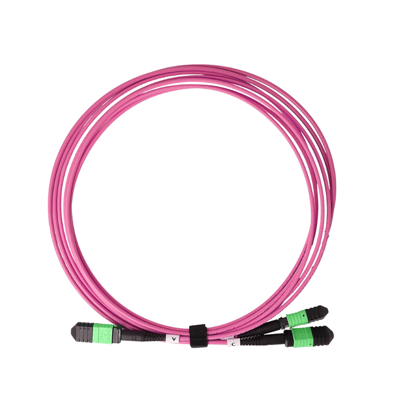
In today's hyper-connected world, the backbone of reliable network communication rests upon quality components that ensure seamless data transmission. Among these critical components, the fiber optic cable patch cord stands as an indispensable element that directly impacts network performance, reliability, and scalability.
Whether you're a data center manager, telecommunications engineer, enterprise IT professional, or fiber-to-the-home (FTTH) installer, understanding the nuances of fiber optic cable patch cords can mean the difference between a robust, future-proof network and costly downtime.
DIMI Fiber Optic Cable Patch Cords Products
Understanding Fiber Optic Cable Patch Cords: The Foundation of Optical Connectivity
A fiber optic cable patch cord, also known as a fiber jumper or fiber patch cable, is a length of fiber optic cable terminated with connectors on both ends. These connectors facilitate temporary or semi-permanent connections between optical devices, equipment, or fiber optic cabling infrastructure.
Unlike their copper counterparts, fiber optic cable patch cords transmit data as pulses of light through glass or plastic fibers, offering unprecedented bandwidth, immunity to electromagnetic interference, and the ability to maintain signal integrity over extended distances.

Construction of a Quality Fiber Optic Patch Cord
The construction of a quality fiber optic cable patch cord involves multiple precision-engineered components working in harmony:
The fiber core—where light travels—is surrounded by cladding that reflects light back into the core through total internal reflection.
This assembly is protected by buffer coatings, strength members (typically aramid yarn), and an outer jacket designed to withstand environmental stresses and mechanical strain.
The termination process, where connectors are attached to fiber ends, requires meticulous precision to ensure minimal insertion loss and return loss.

DIMI Addressing Pain Points Across Different Industries
For Data Center Operators: Maximizing Density and Minimizing Downtime

Data center professionals face unique challenges that quality fiber optic cable patch cords directly address. The explosive growth of cloud computing, virtualization, and big data analytics has created unprecedented demands for bandwidth and port density. Traditional copper cabling simply cannot meet these requirements within the physical constraints of modern data centers.

High-Density Connectivity
High-density connectivity solutions utilizing fiber optic cable patch cords enable data center operators to dramatically increase port counts within limited rack space. Multi-fiber push-on (MPO/MTP) fiber optic cable patch cords can accommodate 12, 24, or even 72 fibers in a single connector, compared to traditional duplex configurations.

Reducing Downtime Risks
Downtime costs in data centers can reach tens of thousands of dollars per minute. Robust fiber optic cable patch cords with reinforced boots, bend-insensitive fiber, and pull-proof construction significantly reduce the risk of accidental disconnection or damage during maintenance operations.

Minimizing Insertion Loss
Insertion loss represents another critical concern for data center operators. Every connection point in an optical network introduces some degree of signal loss. Premium fiber optic cable patch cords feature ultra-physical contact (UPC) or angle-polished contact (APC) connector terminations that minimize insertion loss to 0.3 dB or less.
For Telecommunications Service Providers: Ensuring Service Quality and Scalability
Telecommunications carriers deploying fiber-to-the-home (FTTH), 5G backhaul networks, and metropolitan area networks require fiber optic cable patch cords that deliver exceptional reliability under diverse environmental conditions. Service level agreements (SLAs) mandate uptimes of 99.99% or higher, leaving virtually no margin for component failures.

Return Loss Performance
Return loss performance becomes particularly critical in passive optical network (PON) deployments where optical power budgets must accommodate multiple splits and potentially lengthy distribution networks. APC-terminated fiber optic cable patch cords achieve return loss values exceeding 60 dB, virtually eliminating back-reflection.
Weather Resistance
Weather-resistant fiber optic cable patch cords with robust outer jackets protect against temperature extremes, moisture ingress, and UV degradation in outdoor installations and environmentally challenging locations. For central office and outside plant applications, fiber optic cable patch cords rated for extended temperature ranges (-40°C to +85°C) ensure consistent performance.
Network Scalability
Scalability represents another paramount concern for service providers. As subscriber counts grow and bandwidth demands increase, network infrastructure must accommodate seamless upgrades without costly forklift replacements. Backwards-compatible fiber optic cable patch cords enable phased migration strategies.
For Enterprise IT Departments: Balancing Performance, Budget, and Future-Proofing

Enterprise IT professionals must navigate the challenging terrain of delivering reliable network connectivity while managing constrained budgets and preparing for future technology transitions. The right fiber optic cable patch cord selection can significantly impact both immediate operational efficiency and long-term total cost of ownership.

Total Cost of Ownership
Budget constraints often tempt organizations toward lowest-cost connectivity solutions, but this approach frequently proves counterproductive.
While premium fiber optic cable patch cords may carry higher initial acquisition costs, their superior reliability dramatically reduces long-term expenses associated with troubleshooting, replacement, and network downtime.

Certification and Testing
Certification and testing documentation provides critical assurance for enterprise deployments.
Reputable manufacturers provide comprehensive test reports for each fiber optic cable patch cord, documenting insertion loss, return loss, and geometric parameters.
This documentation facilitates efficient acceptance testing and provides baseline performance metrics.

Application Flexibility
Application flexibility represents another key consideration for enterprise environments where network requirements evolve rapidly.
Fiber optic cable patch cords supporting multiple protocols—including Ethernet, Fibre Channel, InfiniBand, and emerging standards—provide the versatility needed to accommodate diverse equipment.
For AV Professionals and Broadcast Engineers: Delivering Pristine Signal Quality
The audiovisual and broadcast industries have increasingly adopted fiber optic infrastructure to meet demanding requirements for signal quality, EMI immunity, and the ability to transmit multiple channels over extended distances. Professional-grade fiber optic cable patch cords enable these applications with performance characteristics unattainable with traditional copper cabling.


Extended Distance Capability
Extended distance capability represents another significant advantage for AV applications. While copper-based solutions typically limit transmission distances to 100 meters or less, fiber optic cable patch cords enable uncompressed HD and 4K video transmission over distances exceeding 10 kilometers.

EMI Immunity
Electromagnetic interference poses a constant challenge in environments with high-power lighting, motor drives, and radio frequency equipment. Unlike copper cables that act as antennas picking up environmental noise, fiber optic cable patch cords provide complete immunity to EMI and radio frequency interference (RFI).

Ground Loop Elimination
Ground loop elimination through galvanic isolation provides yet another benefit for complex AV systems. Electrical connections between equipment at different ground potentials can introduce hum, buzz, and video artifacts that fiber optics eliminate.
Perfect signal fidelity over long distances
Immunity to electrical noise and interference
Support for 4K, 8K, and HDR video formats
Thin, lightweight cables simplify installation
Long service life with minimal degradation
Technical Specifications That Define Performance
Connector Types and Applications
The connector type selected for a fiber optic cable patch cord fundamentally determines compatibility, performance characteristics, and application suitability. LC (Lucent Connector) and SC (Subscriber Connector) types dominate modern installations due to their compact footprint and reliable performance.

LC Connector
Small form factor enabling high-density applications. De facto standard for enterprise and data center environments.

SC Connector
Excellent performance with push-pull coupling mechanism that simplifies installation and reduces fiber damage risk.

ST Connector
Prevalent in legacy multimode installations and premises cabling with bayonet-style coupling.

MPO/MTP Connector
Enables parallel optics applications supporting 40G, 100G, and 400G transmission rates with multiple fibers.
Single-Mode vs. Multimode Fiber Selection

Single-Mode Fiber
The fundamental distinction between single-mode and multimode fiber optic cable patch cords centers on core diameter and the resulting transmission characteristics.
- Core Diameter:Approximately 9 micrometers
- Transmission Characteristics:Supports only a single light mode with minimal modal dispersion
- Ideal Applications:Telecommunications, campus backbone, long-distance data center interconnects
Multimode Fiber
Multimode fiber features larger core diameters supporting multiple light modes simultaneously, offering advantages for specific applications.
- Core Diameters:Typically 50 or 62.5 micrometers
- Fiber Grades:OM3, OM4, and OM5 providing progressively enhanced bandwidth and distance capabilities
- Ideal Applications:Short-reach applications with lower-cost transceivers and easier termination

Polish Types and Optical Performance

The polish applied to connector ferrules in fiber optic cable patch cords dramatically impacts optical performance parameters. Each polish type offers specific advantages for different applications.
Physical Contact (PC)
Creates a slightly convex fiber end-face that ensures fiber cores make direct contact when mated, minimizing air gaps and associated insertion loss.
Ultra-Physical Contact (UPC)
A refinement of PC techniques, achieving even tighter fiber-to-fiber contact with superior return loss performance for most digital applications.
Angle-Polished Contact (APC)
Features an 8-degree angle polish that directs back-reflections away from the fiber core, ideal for sensitive optical receivers.
When to Use Each Polish Type

PC Polish
Legacy installations
Cost-sensitive applications
Non-critical networks

UPC Polish
Data centers
Enterprise networks
High-speed digital links
Most modern installations

APC Polish
Passive Optical Networks (PON)
Analog RF transmission
CATV/SMATV systems
High-sensitivity receivers
Quality Indicators That Separate Premium from Economy Products

Manufacturing Processes and Quality Control
The manufacturing processes employed in producing fiber optic cable patch cords directly determine long-term reliability and performance consistency. Precision termination equipment ensures consistent connector geometry, while automated testing systems verify critical parameters for every completed assembly.
Premium manufacturers implement comprehensive quality management systems aligned with ISO 9001 standards and industry-specific certifications.

Testing and Certification Standards
Industry standards established by organizations including Telecommunications Industry Association (TIA), International Electrotechnical Commission (IEC), and Telcordia define performance requirements for fiber optic cable patch cords across various applications.
Comprehensive testing protocols verify critical parameters including insertion loss, return loss, ferrule geometry, and mechanical durability.

Materials and Construction Quality
The materials employed in fiber optic cable patch cord construction directly impact mechanical durability, environmental resistance, and long-term reliability. High-quality ceramic ferrules provide superior dimensional stability compared to polymer alternatives.
Premium fiber optic cable patch cords utilize low-smoke zero-halogen (LSZH) or plenum-rated materials that meet stringent fire safety standards.
Key Quality Differentiators
Insertion Loss Performance
Premium products consistently achieve ≤0.3 dB insertion loss, while economy products may exceed 0.5 dB or more.
Return Loss Consistency
UPC connectors maintaining ≥50 dB and APC connectors ≥60 dB across all production units.
Ferrule Quality
Precision ceramic ferrules with tight tolerances on outer diameter, concentricity, and surface finish.
Cable Strength Members
High-quality aramid yarn providing proper tensile strength without fiber stress.
Jacket Materials
UV-resistant, flame-retardant materials meeting industry specifications for temperature range and environmental resistance.
Connector Boot Design
Reinforced strain relief boots that prevent fiber damage during handling and provide adequate bend radius protection.
FAQ
Q: What is a patch cord?
A: A patch cord (or patch cable) is a short, flexible cable with connectors on both ends used to “patch” or interconnect equipment. It can be copper (RJ45 for data, 3.5 mm for audio, etc.) or fiber optic (LC/SC/ST). Patch cords typically use stranded conductors (for flexibility) and are meant for equipment-to-equipment links—e.g., switch ↔ patch panel, wall jack ↔ laptop.
Q: Is a patch cord the same as an Ethernet cable?
A: Not exactly. Ethernet cable refers to twisted-pair cable used for Ethernet networks (Cat5e/Cat6/Cat6A/Cat7/8). A patch cord is any short, pre-terminated cable used to interconnect devices. So an Ethernet patch cord is a type of patch cord. But not all patch cords are Ethernet—they can also be fiber, audio, or other signal types.
Q: What is a patch cord used for?
A: Quick equipment-to-equipment links: switch ↔ patch panel, wall jack ↔ PC/AP/printer/IP camera, temporary test leads, and fiber jumps between transceivers and patch panels.
Q: What are patch cords used for?
A: Same idea as #3—fast, flexible connections in racks, work areas, labs, and telecom rooms (copper or fiber).
Q: What is a patch cord Ethernet?
A: Usually means an Ethernet patch cord: a short Cat5e/Cat6/Cat6A (etc.) cable with RJ45 plugs on both ends (often 0.3–10 m, 28–26 AWG stranded).
Q: How to make a patch cord (general RJ45)
A: Tools: stranded TP cable, 2× RJ45 plugs (rated for stranded & your category), crimper, stripper, flush cutters, tester, optional boots. Wiring: Use T568B on both ends (or T568A—just match). T568B order (clip down, left→right): 1 W-O, 2 O, 3 W-G, 4 B, 5 W-B, 6 G, 7 W-Br, 8 Br. Steps: Cut length → strip ~25 mm jacket → untwist minimally & arrange → trim wires flat (~12–13 mm) → fully seat into plug with jacket under the strain tab → crimp → repeat other end (same scheme) → test.
Q: How to make Cat6 patch cord
A: As in #6, but use Cat6-rated stranded cable and Cat6-rated RJ45. Keep pair twists to the plug entry, avoid kinks, and test for wire-map and performance.
Q: How to make patch cord
A: For Ethernet, follow #6. For other types, use the connector’s process (e.g., solder for some audio; factory-polished connectors or field-install kits for fiber).
Q: How to make patch cord Cat6
A: Same as #7. Use the same standard on both ends (A-A or B-B; B-B is most common). Crossover cords are rarely needed today (Auto-MDI/MDI-X is common).
Q: Is a patch cord an Ethernet cable?
A: It can be—when it’s an RJ45 Ethernet lead. But patch cords also exist for fiber, audio, etc
Q: Is patch cord the same as Ethernet?
A: No. Patch cord is a form factor/use case; Ethernet is a network technology. Only “Ethernet patch cord” makes them the same thing.
As one of the most professional fiber optic cable patch cord manufacturers and suppliers in China, we're featured by quality products and good service. Please rest assured to wholesale custom made fiber optic cable patch cord from our factory.