DIMI’s Engineering Strength in Fiber Optic Splice Closures
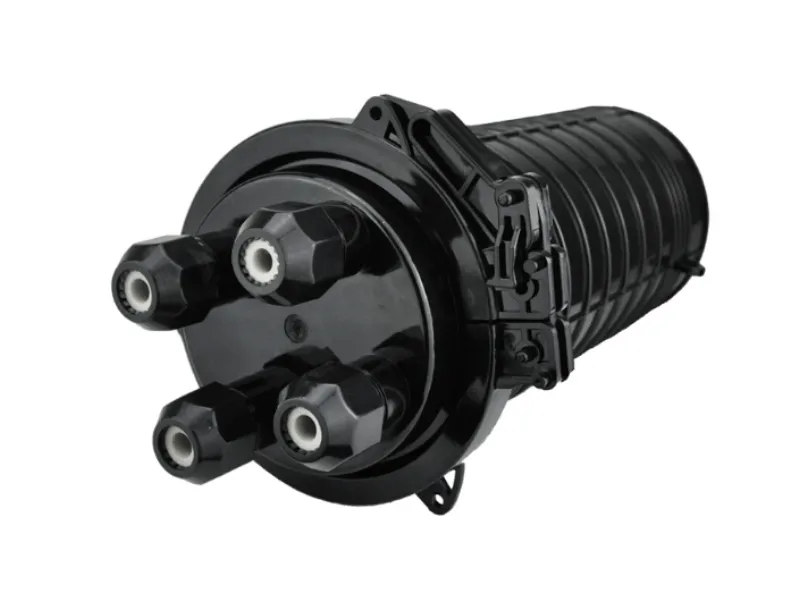
For DIMI, a fiber optic box is not just a housing—it’s a critical protection and management node for your network. Focusing on fiber optic splice closures, we engineer solutions that combine mechanical protection, environmental sealing, and cable management to ensure maximum uptime in telecom backbones, FTTH networks, data centers, and harsh industrial environments.
Customization & Pre-terminated Solution Options
DIMI provides OEM/ODM fiber optic splice closures and pre-terminated solutions tailored to your deployment scenarios. Options include different closure sizes and port counts, cable entry types, sealing methods, splitter and splice tray configurations, as well as factory pre-terminated pigtails or distribution cables for plug-and-play installation. Branding, labeling, and packaging can all be customized to match your project and operator standards.
Testing, Quality Assurance & Certification Support
Every splice closure and pre-terminated assembly is subject to strict mechanical and environmental testing, including tensile, impact, temperature cycling, and IP-rated sealing verification to ensure long-term reliability in the field. Where required, DiMi supports third-party testing and certification to meet operator specifications and local regulatory requirements, helping you reduce failure rates and avoid costly network interruptions.
DIMI Fiber Optic Box Products
-
![12 Core Horizontal Fiber Optic Splice Closure]() 12 Core Horizontal Fiber Optic Splice Closure12 Core Horizontal Fiber Optic Splice Closure for FTTH Outdoor NetworksEngineered by Dimifiber to protect drop-cable and distribution splices in aerial, wall-mount, duct, handhole and direct-buried
12 Core Horizontal Fiber Optic Splice Closure12 Core Horizontal Fiber Optic Splice Closure for FTTH Outdoor NetworksEngineered by Dimifiber to protect drop-cable and distribution splices in aerial, wall-mount, duct, handhole and direct-buried -
![2 Port Fiber Termination Box]() 2 Port Fiber Termination BoxThe DIMI FIBER 2-port fiber termination box is a compact enclosure that terminates, splices, protects and manages optical fibers at the edge of an FTTH/FTTx network. It connects the incoming drop
2 Port Fiber Termination BoxThe DIMI FIBER 2-port fiber termination box is a compact enclosure that terminates, splices, protects and manages optical fibers at the edge of an FTTH/FTTx network. It connects the incoming drop -
![12 Port Fiber Termination Box]() 12 Port Fiber Termination BoxA 12 core fiber distribution box designed to support organized feeder-to-drop cable connection across residential, commercial, and MDU FTTH deployments. Available for wall-mounted and pole-mounted
12 Port Fiber Termination BoxA 12 core fiber distribution box designed to support organized feeder-to-drop cable connection across residential, commercial, and MDU FTTH deployments. Available for wall-mounted and pole-mounted -
![8 Port Fiber Termination Box]() 8 Port Fiber Termination BoxDIMI FIBER 8 Port Fiber Termination Box is a compact and project-ready solution for FTTH/FTTx networks, designed to serve as a reliable subscriber access node. It supports up to 8 drop cable
8 Port Fiber Termination BoxDIMI FIBER 8 Port Fiber Termination Box is a compact and project-ready solution for FTTH/FTTx networks, designed to serve as a reliable subscriber access node. It supports up to 8 drop cable -
![6 Port Fiber Termination Box]() 6 Port Fiber Termination BoxDIMI FIBER 6 Port Fiber Termination Box is a compact wall-mount fiber distribution and ODP box designed for FTTH access networks. It is suitable for residential drop cable termination, villa
6 Port Fiber Termination BoxDIMI FIBER 6 Port Fiber Termination Box is a compact wall-mount fiber distribution and ODP box designed for FTTH access networks. It is suitable for residential drop cable termination, villa -
![4 Port Fiber Termination Box]() 4 Port Fiber Termination BoxPort Count:4 portsAdapter Type:SC/APC most common ; SC/UPC, LC duplex also referencedSplicing Capacity:4 / 8 / 12 fibers for small FTBsPLC Splitter Compatibility:Carefiber, OMC, Rayoptic reference
4 Port Fiber Termination BoxPort Count:4 portsAdapter Type:SC/APC most common ; SC/UPC, LC duplex also referencedSplicing Capacity:4 / 8 / 12 fibers for small FTBsPLC Splitter Compatibility:Carefiber, OMC, Rayoptic reference -
![48 Fibre Optic Splice Closure]() 48 Fibre Optic Splice ClosureKey FeaturesIP68 Environmental ProtectionFully sealed against water, dust, and moisture ingress for reliable outdoor performance in harsh conditions.Mechanical Sealing TechnologyRotary mechanical
48 Fibre Optic Splice ClosureKey FeaturesIP68 Environmental ProtectionFully sealed against water, dust, and moisture ingress for reliable outdoor performance in harsh conditions.Mechanical Sealing TechnologyRotary mechanical -
![96 Fibers 1In-2Out Inline Splice Closure, Heat-Shrink Seal, Wall/Pole Mount, IP68]() 96 Fibers 1In-2Out Inline Splice Closure, Heat-Shrink Sea...IP68 ProtectionSuperior environmental protection against dust, water, and extreme temperatures for reliable outdoor performance.Heat-Shrink SealingAdvanced heat-shrink sealing technology ensures
96 Fibers 1In-2Out Inline Splice Closure, Heat-Shrink Sea...IP68 ProtectionSuperior environmental protection against dust, water, and extreme temperatures for reliable outdoor performance.Heat-Shrink SealingAdvanced heat-shrink sealing technology ensures -
![144 Fibers 2In-4Out Dome Fiber Optic Splice Closure]() 144 Fibers 2In-4Out Dome Fiber Optic Splice ClosureThe 144 Fibers 2In-4Out Dome Fiber Optic Splice Closure is a versatile and reliable fiber management solution engineered for splicing, branching, and protecting fiber connections in demanding network
144 Fibers 2In-4Out Dome Fiber Optic Splice ClosureThe 144 Fibers 2In-4Out Dome Fiber Optic Splice Closure is a versatile and reliable fiber management solution engineered for splicing, branching, and protecting fiber connections in demanding network


Understanding Fiber Optic Box Technology: Core Components and Architecture
What Defines a Modern Fiber Optic Box?
A fiber optic box, also known as a fiber distribution box, fiber termination box, or fiber enclosure, is a protective housing designed to accommodate fiber optic cable terminations, splices, connectors, and patch cords. These enclosures come in various configurations—wall-mounted units, rack-mounted systems, underground vaults, and aerial installations—each engineered for specific environmental conditions and application requirements.
The fundamental purpose of any fiber optic box centers on five critical functions:

Protection
Shielding sensitive fiber connections from environmental hazards including moisture, dust, temperature extremes, physical impact, and electromagnetic interference. Industrial-grade solutions feature ruggedized construction with IP-rated sealing.
01
Organization
Providing structured cable management to prevent fiber damage from excessive bending, tangling, or strain. Advanced designs incorporate integrated routing guides, strain relief, and organized splice tray systems.
02
Accessibility
Enabling technicians to easily access fiber connections for installation, maintenance, troubleshooting, and capacity expansion through intuitive layouts that reduce service time and disruptions.
03
Scalability
Accommodating future growth through modular architecture and flexible capacity options. Leading platforms support incremental expansion from initial deployment to full capacity without system replacement.
04
Performance
Maintaining signal integrity through precision-engineered connector alignment, minimal insertion loss, and low return loss characteristics. Premium solutions utilize high-quality components meeting industry standards.
05
Architectural Variations: Matching Fiber Optic Box Designs to Application Requirements
The modern fiber optic box market offers an extensive range of configurations, each optimized for specific deployment scenarios:


Wall-Mounted Enclosures
Compact fiber optic box units designed for space-constrained environments such as telecommunications rooms, building entrance facilities, and customer premises equipment (CPE) locations.
- Accommodate 2 to 48 fiber connections
- Flush-mount or surface-mount installation options
- Minimal frontal projection for space efficiency
- Ideal for enterprise and building applications
Strategic Value Propositions: How Fiber Optic Box Solutions Address Critical Pain Points
For Telecommunications Service Providers: Network Reliability and Operational Efficiency
Telecommunications carriers face relentless pressure to deliver five-nines reliability (99.999% uptime) while managing capital expenditures and operational costs. The right fiber optic box infrastructure directly addresses these competing demands through several key mechanisms:
Accelerated Deployment Timelines
Pre-terminated fiber optic box systems with factory-installed connectors and plug-and-play modules can reduce installation time by 60-80% compared to field-terminated alternatives. This dramatic time savings translates directly to faster revenue recognition for new service activations.
01
Simplified Network Management
Modular fiber optic box architectures with standardized adapter panels, cassettes, and connectivity components enable streamlined inventory management and simplified technician training. Service providers can standardize on fewer product SKUs while maintaining flexibility.
02
Enhanced Service Agility
High-density fiber optic box solutions with capacity for hundreds of fiber connections in minimal footprint enable carriers to rapidly provision new services without space constraints. The ability to scale incrementally protects infrastructure investments.
03
Proactive Maintenance Capabilities
Well-designed fiber optic box systems with organized fiber routing, clear port labeling, and accessible architecture significantly reduce mean time to repair (MTTR) during service-affecting events, supporting aggressive SLA commitments.
04
For Enterprise Network Managers: Future-Proof Infrastructure and Total Cost of Ownership
Corporate IT organizations increasingly recognize that network infrastructure represents a strategic asset rather than a commodity expense. Forward-thinking fiber optic box selection delivers measurable value throughout the infrastructure lifecycle:
| Strategic Advantage | Description | Business Impact |
|---|---|---|
|
Investment Protection |
25+ year service life with backward and forward compatibility |
Infrastructure remains viable through multiple technology cycles |
|
Operational Flexibility |
Tool-free module installation enables non-disruptive upgrades |
Rapid response to changing business requirements |
|
Simplified Documentation |
Color-coded components and integrated labeling systems |
Reduced troubleshooting time and improved audit compliance |
|
Enhanced Performance |
Precision-manufactured components with low loss characteristics |
Supports bandwidth-intensive applications and extended distances |
For Data Center Operators: Density, Efficiency, and Scalability
Modern hyperscale and colocation data centers face unprecedented demands for port density, power efficiency, and rapid provisioning capabilities. Advanced fiber optic box architectures address these requirements through innovative engineering:
Ultra-High Density Configurations
State-of-the-art fiber optic box designs supporting 144+ fiber connections per 1RU rack unit enable maximum utilization of premium data center floor space.
Streamlined Cable Management
Integrated front and rear cable management systems prevent fiber tangling, maintain proper bend radius compliance, and improve airflow for cooling efficiency.
Reduced Power Consumption
Passive fiber optic box infrastructure eliminates the power consumption, heat generation, and cooling requirements associated with active electronics.
Flexible Connectivity Options
MPO/MTP capable systems support both traditional duplex LC connectivity and emerging trunk-based architectures, optimizing solutions for specific applications.
For FTTH Network Operators: Cost-Effective Subscriber Access
Fiber-to-the-home deployments require specialized fiber optic box solutions optimized for outside plant environments and distributed access architectures:

Environmental Resilience
Weatherproof fiber optic box enclosures engineered to IP68 standards provide reliable protection in aerial, buried, and pedestal-mounted applications, withstanding extreme temperatures from -40°C to +70°C.

Rapid Service Activation
Pre-connectorized fiber optic box terminals with factory-installed splitters and drop cable interfaces enable service technicians to activate new subscribers in minutes rather than hours.

Network Flexibility
Modular architectures supporting field-changeable split ratios (1:4, 1:8, 1:16, 1:32) provide network planners with flexibility to optimize passive optical network (PON) designs based on subscriber density.

Future-Proof Capacity
High-count solutions accommodating 144 to 432+ fiber connections enable network operators to deploy "fiber-deep" architectures supporting future bandwidth growth and emerging PON technologies.
For Industrial and Harsh Environment Applications: Mission-Critical Reliability
Industrial facilities, transportation infrastructure, military installations, and energy sector networks require specialized fiber optic box solutions capable of operating in demanding conditions:
Extreme Temperature Performance
Industrial-grade fiber optic box enclosures rated for extended temperature ranges (-40°C to +85°C) maintain reliable operation in outdoor cabinets, manufacturing environments, and uncontrolled spaces.
Vibration and Shock Resistance
Ruggedized fiber optic box designs with reinforced mounting hardware, vibration-dampening components, and secure connector latching mechanisms withstand mechanical stress in challenging environments.
Corrosion Protection
Stainless steel and aluminum fiber optic box enclosures with advanced powder-coat finishes resist chemical exposure, salt spray, and corrosive atmospheres common in maritime and industrial settings.
Electromagnetic Compatibility
Properly grounded metal fiber optic box housings provide shielding against electromagnetic interference (EMI) and radio-frequency interference (RFI) in electrically noisy industrial settings.
Advanced Features and Capabilities: Differentiating Premium Fiber Optic Box Solutions
Innovative Cable Entry and Sealing Technologies

Modern fiber optic box designs have revolutionized cable entry mechanisms to reduce installation time while maintaining environmental protection. Leading manufacturers offer tool-free wedge-based sealing systems that accommodate multiple cable types and diameters without requiring heat, adhesives, or specialized tools. These innovations enable technicians to complete fiber optic box installations in a fraction of the time required by traditional sealing methods, directly reducing labor costs and accelerating project schedules.
Multiple cable entry ports with snap-in grommets and sliding seals
Adjustable strain relief components for various cable diameters
Compatibility with loose-tube, tight-buffered, armored, and ADSS cables
Mixed cable type support within a single fiber optic box
Tool-free installation reducing technician training requirements
Intelligent Cable Management and Fiber Routing
Professional-grade fiber optic box solutions incorporate sophisticated cable management features that protect fiber integrity while simplifying installation and maintenance operations:

Integrated Strain Relief
Built-in cable retention brackets and adjustable clamps within the fiber optic box prevent fiber stress at termination points, eliminating the primary cause of premature connector failure and signal degradation.

Radius Protection
Contoured cable routing guides and protective channels maintain minimum bend radius specifications throughout the fiber optic box interior, preventing micro-bending losses and ensuring compliance with industry standards.

Service Loop Storage
Dedicated slack storage areas within the fiber optic box accommodate excess fiber length required for future splice repairs, connector replacement, or equipment reconfiguration without compromising organization.

Visual Traceability
Color-coded routing pathways, numbered port positions, and integrated labeling systems within the fiber optic box facilitate rapid circuit identification and reduce troubleshooting time during service events.
Modular Architecture and Scalable Platforms
Leading fiber optic box manufacturers have embraced modular design philosophies that provide maximum deployment flexibility:
Universal Adapter Panels
Standardized mounting interfaces accommodate interchangeable adapter panels supporting LC, SC, ST, FC, and MPO connector types.
Hot-Swappable Modules
Tool-free installation and removal of components enable non-disruptive capacity expansion and technology upgrades.
Incremental Growth
Right-sized deployment options enable matching initial scope to requirements while preserving expansion capability.
Cross-Platform Compatibility
Component standardization across product families simplifies inventory management and technician training.
Benefits of Modular Architectures
Reduced upfront investment through right-sized initial deployment
Lower total cost of ownership through incremental expansion
Ability to incorporate new technologies as they become available
Simplified maintenance and reduced service disruption
Standardized components across diverse deployment scenarios
Quality Construction and Material Selection
Premium fiber optic box solutions reflect careful attention to material selection and manufacturing quality:

Structural Integrity
Heavy-gauge steel or die-cast aluminum fiber optic box housings provide robust mechanical protection and electromagnetic shielding while maintaining manageable weight for installation and serviceability.

Corrosion Resistance
Multi-stage powder-coat finishing processes create durable, attractive surfaces on fiber optic box exteriors that resist scratching, chipping, and environmental degradation throughout extended service life.

Precision Manufacturing
CNC-machined mounting surfaces, precision-molded adapter panels, and carefully controlled manufacturing tolerances ensure consistent performance across all fiber optic box units, eliminating field fit-up issues.

Environmental Ratings
Third-party tested and certified IP ratings, NEMA ratings, and environmental specifications provide verifiable assurance that fiber optic box products will perform as specified in real-world deployment conditions.
Installation Best Practices: Maximizing Fiber Optic Box Performance and Longevity

Cable Entry and Preparation Techniques
Proper cable preparation significantly impacts long-term fiber optic box performance and serviceability. Strip cable jackets only to the extent necessary for routing within the enclosure.
- Maintain maximum mechanical protection of cable
- Secure strength members to dedicated anchoring points
- Never rely on connectors for mechanical support
- Maintain minimum bend radius at entry ports
Site Preparation and Placement Considerations
Successful fiber optic box deployment begins with careful site evaluation and preparation. Wall-mounted installations require secure attachment to structural elements rather than drywall or suspended ceiling grid systems.
- Verify mounting surfaces can support fully-loaded weight
- Ensure adequate working clearance for service access
- Orient outdoor units to minimize environmental exposure
- Provide drip loops on incoming cables for moisture protection

Fiber Termination and Splicing Standards
Within the fiber optic box environment, maintain consistent fiber handling practices that protect signal quality and ensure long-term reliability.
- Verify proper ferrule alignment and secure latching
- Clean fiber end-faces before mating connections
- Document insertion loss and return loss measurements
- Organize splice trays logically for future access
Testing, Documentation, and Commissioning
Comprehensive testing validates installation quality and establishes performance baselines for future reference.
- Perform end-to-end insertion loss testing on all circuits
- Compare measured values against industry standards
- Document all connections thoroughly with test results
- Photograph interiors before closing for visual reference

Preserving Fiber Optic Box Performance Throughout the Service Life

Periodic Inspection and Cleaning
Establish regular inspection schedules for critical fiber optic box installations, with frequency determined by environmental conditions and network importance.
Inspection Checklist
- Verify seals remain intact and effective
- Check for signs of moisture intrusion
- Inspect cable entry points for damage
- Ensure interior organization remains intact
- Check for rodent or insect infestation
Cleaning Procedures
- Clean connector end-faces regularly
- Use approved fiber cleaning methods
- Inspect cleaned connectors with microscopes
- Clean exterior surfaces as needed
- Remove dust from interior during service
Capacity Management and Utilization Tracking
Monitor fiber optic box capacity utilization as networks grow and evolve. Track available port counts, unused module slots, and spare fiber capacity.
Capacity Planning Guidelines
- Proactively upgrade when utilization approaches 80%
- Maintain 20-30% spare capacity for growth and emergencies
- Plan for technology upgrades requiring additional space
- Document all available connections for quick reference
- Review utilization quarterly for strategic planning
Asset Management Practices
- Maintain accurate circuit assignment records
- Track installation and last service dates
- Document associated network equipment
- Implement management software for large networks
- Map physical connections to logical network topology

Performance Monitoring and Troubleshooting
Investigate service-affecting events promptly to minimize customer impact and prevent recurring failures. When problems occur, methodically isolate fault locations by testing circuits at fiber optic box access points.

Troubleshooting Methodology
- Compare current results to baseline measurements
- Isolate fault location using divide-and-conquer approach
- Inspect physical connections for damage or contamination
- Clean and retest before replacing components
- Verify proper installation practices were followed

Common Issues
- Contaminated connectors causing high loss
- Damaged patch cords with excessive bending
- Improper bend radius at cable entry points
- Moisture intrusion in outdoor enclosures
- Loose connections from vibration or thermal cycling

Repair Best Practices
- Address root causes rather than symptoms
- Document all repairs and modifications
- Retest entire path after completing repairs
- Update baseline measurements after significant changes
- Implement preventative measures for recurring issues
FAQ
Q: How does a fiber optic termination box work?
A: A fiber optic termination box provides a secure point where fiber cables are connected and organized. It protects fiber splices and connectors from dust, moisture, and mechanical stress while maintaining precise alignment. Inside, pigtails connect to patch panels or adapters, ensuring low-loss transmission and easy maintenance for network technicians.
Q: What is a fiber optic box used for?
A: A fiber optic box is used to house, protect, and distribute optical fiber cables in communication networks. It acts as the interface between incoming and outgoing lines, allowing technicians to splice, connect, or manage fibers safely. Common applications include FTTH systems, data centers, and outdoor telecom enclosures.
Q: Why use a fiber optic splice box?
A: A fiber optic splice box is used to safely store and protect spliced fibers after joining two cables. Without it, delicate fusion joints could break or get contaminated. The box ensures mechanical protection, proper bend radius, and long-term stability, improving signal integrity and maintenance efficiency.
Q: Which fiber optic terminal box should you choose?
A: Choose a fiber optic terminal box based on installation environment and capacity needs. For outdoor setups, pick weatherproof IP65-rated boxes. For indoor or wall-mounted use, a compact terminal box with SC or LC adapters is ideal. Always match connector type and fiber count to your network design.
Q: Where to install a fiber optic junction box?
A: A fiber optic junction box should be installed at points where fiber cables are joined, split, or redirected. In buildings, it’s typically placed in corridors or communication cabinets. Outdoors, it’s installed along cable routes, mounted on poles or inside underground handholes for protection and access.
Q: When to replace a fiber optic cable box?
A: Replace a fiber optic cable box when seals degrade, connectors show corrosion, or fiber loss increases. Physical cracks or water intrusion are warning signs. Regular inspections every 12–18 months help detect early damage, ensuring stable transmission and preventing costly downtime.
Q: Can a fiber optic box be used outdoors?
A: Yes, but it must be rated for outdoor use. Outdoor fiber optic boxes are weatherproof, UV-resistant, and designed to handle temperature changes. Look for IP65 or higher protection ratings and rustproof materials like stainless steel or reinforced plastic to prevent moisture-related failures.
Q: Do fiber optic ont boxes need ventilation?
A: No active ventilation is typically required because ONT boxes generate minimal heat. However, they should be placed in dry, cool areas with sufficient airflow. Avoid enclosed cabinets without space around the unit, as trapped heat may affect performance or shorten electronic component lifespan.
Q: How does a fiber optic distribution box work?
A: A fiber optic distribution box organizes and connects multiple fibers within a network. Incoming main cables are split or distributed into smaller lines leading to end users. Inside, adapters and patch cords manage signal routing while protecting delicate fibers from mechanical or environmental stress.
Q: What makes a fiber optics termination box reliable?
A: Reliability depends on robust sealing, high-quality connectors, and proper fiber management. A good termination box maintains minimal insertion loss and prevents cable bending beyond safe limits. Materials like ABS plastic or stainless steel, along with dustproof gaskets, extend its service life in harsh conditions.
Q: Why choose an optic fiber box for networks?
A: An optic fiber box simplifies network expansion by providing structured, protected cable management. It allows quick access for testing or repairs, reduces clutter, and minimizes the risk of accidental fiber damage. For high-speed data networks, it’s essential for organized, low-loss signal routing.
Q: Which fiber optic converter box fits your setup?
A: Select a converter box compatible with your signal type and distance. For short runs, use media converters supporting Ethernet-to-fiber conversion. For industrial or outdoor systems, choose rugged units with dual power inputs and wide temperature tolerance to ensure stable performance.
Q: Where to place a fiber optic box indoors?
A: Install the box near your main network entry point or patch panel for easy maintenance. Keep it away from heat sources, vibration, or direct sunlight. Mounting it on a wall or within a structured wiring cabinet ensures both accessibility and long-term protection of fiber connections.
As one of the most professional fiber optic box manufacturers and suppliers in China, we're featured by quality products and good service. Please rest assured to wholesale custom made fiber optic box from our factory.