In today's hyper-connected world, where data transmission speeds and network reliability determine business success, the humble fiber optic adapter plays a pivotal role that often goes unrecognized. These precision-engineered components serve as the critical junction points in fiber optic networks, enabling seamless connections between different cable types, connector interfaces, and network equipment.
Whether you're a telecommunications provider managing vast infrastructure, an enterprise IT manager overseeing data center operations, or a system integrator designing complex network solutions, understanding the nuances of fiber optic adapter technology is essential for building robust, future-proof connectivity solutions.
DIMI Fiber Optic Adapters Product
-
![Fiber Optic LC To SC Adapter]() Fiber Optic LC To SC AdapterProduct HighlightsDuplex LC/UPC ConfigurationStandard SC footprint ensures seamless integration into existing fiber patch panels, ODF frames, and distribution boxes without retrofit or special
Fiber Optic LC To SC AdapterProduct HighlightsDuplex LC/UPC ConfigurationStandard SC footprint ensures seamless integration into existing fiber patch panels, ODF frames, and distribution boxes without retrofit or special -
![LC To ST Fiber Optic Cable Adapter]() LC To ST Fiber Optic Cable AdapterHybrid LC-ST ConfigurationEnables direct connectivity between LC small-form-factor connectors and ST bayonet-style connectors, eliminating the need for multiple patch cords or field adapters when
LC To ST Fiber Optic Cable AdapterHybrid LC-ST ConfigurationEnables direct connectivity between LC small-form-factor connectors and ST bayonet-style connectors, eliminating the need for multiple patch cords or field adapters when -
![LC TO FC Fiber Optic Adapters]() LC TO FC Fiber Optic AdaptersHigh-precision hybrid adapter enabling seamless LC-to-FC interconnection in data centers, telecom networks, and FTTx deployments. Zirconia ceramic sleeve delivers ≤0.3 dB insertion loss with proven
LC TO FC Fiber Optic AdaptersHigh-precision hybrid adapter enabling seamless LC-to-FC interconnection in data centers, telecom networks, and FTTx deployments. Zirconia ceramic sleeve delivers ≤0.3 dB insertion loss with proven


Understanding Fiber Optic Adapter Technology
The primary function of a fiber optic adapter extends beyond simple physical connection. These components must maintain the optical path integrity, minimize insertion loss, reduce back reflection, and provide repeatable performance across varying environmental conditions. Modern adapters incorporate ceramic, bronze, or polymer alignment sleeves that guide connector ferrules into perfect alignment, ensuring that the fiber cores meet with minimal air gap or angular misalignment. This precision directly impacts signal quality, transmission distance, and overall network performance.

Addressing Critical Pain Points for Telecommunications Service Providers

Network Reliability and Uptime
For telecom operators, every minute of network downtime translates to significant revenue loss and customer dissatisfaction. Our adapters undergo rigorous testing protocols including thermal cycling from -40°C to +75°C, vibration resistance testing, and accelerated aging studies.

Scalability and Density Optimization
As bandwidth demands continue their exponential growth trajectory, our high-density fiber optic adapter panels and cassettes enable operators to dramatically increase port counts within constrained rack space.

Environmental Protection
Our weatherproof adapter housings incorporate IP67-rated sealing mechanisms that protect against moisture ingress, dust contamination, and extreme temperature fluctuations for outdoor installations.

Mechanical Durability and Longevity
The mechanical durability of our fiber optic adapter products exceeds industry standards, with mating cycle ratings extending beyond 1,000 insertions while maintaining consistent optical performance. For operators managing millions of connection points across their networks, this longevity translates directly to operational efficiency and capital expenditure optimization.
The ceramic zirconia alignment sleeves in our premium adapter lines provide superior wear resistance compared to phosphor bronze alternatives, making them ideal for high-traffic environments where technicians frequently perform testing and reconfiguration.
Modular Architecture Benefits

The modular architecture of our fiber optic adapter systems allows for incremental deployment strategies that align capital investment with revenue generation. Operators can install empty panels with protective dust caps and populate adapters as circuits are activated, minimizing upfront costs while maintaining flexibility.
This approach proves particularly valuable for greenfield deployments and speculative build-outs where initial take rates may be uncertain, providing both financial prudence and future expansion capabilities.
Enterprise Data Center Solutions
Enterprise data centers operate under different constraints and priorities than telecommunications networks, requiring fiber optic adapter solutions optimized for high-density computing environments, rapid deployment cycles, and evolving technology standards. Our enterprise-focused product lines address the specific pain points that infrastructure managers face daily.

High-Speed Network Migration and Future-Proofing

As enterprises transition from 10G to 40G, 100G, and beyond, the fiber optic adapter infrastructure must support multiple generations of optical transceivers without requiring wholesale replacement. Our connector-agnostic adapter panels accommodate LC, SC, MPO/MTP, and CS connectors within unified patching systems, enabling gradual migration strategies.
The single-mode and multimode fiber optic adapter variants in our catalog provide explicit support for both legacy OM3/OM4 multimode applications and emerging single-mode deployments driven by longer reach requirements. This flexibility proves critical for enterprises operating hybrid environments where different fiber types coexist within the same facility.

Cable Management and Operational Efficiency
Data center operators consistently cite cable management as a primary challenge, particularly in mature facilities where organic growth has created tangled infrastructure. Our fiber optic adapter panels integrate intelligent cable routing features including radius-controlled pathways, adjustable strain relief, and segregated management zones.
The tool-free installation mechanisms incorporated into our premium fiber optic adapter systems reduce deployment time by up to 60% compared to traditional solutions requiring specialized equipment.
Optical Performance and Testing Accessibility
Enterprise networks increasingly support latency-sensitive applications including high-frequency trading, real-time analytics, and converged storage networks where every microsecond matters. Our low-insertion-loss fiber optic adapter products maintain optical budgets that support extended reach.
Our fiber optic adapter panels incorporate test port access points that enable optical time-domain reflectometer measurements and power meter verification without disconnecting active circuits, accelerating fault isolation.

System Integrator and Contractor Advantages
Installation Efficiency and Labor Cost Reduction
Labor costs typically represent 60-70% of total deployment expenses for fiber optic projects, making installation efficiency a primary economic driver. Our quick-mount fiber optic adapter plates feature snap-in retention mechanisms that eliminate screws and specialized tools.
The intuitive design of our fiber optic adapter products minimizes training requirements for installation personnel, enabling contractors to deploy less experienced technicians on routine installations while reserving senior expertise for complex troubleshooting.


Inventory Management and Supply Chain Simplification
Contractors managing multiple concurrent projects appreciate the inventory rationalization enabled by our standardized fiber optic adapter portfolio. By offering comprehensive compatibility across connector types within consistent mounting formats, we reduce the number of unique SKUs that contractors must stock.
Our volume pricing structures and partnership programs provide contractors with predictable cost models that facilitate accurate project bidding. The extended warranty coverage on our fiber optic adapter products—typically five years or more—reduces contractor exposure to warranty claims.
Technical Support and Documentation Resources
Project success depends on access to accurate technical information during design and installation phases. Our comprehensive fiber optic adapter documentation library includes CAD drawings, specification sheets, installation guides, and compatibility matrices.
Technical support teams staffed by experienced fiber optic specialists provide responsive assistance for unusual configurations or integration challenges, reducing project risk and accelerating problem resolution.

Specialized Applications

Industrial and Transportation Networks
Industrial automation and transportation infrastructure networks operate in demanding environments where standard IT-grade components may prove inadequate.
Our industrial-rated adapters incorporate enhanced vibration resistance, expanded operating temperature ranges, and compliance with railway standards including EN 50173 and EN 50174.

Healthcare and Medical Imaging
Medical facilities deploying PACS imaging systems, surgical visualization equipment, and high-resolution diagnostic displays require specialized fiber optic infrastructure.
Our medical-grade adapters maintain the optical specifications necessary for 12G-SDI and SMPTE 2110 standards while meeting the cleanability requirements of healthcare environments.

Government and Defense Applications
Government and defense networks face stringent security requirements and performance specifications that standard commercial products may not satisfy.
Our TAA-compliant adapters manufactured entirely within approved supply chains meet Buy American Act requirements for federally funded projects with enhanced security features.
Technical Specifications and Performance Characteristics
Insertion Loss and Return Loss Specifications
Insertion loss—the optical power lost as light passes through a fiber optic adapter connection—directly impacts transmission distance and system margins. Our standard single-mode adapters achieve typical insertion loss values of 0.2-0.3 dB, while premium variants reach 0.15 dB or lower.
Typical Performance Values

Single-mode Adapters
- Standard: 0.2-0.3 dB insertion loss
- Premium: 0.15 dB or lower
- PC polish: >40 dB return loss
- APC polish: >60 dB return loss

Multimode Adapters
OM1/OM2: 0.15-0.25 dB insertion loss
OM3/OM4: 0.15-0.25 dB insertion loss
PC polish: >35 dB return loss
Mechanical Durability and Mating Cycle Performance

The mechanical robustness of fiber optic adapter components determines long-term reliability in operational environments. Our standard product lines support minimum 500 mating cycles while maintaining optical specifications within initial parameters, suitable for installations with moderate reconfiguration frequency.
Environmental Performance and Reliability
Operating temperature range defines the environments where fiber optic adapter components maintain specifications. Our standard products operate from -5°C to +70°C, suitable for temperature-controlled indoor installations.
Extended-temperature variants expand this range to -40°C to +75°C for outdoor applications and uncontrolled environments. Thermal cycling testing verifies that optical performance remains stable across this temperature range despite coefficient of thermal expansion differences between component materials.

Environmental Testing Standards
Thermal Cycling
-40°C to +75°C, 1000 cycles with less than 0.2dB change
01
Humidity Resistance
95% relative humidity at 65°C for 1000 hours
02
Vibration Testing
10-2000Hz, 10g acceleration in all axes
03
Salt Sprays
5% NaCl solution, 96 hours exposure
04
Connector Compatibility and Interface Standards
The diversity of fiber optic connector standards in deployed networks requires versatile adapter solutions
product key technologies

Single-Mode and Multimode Adapter Variants
The fundamental difference between single-mode and multimode fiber optic adapter products lies in the alignment sleeve bore diameter, optimized for either 9/125μm single-mode fiber or 50/125μm and 62.5/125μm multimode fiber cores.
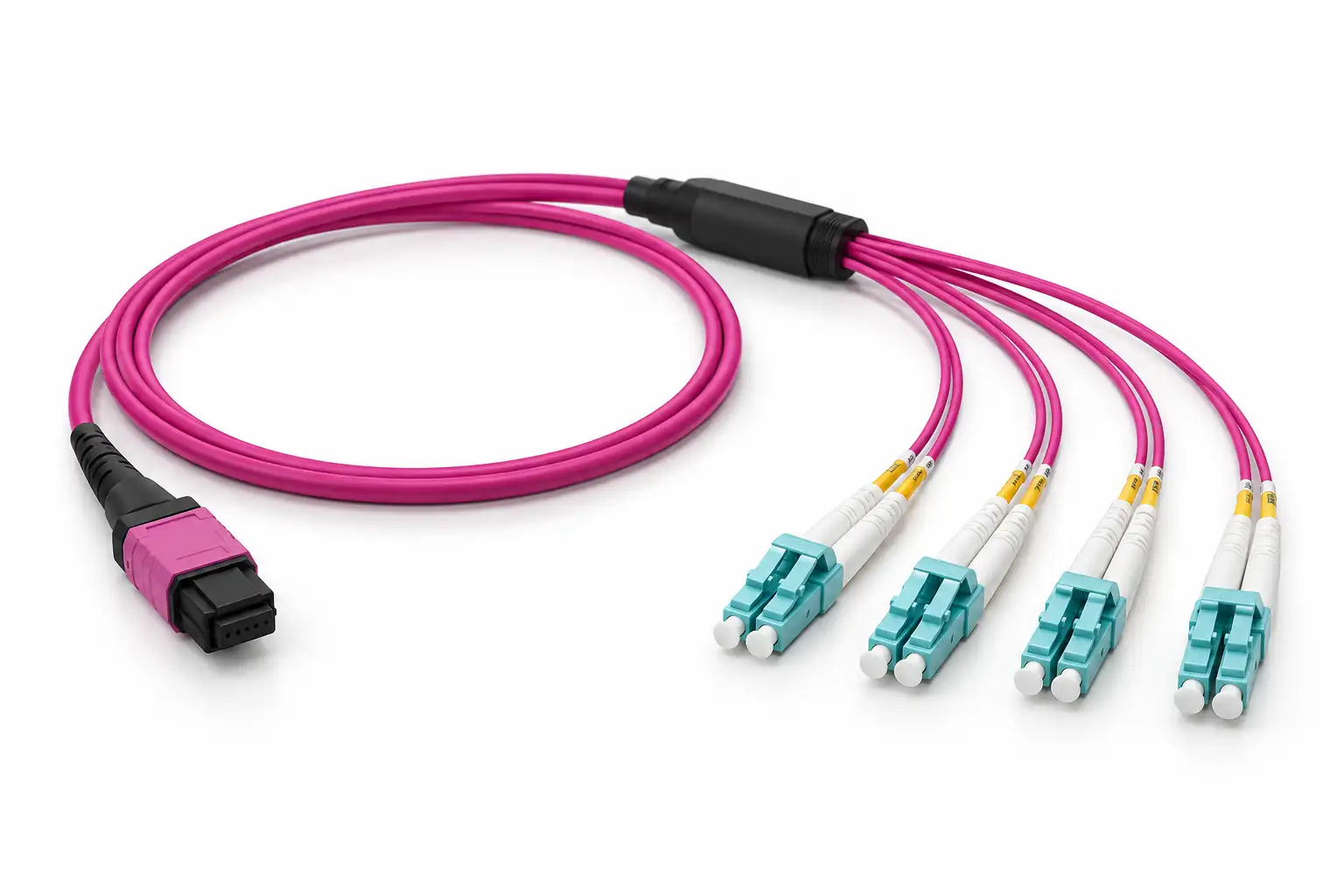
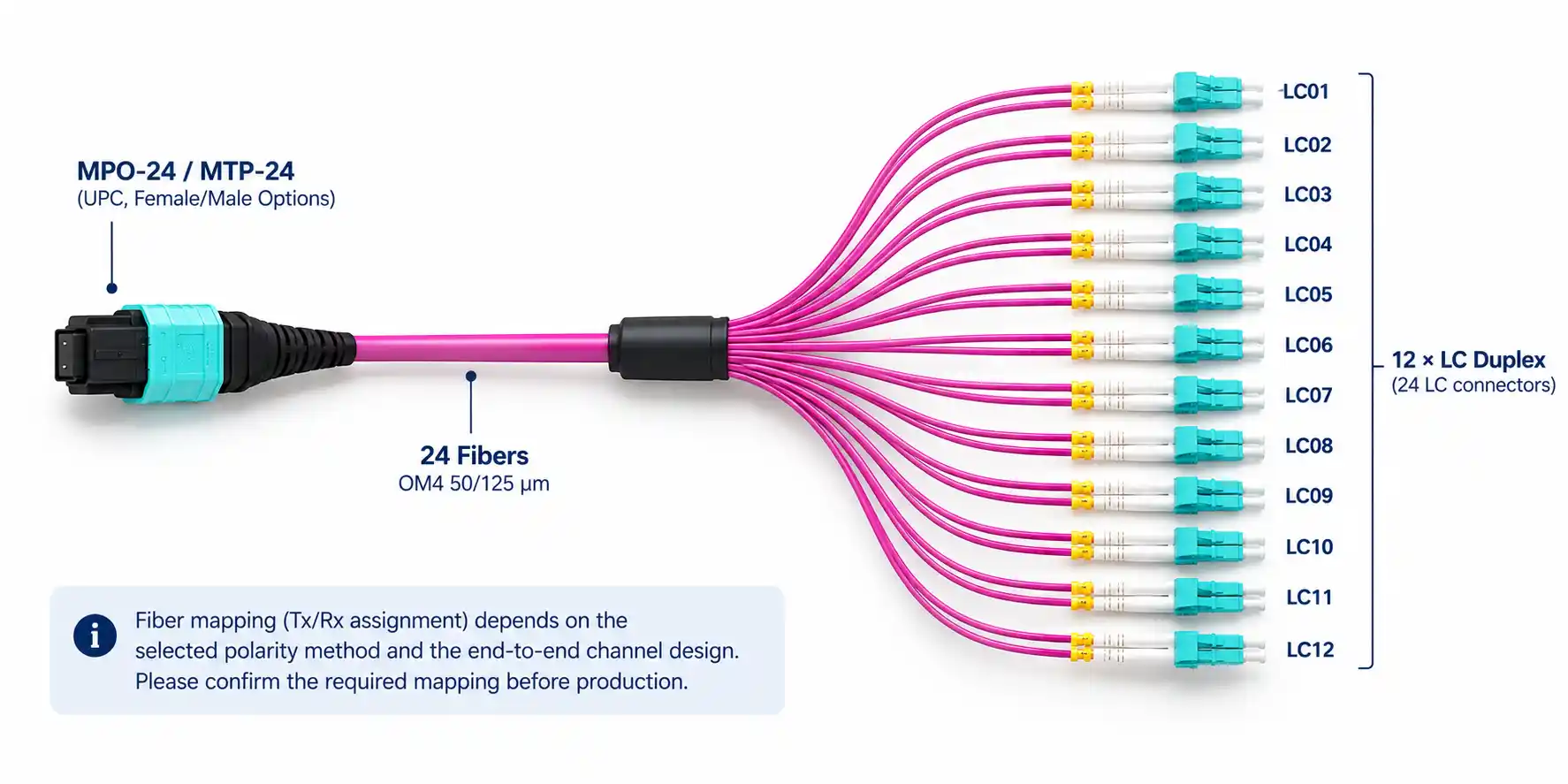
Hybrid fiber optic adapter configurations supporting mixed connector types within unified panels enable flexible deployment strategies. LC-to-SC adapters facilitate migration between connector standards, while MPO-to-LC breakout adapters support the transition from parallel optics to duplex connectivity required in many data center architectures.
High-Density MPO/MTP Solutions
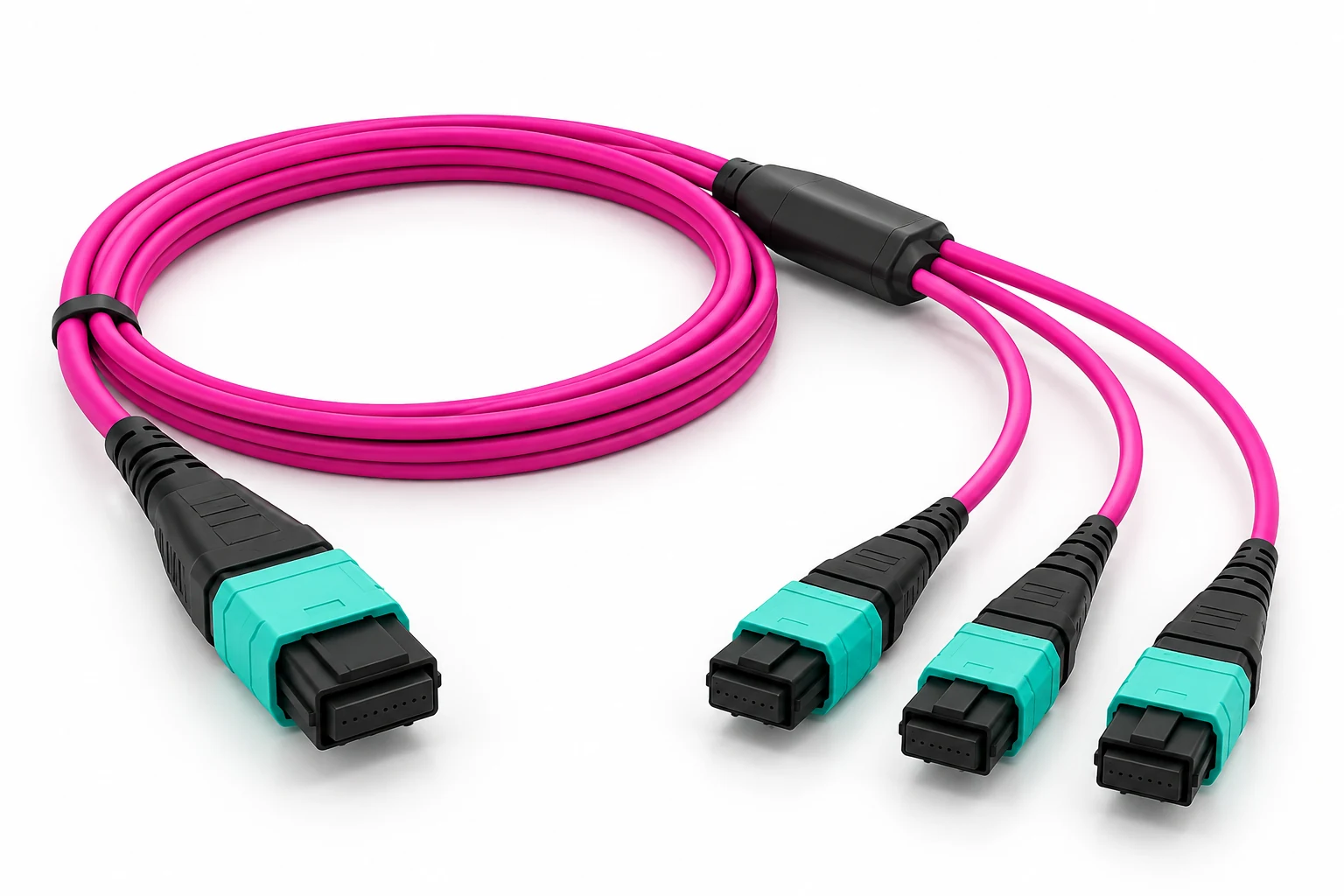
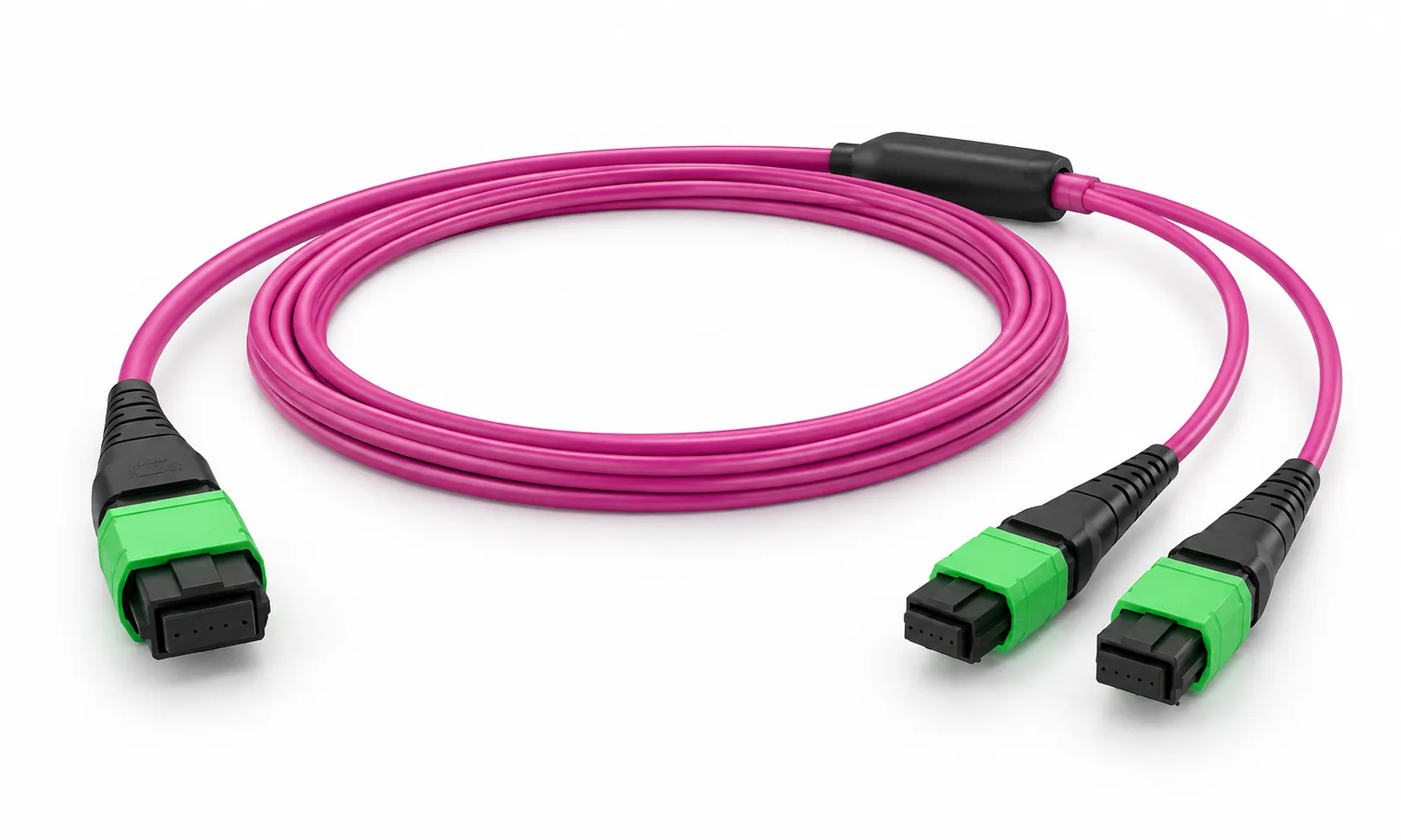
The migration toward 40G, 100G, and 400G network speeds drives increasing adoption of MPO/MTP multi-fiber connectors, requiring specialized fiber optic adapter solutions that maintain the precise alignment of 12 or 24 fiber cores simultaneously.
Polarity management represents a critical consideration in MPO fiber optic adapter deployments. Our clearly labeled adapter housings indicate polarity type (A, B, or C) to facilitate correct cable routing and prevent costly connection errors. Conversion modules enabling transitions between polarity schemes provide additional deployment flexibility.

Quality Assurance and Manufacturing Excellence
Precision Manufacturing and Materials Engineering

The alignment sleeve at the heart of every fiber optic adapter determines optical performance through microscopic dimensional control. Our ceramic zirconia sleeves undergo multiple precision grinding and lapping operations achieving bore tolerances within one micron, essential for maintaining the sub-micron fiber core alignment required for low insertion loss.
Automated inspection systems measure hundreds of dimensional parameters on every sleeve, rejecting components outside specification limits before assembly.

Housing Materials
- High-impact ABS and polycarbonate polymers
- Precision injection molding with tight tolerances
- Metal housings: precision-machined brass or stainless steel
- Electroplated or anodized finishes for corrosion protection

Alignment Sleeve Options
- Ceramic zirconia: superior wear resistance
- Phosphor bronze: cost-effective solution
- Polymer: for specific low-cost applications
- All materials meet Telcordia GR-326 standards
Testing and Certification Programs
Every fiber optic adapter leaving our manufacturing facilities undergoes optical performance testing verifying insertion loss, return loss, and alignment accuracy against defined acceptance criteria. Automated test systems measure these parameters at multiple wavelengths—typically 850nm, 1300nm, and 1550nm—ensuring compliance across the operating spectrum.

International Certifications
- Telcordia GR-326 compliant
- UL 94 V-0 flammability rating
- RoHS 2011/65/EU compliant
- CE marked for European markets
Performance Testing
- Insertion loss at multiple wavelengths
- Return loss measurement
- Mechanical endurance testing
- Environmental exposure testing
Quality Management
- ISO 9001:2015 certified
- Statistical process control
- Continuous improvement programs
- Full traceability of components

Partnering for Connectivity Excellence
Whether you're designing a hyperscale data center, expanding telecommunications infrastructure, implementing industrial automation networks, or addressing specialized application requirements, our fiber optic adapter solutions provide the performance characteristics, reliability attributes, and deployment flexibility that transform connectivity from a potential bottleneck into a competitive advantage. We invite you to engage with our technical teams to explore how our products and expertise can address your specific connectivity challenges and support your infrastructure evolution strategy.
As one of the most professional fiber optic adapter manufacturers and suppliers in China, we're featured by quality products and good service. Please rest assured to wholesale custom made fiber optic adapter from our factory.