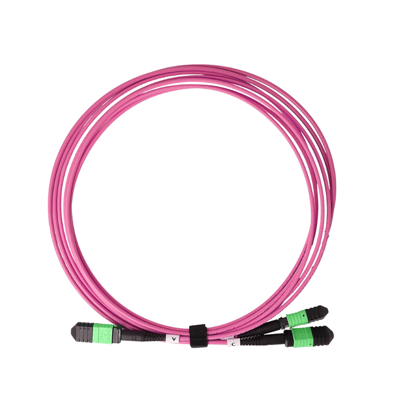
Choosing fiber optic connectors involves insertion loss specs, ferrule polishing quality, mechanical durability, and environmental adaptability. The market ranges from standard telecom-grade to industrial ruggedized types, with price variations reaching 5-8x, but focusing only on unit cost misses the long-term maintenance expenses. This guide compares mainstream connector types' technical characteristics, focusing on loss budget analysis, application matching, and total cost of ownership.
Over the past seven years, we've supported connector selection for 200+ projects - from 5G base stations to submarine cables, data centers to industrial sites. This content is based on actual deployment feedback, failure rate statistics, and performance test data.
Regarding technical support, our engineering team typically responds to technical questions within half a day on weekdays. Complex system integration proposals might need 2-3 business days for initial recommendations. Standard products usually ship in 3-5 days, custom items depend on specific requirements - generally 2-4 weeks.
DIMI Fiber Optic Connector Products
-
![Fiber Optic Cable LC Connector]() Fiber Optic Cable LC ConnectorDIMI Fiber Optic Cable LC Connector is a compact, push-pull connector designed for high-density fiber networks. Available for singlemode and multimode fibers with UPC or APC polishing, it ensures low
Fiber Optic Cable LC ConnectorDIMI Fiber Optic Cable LC Connector is a compact, push-pull connector designed for high-density fiber networks. Available for singlemode and multimode fibers with UPC or APC polishing, it ensures low -
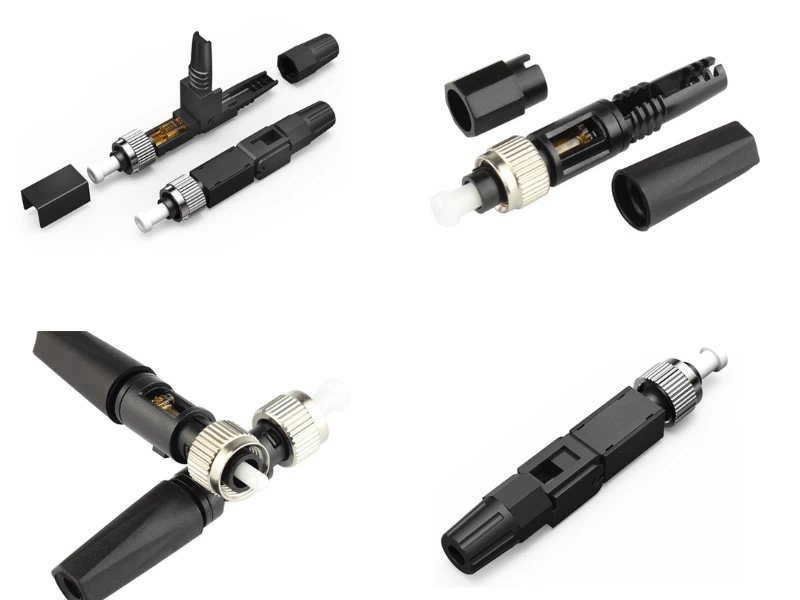
![FC UPC Fiber Optic Cable Connector]() FC UPC Fiber Optic Cable ConnectorDiMi FC UPC Fiber Optic Connector: Precision & Reliability for Single-Mode NetworksDiMi’s FC UPC fiber optic connector is designed for demanding single-mode applications that require secure, threaded
FC UPC Fiber Optic Cable ConnectorDiMi FC UPC Fiber Optic Connector: Precision & Reliability for Single-Mode NetworksDiMi’s FC UPC fiber optic connector is designed for demanding single-mode applications that require secure, threaded -
![Fiber Optic Cable SC UPC Connector]() Fiber Optic Cable SC UPC ConnectorDiMi SC UPC Fiber Optic Connector: Superior Performance for Single-Mode NetworksDiMi’s SC UPC fiber optic connector offers top-tier connectivity for single-mode fiber networks, ensuring reliable,
Fiber Optic Cable SC UPC ConnectorDiMi SC UPC Fiber Optic Connector: Superior Performance for Single-Mode NetworksDiMi’s SC UPC fiber optic connector offers top-tier connectivity for single-mode fiber networks, ensuring reliable,


Classification by Application Scenario and Technical Level
Data Center / MDF Interconnection
Suitable Scenarios:
High-density cabling, frequent patch cord changes, environments with strict insertion loss and return loss requirements
Core Features:
LC duplex and MPO/MTP multi-fiber connectors are mainstream, single-channel insertion loss ≤0.3dB
Ferrule end-face uses PC or UPC polish, return loss requirements above -50dB
Mechanical durability of 500+ mating cycles
Price Positioning:
Standard LC connectors are economy-level; MPO/MTP costs 3-4x LC due to multi-fiber structure and alignment precision requirements
Typical Examples:
LC single-mode UPC, LC multimode, 12-fiber/24-fiber MPO


Important Note:
Dust control in data center environments is critical. Even with UPC end-faces, insertion loss can spike from 0.2dB to over 0.8dB when contaminated. Cleaning tools and procedures affect long-term performance more than the connectors themselves.

Telecom Networks / Long-Distance Transmission
Suitable Scenarios:
Backbone networks, metro networks, access networks - extremely sensitive to return loss and insertion loss
Core Features:
SC and FC connectors still widely used, especially for equipment-side interfaces
APC polished end-faces (8° angle) are standard configuration, return loss reaches -60dB
Single-mode fiber dominant, operating wavelengths 1310nm/1550nm
Price Positioning:
APC end-faces cost 30-50% more than UPC due to complex polishing processes
Typical Examples:
SC/APC single-mode, FC/APC single-mode

Important Note:
APC and UPC end-faces absolutely cannot be mated. Forced connection causes permanent end-face damage. We've seen too many field cases where mixing types resulted in entire cable sections being scrapped.
Not Just Traditional Cyber & Immigration Firm
Suitable Scenarios:
Factory automation, rail transit, outdoor cabinets, environments with severe vibration and temperature fluctuations
Core Features:
Reinforced mechanical structure, IP67 or IP68 protection rating
Operating temperature range -40°C to +85°C
Anti-vibration design, typically with locking mechanisms
Mating cycles can exceed 1000+
Price Positioning:
Industrial-grade is 2-3x standard telecom-grade; military/marine grade can be 4-5x
Typical Examples:
Industrial LC, ruggedized SC, waterproof MPO


Important Note
Read protection ratings carefully - IP67 means "brief immersion," not "long-term underwater." Also, in low-temperature environments, ceramic ferrules in ordinary connectors can misalign due to thermal expansion/contraction differences.

Special Wavelength / High Power Applications
Suitable Scenarios:
Laser processing, medical equipment, scientific instruments, DWDM systems
Core Features:
Special optical coatings optimized for specific wavelengths
High-power connectors (>1W) require special end-face treatment
Ultra-low insertion loss (<0.15dB) and extremely high return loss (>65dB)
Price Positioning:
High-end tier, varies greatly depending on customization
Typical Examples:
Expanded beam connectors, PM (polarization maintaining) connectors

In high-power applications, even 0.1dB insertion loss means tens to hundreds of milliwatts concentrated at the micron-scale end-face contact point. Cleanliness requirements are an order of magnitude higher than ordinary applications.
Quick Comparison Table
| Connector Type | Typical Application | Insertion Loss | Return Loss | Mating Life | Environmental Rating | Relative Cost |
|---|---|---|---|---|---|---|
| LC/UPC | Data center, short-reach | 0.2-0.35dB | -50dB | 500 cycles | Indoor | Baseline |
| SC/APC | Telecom long-haul, PON | 0.2-0.3dB | -60dB | 500 cycles | Indoor/outdoor | 1.3-1.5x |
| FC/APC | Test equipment, high-end | 0.15-0.25dB | -65dB | 500 cycles | Indoor | 1.4-1.8x |
| MPO/MTP | High-density, parallel transmission | 0.25-0.5dB | -50dB | 500 cycles | Indoor | 3-4x |
| Industrial LC | Harsh environments | 0.3-0.5dB | -50dB | 1000+ cycles | IP67/68 | 2-3x |
| ST | Legacy systems, multimode | 0.3-0.6dB | -40dB | 500 cycles | Indoor | 0.8x |


How to Choose the Right Fiber Optic Connector: 6 Key Decision Points

Insertion Loss Budget Allocation
Why It Matters:
Link insertion loss budget directly determines transmission distance and signal quality. Applications below 10G are fairly tolerant; 25G/40G and above are extremely sensitive to insertion loss.
How to Determine:
If your link loss budget is generous (>3dB margin) → Economy connectors work fine
If you're doing long-distance or high-speed (≥25G) → Must use low-loss type
If uncertain → Calculate link budget first: Transmit power - Receiver sensitivity - Fiber attenuation - Other losses = Margin left for connectors
Common Mistake: Only looking at individual connector specs, forgetting the entire link has multiple connection points. A data center channel might have 4-6 connector pairs; each adding 0.1dB accumulates to 0.6dB difference.

Single-Mode vs Multimode
Why It Matters:
This isn't about performance - it's about compatibility. Single-mode and multimode have different core diameters (9μm vs 50/62.5μm), requiring different connector alignment precision.
How to Determine:
Transmission distance <300m, speed ≤10G → Multimode sufficient, lower cost
Transmission distance >500m, or potential future upgrade to 25G+ → Must use single-mode
What's your existing system → Stay consistent, don't mix
Common Mistake: Thinking single-mode performs better so using it everywhere. Multimode offers better cost-performance for short-reach applications, and light sources are cheaper too. Also, 62.5μm and 50μm multimode fibers cannot be intermated - insertion loss will be terrible.

End-Face Polish Type (PC/UPC/APC)
Why It Matters:
This directly affects return loss specs, which are critical for analog signals, high-speed digital signals, and certain wavelength division systems.
How to Determine:
Data centers, enterprise networks → UPC sufficient (-50dB return loss)
Telecom networks, PON systems, long-distance → Must use APC (-60dB)
CATV, analog transmission → APC is mandatory
Uncertain → Ask equipment supplier, check what the equipment-side interface type is
Common Mistake: Thinking APC performs better so using it everywhere. First, it's expensive. Second, if the mating side is UPC, forcing APC causes greater insertion loss and reflection. APC and UPC are incompatible - this is a hard rule.

Mechanical Durability Requirements
Why It Matters:
Data centers might move dozens of patch cords per year; test equipment gets plugged/unplugged multiple times daily. Connector failure isn't just about replacing a connector - it requires retesting, documentation, and potentially affects the entire link.
How to Determine:
Fixed connections, rarely moved → Standard 500-cycle life sufficient
Frequent patch cord changes (data centers, test environments) → Consider high-durability type (1000+ cycles)
Extremely frequent mating → See if you can switch to MPO or modular solutions
Harsh environments → Industrial-grade connectors with reinforced mechanical strength and sealing
Common Mistake: Thinking 500 cycles is a lot. In reality, test environments can plug/unplug a port 50 times per week - reaching life limit in one year.

Density and Space Constraints
Why It Matters:
In data centers and high-density applications, physical space is a hard constraint. How many ports fit in 1U directly impacts rack utilization.
How to Determine:
Port count <48/U → LC duplex connector standard solution
Port count needs 96-144/U → MPO/MTP parallel solution
Need field termination flexibility → LC primarily, MPO for backbone
Large future expansion expected → Pre-provision MPO backbone, use MPO-to-LC modules
Common Mistake: Using all LC initially to save money, then discovering no expansion space and having to completely re-cable. MPO has higher upfront investment but lower TCO in high-density scenarios.

Environmental Adaptability
Why It Matters:
Outdoor cabinets, factory floors, transportation hubs - temperature, humidity, dust, vibration all affect connector performance and lifespan.
How to Determine:
Standard equipment room environment → Regular telecom-grade
Outdoor cabinets, non-climate-controlled → Operating temp -40 to +75°C
Industrial sites, rail transit → IP67 protection + anti-vibration design
Marine, offshore platforms → Salt spray tested, IP68 sealed
Severe dust environments → Consider designs with dust caps or Expanded Beam non-contact type
Common Mistake: Using indoor-grade connectors outdoors; after six months, oxidation and water ingress cause insertion loss to jump from 0.3dB to 2dB or even complete failure. Also in low-temp environments, ceramic ferrules and metal housings in ordinary connectors have different thermal expansion coefficients, creating stress that causes alignment drift.
Technical Parameter Deep Dive

Insertion Loss
Technical Explanation:
Power loss as optical signal passes through connector interface, measured in dB. Main sources are fiber core alignment errors, end-face quality, and Fresnel reflection.
Practical Value:
Insertion loss at each connection point accumulates, directly consuming link budget
Applications below 10G aren't sensitive to 0.2dB vs 0.5dB difference
25G/40G and above: 0.1dB difference can worsen BER from 10^-12 to 10^-9
Is It Necessary:
Short-reach, low-speed: <0.5dB works
Long-reach, high-speed: Must be <0.3dB, preferably <0.25dB
Test equipment, precision applications: Target <0.15dB
Cost Impact:
Going from 0.5dB to 0.2dB increases cost 20-30%; from 0.2dB to 0.15dB adds another 40-50%. Mainly polishing process and quality control costs.
Return Loss
Technical Explanation:
Ratio of reflected optical power back to source versus incident power, measured in dB - higher numbers are better (negative sign indicates loss). PC end-face: -40dB, UPC: -50dB, APC: -60dB.
Practical Value:
Affects laser stability; reflected light interferes with laser operation
Analog signal transmission (CATV) extremely sensitive to return loss
High-speed digital signals (≥25G) also experience inter-symbol interference from reflections
In DWDM systems, reflections create crosstalk
Is It Necessary:
Digital signals, short-reach: -50dB sufficient (UPC)
Long-distance, PON, analog signals: Must have -60dB (APC)
DWDM, coherent optical systems: -65dB or higher
Cost Impact:
From UPC to APC, polishing process changes from spherical to 8° angle, yield drops, cost increases 30-50%.


End-Face Polish Type
Technical Explanation:
PC (Physical Contact): Spherical polish, physical end-face contact
UPC (Ultra Physical Contact): More refined spherical polish, tighter contact
APC (Angled Physical Contact): 8° angle polish, reflected light deflected away from fiber core
Practical Value:
PC: Old standard, basically obsolete now
UPC: Data center mainstream, good cost-performance
APC: Telecom network standard, excellent return loss specs
Is It Necessary:
Choose based on application, don't mix. APC only mates with APC, UPC only with UPC/PC.
Cost Impact:
Polishing complexity: PC < UPC < APC, with costs rising in steps.
Mechanical Durability (Mating Life)
Technical Explanation:
Number of mating cycles a connector can withstand. Standard is 500 cycles, high-end can reach 1000+. Failure modes typically include ceramic ferrule wear, spring fatigue, housing latch failure.
Practical Value:
Fixed connections: Moved once or twice per year, 500 cycles lasts 20 years
Frequent patching: Data center operations, might move 50-100 times yearly, 5-10 year life
High-frequency mating: Test equipment, multiple times daily, reaches life limit in 2-3 years
Is It Necessary:
Depends on usage frequency; standard 500 cycles sufficient for most applications
Test environments, frequently-changed data centers consider high-durability type
Ultra-high frequency mating scenarios consider modular solutions instead
Cost Impact:
High-durability connectors use better ceramic materials (zirconia) and reinforced springs, increasing cost 15-25%.


Operating Temperature:
Standard grade: 0°C ~ +70°C (indoor equipment rooms)
Extended grade: -20°C ~ +75°C (outdoor cabinets)
Industrial grade: -40°C ~ +85°C (harsh environments)
Protection Rating:
No protection: Indoor clean environments
IP67: Dust-proof, brief immersion (1 meter deep for 30 minutes)
IP68: Dust-proof, long-term immersion (manufacturer-defined depth and duration)
Practical Value:
Using wrong environmental grade causes premature connector failure. We've encountered customers using indoor-grade connectors in Northeast China outdoor cabinets; at -30°C winter temps, ceramic ferrules and metal housings contract at different rates, creating stress that causes fiber breaks.
Cost Impact:
Industrial-grade costs 1.5-2x standard grade, military/marine grade 3-4x. Mainly material costs (stainless steel housings, special sealing components) and testing costs.
Application Scenarios & Configuration Recommendations
Scenario 1: Large Data Center (10,000+ Servers)
Typical Requirements
High-density cabling, 100G/400G networks
Frequent patch cord changes and expansions
Sensitive to insertion loss budget (multi-tier cascading)
Need clear labeling and management
Implementation Considerations:
Pre-terminated backbone solutions are 3-5x faster than field termination, but 20-30% higher upfront investment
Recommend MPO connectors use Pinned/Unpinned pairing to avoid field identification errors
Cleaning management is critical: Suggest cleaning tool kits in each rack
Labeling system must be planned during design phase

Applicable Solutions
Backbone: MPO/MTP-12 or MPO-24, for switch uplinks and server interconnects
Access: LC duplex connectors, paired with MPO-LC breakout modules
Polish type: Primarily UPC, APC for long-distance interconnects
Fiber: Mainly single-mode (future 400G/800G upgrades)
Cost Considerations
Initial investment: MPO solution 30-40% higher than traditional LC
TCO: Considering labor costs, MPO solution pays back in 3-5 years
Suggest phased implementation: Core starts with MPO, access can retain LC
Telecom Carrier Backbone Network
Typical Requirements
Ultra-long distance transmission (50-100+ kilometers)
Extremely strict insertion loss and return loss specifications
DWDM/OTN systems, multi-wavelength multiplexing
Equipment-side interfaces primarily SC/FC
Implementation Considerations
All connection points must be verified with optical power meter and OTDR
End-face microscope inspection is mandatory, can't rely only on specs
APC end-face orientation matters (Key up), pay attention during installation
Recommend ceramic alignment sleeves rather than phosphor bronze

Applicable Solutions
Connector type: SC/APC or FC/APC
Fiber: Single-mode G.652D or G.655
Return loss requirement: Above -60dB
End-face cleaning: Must use professional cleaning equipment and inspection tools
Cost Considerations:
Connector cost is small portion (<5%), but system impact is huge
One non-compliant connection point can affect dozens of wavelengths
Maintenance costs exceed initial procurement: Recommend stocking spare parts and cleaning tools
Factory Automation Network
Typical Requirements
Large temperature variations (-20°C ~ +60°C)
Dust, oil, vibration environment
Strict EMI/EMC requirements
Need IP65+ protection
Implementation Considerations
All connection points must have sealing and locking mechanisms
Recommend armored optical cables, reinforced connector tail cable protection
During installation ensure seal rings properly seated, tightening torque per specs
Regular inspection (quarterly), as vibration can loosen connections

Applicable Solutions
Connectors: Industrial-grade LC or ruggedized SC
Protection rating: IP67 (workshop) or IP68 (outdoor)
Operating temperature: -40°C ~ +85°C
Anti-vibration: Per IEC 61753-1 standar
Cost Considerations
Industrial-grade connectors are 2-3x standard grade
But much lower failure rate: Field replacement labor cost can be 10x connector price
Recommend going industrial-grade from start, don't think "use regular first, replace when broken
5G Fronthaul Network (BBU-AAU)
Typical Requirements
High-density cells, 12-48 fibers per base station
Outdoor environment, wide temperature range
Need rapid deployment
eCPRI/25G speeds, sensitive to insertion loss and dispersio
Implementation Considerations
Harsh tower-top environment: Temperature -40°C ~ +70°C, sun exposure, rain and snow
Recommend pre-terminated solutions, field termination quality hard to guarantee
MPO connectors must be waterproof type, sealing is critical
Cable routing must consider wind and ice loading, adequate fixing point spacing

Applicable Solution
Backbone: MPO-12 pre-terminated solution
Equipment side: LC/APC or SC/APC (depends on equipment interface)
Fiber: Single-mode OS2, recommend G.652D or better
Protection: Connector IP67, reinforced tail cable protection
Cost Considerations
Pre-terminated 20-30% more expensive than field termination, but construction time reduced 60-70%
Lower failure rate: Field termination failure rate is 3-5x pre-terminated
Labor costs: Tower-top work daily labor can be 2-3x material costs
Pricing & Procurement Information
Price Structure Analysis

Connector Body Cost Factors
Ceramic Ferrule Precision: Diameter tolerance from ±0.5μm to ±0.1μm, each doubling of precision increases cost 30-50%
End-Face Polishing Process: PC → UPC → APC, each level increases polishing time, reduces yield
Alignment Sleeve Material: Phosphor bronze (economy) vs ceramic (high-end), ceramic costs 50% more but 3x better durability
Housing and Spring Materials: Regular stainless steel vs specialty alloys, affects corrosion resistance and mechanical performance

Accessory Costs
Tail cable and boots: Standard protection vs reinforced vs armored, 2-4x price difference
Adapters/flanges: Standard vs low-loss type, 20-30% premium
Installation accessories: Cleaning tools, end-face protection caps, label materials
Testing and acceptance: If 100% testing with reports required, adds 15-20% cost

Hidden Costs (Easily Overlooked)
System upgrades due to excessive insertion loss: May require better optical modules or additional amplifiers
Failure replacement costs: Field service fees, downtime losses, retesting
Incompatibility rework: Buying wrong type (APC/UPC mixing) requires batch replacement
Seal failure: In outdoor applications, one connection point water ingress can affect entire link
Price Influencing Factors
Technical Grade (40-60% impact)
Insertion loss specs: Each 0.1dB improvement, cost +15-25%
Return loss specs: UPC → APC, cost +30-50%
End-face quality: Standard polish → precision polish, cost +20-30%
Environmental Adaptability (50-100% impact)
Operating temperature range: Each 20°C extension, cost +15-20%
Protection rating: IP65 → IP67 → IP68, costs rise in steps
Anti-vibration design: Reinforced structure + locking mechanism, cost +30-40%
Volume and Customization (20-50% impact)
Small batch (<100 pcs): Higher unit price, no negotiation room
Medium batch (100-1000 pcs): 10-15% discount possible
Large batch (>1000 pcs): Can negotiate 15-25% discount
Customization: Higher MOQ, unit price +10-20%
Pre-Terminated vs Field Terminated (30-50% impact)
Pre-terminated patch cords: Factory batch production, stable quality, but 20-30% higher unit price
Field termination: Cheaper materials, but needs tools, skills, time - overall cost depends on installation conditions
Purchasing Methods

Contact Us Directly for Quotes:
Suitable for bulk procurement, custom requirements, system integration projects
Advantages:
Direct technical support, negotiable pricing, customizable
Process:
Submit requirements → Technical confirmation → Quotation → Sample testing (optional) → Bulk order
Timeline:
Standard products 3-5 days quote, custom products 1-2 weeks
Services We Provide:
Technical selection support: Recommend appropriate solutions based on application scenarios
Sample testing: Small batch trial, confirm performance before bulk purchase
Customization services: Special lengths, color coding, customer labels
Test reports: Provide insertion loss, return loss test data (optional)
Technical training: Installation, testing, maintenance guidance (large orders)

Trust & Credentials

Product Certifications:
ISO 9001: Quality management system
IEC 61754: Connector interface standards
Telcordia GR-326: Generic requirements for optical connectors
RoHS compliant: Environmental standards

Testing Standards:
Insertion loss: Per IEC 61300-3-4
Return loss: Per IEC 61300-3-6
Durability: Per IEC 61300-2-2
Environmental: Per relevant IEC 61300-2 series
Industry Compliance:
Telecom standards: ITU-T recommendations
Data center: TIA-942 compliant
Industrial: IEC 61753-1 ruggedized standards
FAQ
Q: Should I choose LC or SC connectors?
A: LC is the current standard for data centers and high-density applications - smaller footprint, duplex design. SC is still widely used in telecom equipment and outdoor applications - larger, more robust, easier to handle with gloves. If you're building new infrastructure and space is tight, go LC. If you're matching existing equipment or need outdoor durability, SC makes sense.
Q: Do you offer volume discounts?
A: Yes. Pricing breaks typically start at 100 pieces, with more significant discounts at 500+ and 1000+. The exact discount depends on connector type, customization requirements, and delivery timeline. Contact us with your specific requirements for a project quote. We also offer consignment inventory programs for ongoing projects with predictable consumption.
Q: When do I actually need APC instead of UPC?
A: APC is necessary for: PON/FTTH networks, analog video transmission (CATV), long-haul telecom, and DWDM systems. The 8° angle polish redirects reflections away from the fiber core, achieving -60dB return loss vs -50dB for UPC. For data centers and enterprise networks running digital signals under 25G over moderate distances, UPC is sufficient and costs 30-50% less. Don't use APC "just because" - it requires compatible mating connectors throughout your system.
Q: Can I get samples before committing to a large order?
A: Absolutely. We recommend sample testing for new applications or when switching suppliers. Standard products: small quantities at regular pricing. Custom products: sample charges may apply, credited toward production orders. We can also arrange factory testing and provide performance data before you install anything.
Q: How long do fiber connectors actually last?
A: Rated for 500 mating cycles typically means 10-20 years for fixed installations with occasional moves. In test labs or frequently-reconfigured data centers, you might hit 500 cycles in 2-5 years. Environmental factors matter more than age - outdoor connectors exposed to temperature cycling degrade faster than climate-controlled indoor connectors. We've seen 15-year-old connectors still performing to spec in stable environments, and 3-year-old connectors failing in harsh conditions.
Q: What's your lead time for custom lengths or specifications?
A: Standard products: 3-5 business days. Pre-terminated assemblies with standard lengths: 5-10 days. Custom lengths or special configurations: 2-4 weeks depending on complexity. Custom ferrule types or special environmental ratings: 4-6 weeks. Rush service available for critical projects - let us know your timeline.
Q: What's driving the price difference between cheap and expensive connectors?
A: Main factors: Ferrule tolerance (±0.5μm vs ±0.1μm), end-face polish quality, ceramic vs bronze alignment sleeves, environmental rating, and testing rigor. A $3 connector might test within spec, but with wider variability. A $15 connector has tighter tolerances, better materials, and lower long-term failure rates. For critical applications, spending 3-5x more on connectors to avoid a single system failure is good insurance.
As one of the most professional fiber optic connectors manufacturers and suppliers in China, we're featured by quality products and good service. Please rest assured to wholesale custom made fiber optic connectors from our factory.