


DIMI’s Expertise in High-Density MPO/MTP Connectivity
As bandwidth demand surges with cloud computing, 5G, and AI, DIMI focuses on engineered MPO/MTP fiber solutions for data centers, telecom networks, and enterprise backbones. We provide high-density trunk and harness assemblies that optimize rack space, simplify cabling, and support rapid deployment for large-scale projects—backed by rich OEM/ODM engineering and production experience.
Customization Capabilities & Product Options
DIMI offers fully customizable MPO/MTP cable assemblies, including fiber count (8/12/16/24+), fiber type (OM3/OM4/OM5, OS2), connector type (MPO/MTP to LC/SC/other), polarity (Type A/B/C), jacket materials, branch structures, and pre-terminated plug-and-play modules. Branding, labeling, and packaging can be tailored to your project standards to reduce on-site work and ensure easy identification and management.
Testing, Quality Control & Certification Support
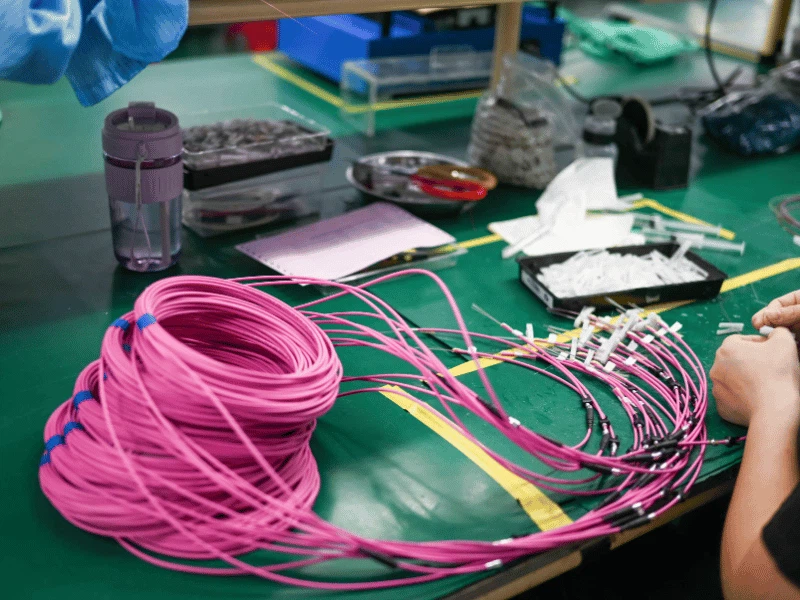
All DIMI MPO/MTP assemblies undergo 100% factory testing for insertion loss, return loss, and endface quality, with detailed test reports provided for every link. Our products are designed and validated against relevant IEC/TIA standards, and we can support third-party testing and certification as required, helping operators and integrators deploy high-density fiber networks with long-term reliability and compliance.
MPO/MPT Cables Products
-
![MPO To SC Breakout Cable-OM4-8/12]() MPO To SC Breakout Cable-OM4-8/12Key SpecificationsConnector Type: MPO Female to SC/UPC Duplex (breakout configuration)Fiber Type: OM4 50/125µm laser-optimized multimode fiberFiber Count: 8-fiber or 12-fiber configurations
MPO To SC Breakout Cable-OM4-8/12Key SpecificationsConnector Type: MPO Female to SC/UPC Duplex (breakout configuration)Fiber Type: OM4 50/125µm laser-optimized multimode fiberFiber Count: 8-fiber or 12-fiber configurations -
![MPO-ST-OM4-8/12-breakout Cable Fiber Optic]() MPO-ST-OM4-8/12-breakout Cable Fiber OpticProduct OverviewOne-Line Value PropositionHigh-density MPO-to-ST breakout solution enabling seamless migration from legacy ST infrastructure to 40G/100G parallel optics with pre-terminated
MPO-ST-OM4-8/12-breakout Cable Fiber OpticProduct OverviewOne-Line Value PropositionHigh-density MPO-to-ST breakout solution enabling seamless migration from legacy ST infrastructure to 40G/100G parallel optics with pre-terminated -
![MPO-FC-SM-8/12 Fibers-fiber Optic Breakout Cable]() MPO-FC-SM-8/12 Fibers-fiber Optic Breakout CableProduct OverviewMPO-FC-SM-8/12 Fibers Single Mode Fiber Optic Breakout CableHigh-Density SolutionConverts single MPO trunk to 8 or 12 individual FC portsFactory-TerminatedEliminates field termination
MPO-FC-SM-8/12 Fibers-fiber Optic Breakout CableProduct OverviewMPO-FC-SM-8/12 Fibers Single Mode Fiber Optic Breakout CableHigh-Density SolutionConverts single MPO trunk to 8 or 12 individual FC portsFactory-TerminatedEliminates field termination -
![MPO-LC-SM-8/12 Fibers-breakout Fiber Optic Cable]() MPO-LC-SM-8/12 Fibers-breakout Fiber Optic CableKey ParametersConnector Type:MPO Female (12-fiber) to LC/UPC Duplex × 4 or 6Fiber Type:OS2 Single-Mode 9/125µmFiber Count:8-fiber or 12-fiber configuration availableJacket Rating:LSZH, OFNP, or PVC
MPO-LC-SM-8/12 Fibers-breakout Fiber Optic CableKey ParametersConnector Type:MPO Female (12-fiber) to LC/UPC Duplex × 4 or 6Fiber Type:OS2 Single-Mode 9/125µmFiber Count:8-fiber or 12-fiber configuration availableJacket Rating:LSZH, OFNP, or PVC -
![MPO/MTP-SM-OM4-12/24 Fibers-breakout Fiber Cable]() MPO/MTP-SM-OM4-12/24 Fibers-breakout Fiber CableProduct OverviewMPO/MTP to LC/SC Breakout Fiber Cable - Single-Mode & OM4 Multimode - 12/24 FibersKey ParametersConnector Configuration: MPO/MTP (12F or 24F) to 6/12× LC Duplex or SC SimplexFiber
MPO/MTP-SM-OM4-12/24 Fibers-breakout Fiber CableProduct OverviewMPO/MTP to LC/SC Breakout Fiber Cable - Single-Mode & OM4 Multimode - 12/24 FibersKey ParametersConnector Configuration: MPO/MTP (12F or 24F) to 6/12× LC Duplex or SC SimplexFiber -
![MPO TO SC-OM4-8/12 Fibers-breakout Cable Fiber]() MPO TO SC-OM4-8/12 Fibers-breakout Cable FiberKey ParametersConnector Type:MPO/MTP Female to 8×SC or 12×SC Duplex UPCFiber Type:OM4 Multimode 50/125µm, aqua jacketFiber Count:8-fiber or 12-fiber configurations availableBreakout Length:0.5m to
MPO TO SC-OM4-8/12 Fibers-breakout Cable FiberKey ParametersConnector Type:MPO/MTP Female to 8×SC or 12×SC Duplex UPCFiber Type:OM4 Multimode 50/125µm, aqua jacketFiber Count:8-fiber or 12-fiber configurations availableBreakout Length:0.5m to -
![MPO MTP Cables-MPO/APC-2*8MPC/PC-OM4]() MPO MTP Cables-MPO/APC-2*8MPC/PC-OM4Key ParametersConnector Configuration: MPO/APC (Female) to 2×8 MPC/PC (Male)Fiber Type: OM4 Multimode 50/125µmFiber Count: 16-fiber (split to 2×8 configuration)Jacket Rating: LSZH (Low Smoke Zero
MPO MTP Cables-MPO/APC-2*8MPC/PC-OM4Key ParametersConnector Configuration: MPO/APC (Female) to 2×8 MPC/PC (Male)Fiber Type: OM4 Multimode 50/125µmFiber Count: 16-fiber (split to 2×8 configuration)Jacket Rating: LSZH (Low Smoke Zero -
![MPO/MTP Cable-SM-12/24 Fibers]() MPO/MTP Cable-SM-12/24 FibersKey ParametersConnector Type:MPO/MTP Female to MPO/MTP Female (or Male options available)Fiber Type:OS2 Singlemode 9/125µmFiber Count:12-fiber and 24-fiber configurationsJacket Rating:LSZH (Low Smoke
MPO/MTP Cable-SM-12/24 FibersKey ParametersConnector Type:MPO/MTP Female to MPO/MTP Female (or Male options available)Fiber Type:OS2 Singlemode 9/125µmFiber Count:12-fiber and 24-fiber configurationsJacket Rating:LSZH (Low Smoke -
![MTP/MPO Cables-MPO/APC-2*8MPC/PC-OM3/OM4]() MTP/MPO Cables-MPO/APC-2*8MPC/PC-OM3/OM4Key SpecificationsConnector Configuration:MPO Female with APC Polish on one end, MPC/PC Polish on the otherFiber Type:OM3 50/125µm or OM4 50/125µm multimode fiberFiber Count:2×8 fibers (16-fiber
MTP/MPO Cables-MPO/APC-2*8MPC/PC-OM3/OM4Key SpecificationsConnector Configuration:MPO Female with APC Polish on one end, MPC/PC Polish on the otherFiber Type:OM3 50/125µm or OM4 50/125µm multimode fiberFiber Count:2×8 fibers (16-fiber -
![Mpo/mtp Cables-FC/APC-SM-8/12 Fibers]() Mpo/mtp Cables-FC/APC-SM-8/12 FibersKey ParametersConnector Type A:MPO/MTP Female (12-fiber interface)Connector Type B:8× or 12× FC/APC Simplex connectorsFiber Type:OS2 Single Mode 9/125µmFiber Count:8-fiber or 12-fiber breakout
Mpo/mtp Cables-FC/APC-SM-8/12 FibersKey ParametersConnector Type A:MPO/MTP Female (12-fiber interface)Connector Type B:8× or 12× FC/APC Simplex connectorsFiber Type:OS2 Single Mode 9/125µmFiber Count:8-fiber or 12-fiber breakout -
![Mpo Mtp Cable-MPO/APC-MPO/APC-OM4-16 Fibers]() Mpo Mtp Cable-MPO/APC-MPO/APC-OM4-16 FibersKey ParametersConnector Type: MPO/APC Female to MPC/PC FemaleFiber Type: OM3/OM4 Multimode 50/125µmFiber Count: 16 (2*8) FibersJacket Rating: LSZH (Optional OFNP, PVC)Length Range: 1~100m
Mpo Mtp Cable-MPO/APC-MPO/APC-OM4-16 FibersKey ParametersConnector Type: MPO/APC Female to MPC/PC FemaleFiber Type: OM3/OM4 Multimode 50/125µmFiber Count: 16 (2*8) FibersJacket Rating: LSZH (Optional OFNP, PVC)Length Range: 1~100m -
![Mtp/mpo Cable-MPO/APC-MPO/APC-OM3/OM4-16 Fibers]() Mtp/mpo Cable-MPO/APC-MPO/APC-OM3/OM4-16 FibersConnector TypeMPO/APC Female to FemaleFiber TypeOM3/OM4 50/125µmFiber Count16 FibersJacket RatingLSZHLength Range1m to 100mPolish TypeAPC 8° angle
Mtp/mpo Cable-MPO/APC-MPO/APC-OM3/OM4-16 FibersConnector TypeMPO/APC Female to FemaleFiber TypeOM3/OM4 50/125µmFiber Count16 FibersJacket RatingLSZHLength Range1m to 100mPolish TypeAPC 8° angle




Understanding MPO Cable Technology: The Foundation of Modern High-Density Connectivity
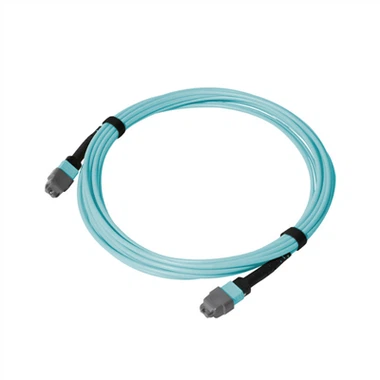
An mpo cable represents a sophisticated fiber optic connectivity solution designed to accommodate multiple fibers within a single, compact connector interface. Unlike traditional single-fiber connections that require individual terminations for each fiber strand, an mpo fiber cable integrates multiple fibers—typically 12, 16, or 24 fibers—into one streamlined connector assembly. This innovative design philosophy addresses the fundamental challenges facing modern network infrastructure: limited rack space, complex cable management, and the need for rapid deployment capabilities.

What is an MPO Cable and Why Does It Matter?

To fully appreciate the significance of this technology, one must understand the mpo cable meaning within the broader context of fiber optic evolution. The mpo cable definition describes it as a multi-fiber connector system that utilizes precision-molded ferrules to align multiple optical fibers simultaneously, enabling parallel optics transmission. This parallel architecture fundamentally differs from traditional serial transmission methods, allowing for substantially higher aggregate bandwidth within a smaller physical footprint.
The mpo fiber optic cable emerged as a response to the limitations of conventional LC and SC connectors when facing the bandwidth demands of 40G, 100G, and now 400G network architectures. Where traditional approaches would require four separate fiber pairs (eight fibers total) for a 40G connection, an mpo optical cable accomplishes the same task through a single connector interface, dramatically simplifying both physical infrastructure and operational complexity.
Comprehensive Product Categories: Understanding MPO Cable Types
The versatility of MPO technology manifests through diverse product configurations, each optimized for specific applications and deployment scenarios. Understanding these mpo cable types enables informed decision-making that aligns technical requirements with operational objectives.

MPO Trunk Cables
Foundational building blocks of structured cabling systems, featuring MPO connectors on both ends for point-to-point backbone connections. Available in 12, 16, and 24-fiber configurations to match specific bandwidth requirements.

MPO Breakout Cables
Bridge multi-fiber MPO infrastructure with traditional single-fiber equipment (LC, SC). Ideal for connecting MPO-based switches to LC-equipped servers and storage devices.

MPO Patch Cables
Versatile interconnection solutions for equipment-to-equipment connections, cross-connects, and temporary installations. Maintain rigorous performance standards with enhanced flexibility.

Specialized Custom MPO Cables
Custom configurations including fanout, splitter, crossover, and loopback cables designed for specific technical requirements and testing scenarios.
MPO Trunk Cables: The Backbone of High-Density Infrastructure
MPO trunk cable assemblies represent the foundational building blocks of structured cabling systems in modern data centers. These mpo/mtp trunk cable solutions feature MPO connectors on both ends, creating point-to-point connections between network equipment, patch panels, or distribution frames. The mtp/mpo trunk cable configuration excels in backbone applications where maintaining fiber polarity and ensuring reliable high-speed transmission are paramount concerns.
Available in various fiber counts—including mpo 12 cable, mpo 16 cable, and mpo 24 cable configurations—these trunk assemblies provide flexibility in matching specific bandwidth requirements. The mpo 12 fiber cable has become particularly prevalent in 40G and 100G applications, while mpo 24 fiber cable assemblies serve higher-density deployments requiring maximum port utilization within constrained physical environments.

Key Advantages of MPO Trunk Cables:
Space-efficient design reduces rack and pathway congestion
Pre-terminated assemblies eliminate field termination errors
Supports seamless scalability from 40G to 400G and beyond
Simplifies cable management and reduces maintenance time
Consistent performance across all fiber strands
MPO Breakout Cables: Bridging Multi-Fiber and Single-Fiber Ecosystems

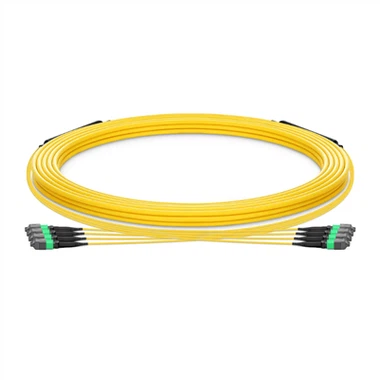
MPO breakout cable assemblies serve as critical interface points between high-density MPO infrastructure and traditional single-fiber equipment. An mpo to lc cable configuration, for instance, features an MPO connector on one end and multiple LC duplex connectors on the opposite end, facilitating connections between MPO-based switch ports and LC-equipped network devices.
The mpo to lc breakout cable has become ubiquitous in enterprise environments, particularly when interfacing with storage area networks, server connections, and access layer switching infrastructure. Similarly, mpo to sc breakout cable assemblies accommodate legacy SC-based equipment, ensuring backward compatibility while enabling migration toward higher-density architectures.
Specialized variants include the mpo 12 breakout cable and mpo 12 to lc cable configurations, which are specifically engineered for 40G QSFP+ and 100G QSFP28 applications. These mpo-12 breakout cable assemblies maintain precise polarity management, ensuring that transmit and receive pairs align correctly across the connection path.
MPO Patch Cables: Flexible Interconnection Solutions
MPO patch cable assemblies provide versatile connectivity options for equipment-to-equipment connections, cross-connects, and temporary installations. These mpo fiber patch cable solutions maintain the same rigorous performance standards as trunk cables while offering enhanced flexibility for dynamic network environments. The mtp mpo fiber patch cable designation reflects the interchangeable nature of MPO and MTP terminology, with MTP representing a specific high-performance implementation of the MPO interface.

Specialized MPO Cable Configurations
Beyond standard trunk, breakout, and patch configurations, the MPO ecosystem includes numerous specialized products designed for specific technical requirements:
MPO fanout cable
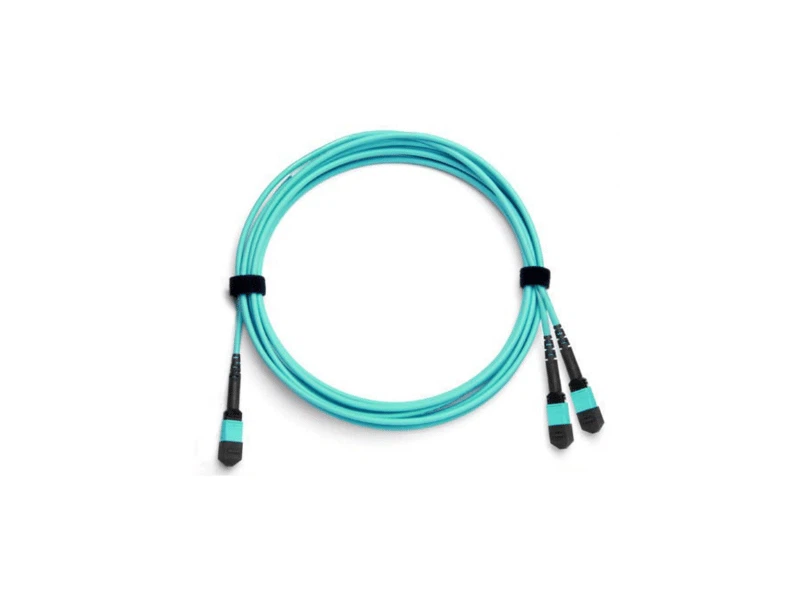
MPO fanout cable assemblies distribute individual fibers from a single MPO connector to multiple single-fiber connections, offering maximum flexibility in complex interconnection scenarios. The multi mode 50-125 om4-bend insensitive mpo fanout cable exemplifies how specialized fiber types integrate with MPO technology to deliver enhanced performance in challenging installation environments.
01
MPO splitter cable
MPO splitter cable configurations enable one-to-many connectivity patterns, supporting applications such as optical distribution networks and testing infrastructures.
02
MPO crossover cable assemblies
MPO crossover cable assemblies, particularly the mpo type b crossover cable variant, provide essential polarity reversal functionality within structured cabling systems.
03
MPO loopback cable
MPO loopback cable modules serve critical roles in network testing, diagnostics, and equipment configuration scenarios.
04
MPO harness cable
MPO harness cable assemblies offer customized multi-branch connectivity solutions for specialized applications requiring non-standard connection patterns.
05
Fiber Type Optimization: Matching Cable Specifications to Application Requirements
The performance characteristics of MPO cable assemblies depend significantly on the underlying fiber specifications. Understanding these distinctions enables optimal product selection for specific deployment scenarios.
Multimode MPO Cable Solutions

Multimode fiber variants dominate short-reach data center applications, offering cost-effective solutions for distances up to several hundred meters. The om3 mpo cable utilizes 50-micron laser-optimized multimode fiber, supporting 40G transmission up to 100 meters and 100G transmission up to 70 meters. The om4 mpo cable extends these distances to 150 meters for 40G and 100 meters for 100G applications, making it the preferred choice for most contemporary data center deployments.
Advanced fiber specifications continue to push performance boundaries. The multimode 50-125 om5 mpo cable method introduces wideband multimode fiber technology, optimized for short-wavelength division multiplexing (SWDM) applications. The multi mode 50-125 om4-bend insensitive mpo cable method incorporates specialized fiber designs that maintain performance characteristics even when subjected to tight bend radii, enabling more flexible cable routing in space-constrained environments.
Multimode MPO Cable Performance Comparison
| Fiber Grade | Core/Clad Diameter | 40G SR4 Distance | 100G SR4 Distance | 400G SR8 Distance | Key Applications |
|---|---|---|---|---|---|
| OM3 | 50/125 µm | 100 m | 70 m | 30 m | Legacy data centers, short-reach 40G/100G |
| OM4 | 50/125 µm | 150 m | 100 m | 70 m | Modern data centers, enterprise backbones |
| OM5 | 50/125 µm | 150 m | 150 m | 100 m | Next-gen data centers, SWDM applications |
| OM4 Bend-Insensitive | 50/125 µm | 150 m | 100 m | 70 m | High-density racks, tight cable routing |
Connector Technology and Compatibility: MPO vs MTP Explained

A common question in the fiber optic industry concerns the relationship between MPO and MTP terminology. The mpo vs mtp cable discussion often generates confusion, but the distinction is straightforward: MPO represents the generic multi-fiber connector interface specified by IEC standards, while MTP designates a specific high-performance implementation manufactured by US Conec under trademark protection.
In practical terms, mtp mpo cable and mtp/mpo cable designations indicate cables featuring MTP-branded connectors, which typically offer enhanced mechanical performance, superior insertion loss characteristics, and improved long-term reliability compared to generic MPO implementations. However, both connector types maintain physical and optical compatibility, with mpo / mtp cables functioning interchangeably within the same infrastructure.
MPO vs MTP: Key Differences and Similarities
Physical Compatibility
Both connectors share the same form factor and can be used interchangeably in the same infrastructure
Performance
MTP connectors typically offer lower insertion loss (≤0.3dB) compared to standard MPO (≤0.5dB)
Mechanical Design
MTP features enhanced latch mechanisms and precision alignment for improved durability
Reliability
MTP connectors undergo stricter quality control, resulting in higher repeatability and longer service life
Cost
MTP connectors carry a premium price point compared to standard MPO connectors
Standards Compliance
Both comply with IEC 61754-7 and TIA-604-5 standards for multi-fiber connectors
MPO Cable Polarity Management
MPO cable polarity management is critical to ensure that transmit (Tx) and receive (Rx) channels are correctly matched in high-density fiber links such as 40G/100G/400G systems. A well-designed polarity scheme avoids channel crossovers, reduces on-site troubleshooting, and guarantees that every fiber core is correctly mapped between transceivers, cassettes, and trunk cables.
DIMI provides complete MPO polarity solutions covering Type A, Type B, and Type C configurations, as well as Method A/B/C system designs. From data center backbone links to 5G and cloud infrastructures, our engineering team can help you select the right polarity, keying, and pin configuration, and pre-label all components. This significantly simplifies installation, minimizes polarity errors, and ensures your MPO cabling system is plug-and-play from day one.


Type A Polarity (Straight-Through)
Fiber positions are maintained straight through from one end to the other (1→1, 2→2, ..., 12→12)

Type B Polarity (Reversed)
Fiber positions are fully reversed at the opposite end (1→12, 2→11, ..., 12→1)
Type C Polarity (Paired Swap)
Fibers are swapped in adjacent pairs (1↔2, 3↔4, ..., 11↔12) at the opposite end
Infrastructure Integration: MPO Structured Cabling Systems

Space Efficiency and Density Optimization
The primary value proposition of MPO technology lies in its exceptional space efficiency. Where traditional cabling approaches might consume multiple rack units of patch panel space, mpo fiber cables consolidate equivalent connectivity into dramatically smaller footprints. This density advantage becomes increasingly critical as equipment port counts increase and available rack space remains constrained.

Installation Time and Labor Cost Reduction
Pre-terminated mpo cable assemblies eliminate field termination requirements, reducing installation time by up to 75% compared to traditional approaches. This labor efficiency translates directly to reduced deployment costs and faster time-to-production for new infrastructure projects.

Enhanced Reliability and Performance Consistency
Factory-terminated mpo fiber optic cable assemblies undergo rigorous quality assurance testing, ensuring consistent optical performance across all fiber positions. This controlled manufacturing environment delivers superior reliability compared to field terminations, which depend heavily on individual technician skill levels and environmental conditions.

Simplified Migration and Reconfiguration
The modular nature of MPO infrastructure facilitates rapid reconfiguration and technology upgrades. Transitioning from 40G to 100G connectivity, for example, often requires only transceiver replacement rather than complete cabling infrastructure renovation, protecting capital investments and minimizing operational disruption.
Addressing Customer Pain Points: How MPO Cable Technology Solves Critical Infrastructure Challenges

For Data Center Operators: Maximizing Density and Minimizing Complexity
Data center operators face relentless pressure to increase port density while managing ever-growing cable volumes within fixed physical spaces. Traditional approaches quickly lead to congested pathways, impaired airflow, and maintenance challenges. mpo fiber patch cable solutions directly address these pain points by consolidating multiple fiber connections into single, streamlined interfaces.
A typical 40G connection requiring four LC duplex connections can be replaced with a single MPO-12 interface, reducing cable count by 75%. When multiplied across hundreds or thousands of ports, this consolidation transforms cable management from a critical constraint into a manageable operational consideration.
For Enterprise IT Teams: Simplifying Deployment and Reducing Errors
Enterprise IT departments often lack specialized fiber optic termination expertise, making traditional field-terminated installations time-consuming and error-prone. Pre-terminated mpo patch cables eliminate field termination requirements entirely, enabling successful installations by technicians with minimal fiber optic experience.
The mpo lc cable breakout approach further simplifies integration with existing LC-based equipment, providing a clear migration path toward high-density infrastructure without requiring wholesale equipment replacement. This backward compatibility protects existing investments while enabling future scalability.

For Telecommunications Providers: Ensuring Scalability and Future-Proofing
Service providers require infrastructure investments that accommodate both current requirements and future growth. The mpo/mtp cables architecture inherently supports multiple speed grades over the same physical infrastructure. A cabling system initially deployed for 40G connectivity seamlessly supports future upgrades to 100G or 400G through transceiver replacement alone, protecting capital investments and avoiding costly infrastructure renovations.
single mode mpo cable solutions address the long-reach requirements of telecommunications networks, enabling high-speed connectivity between central offices, data centers, and remote locations while maintaining consistent performance and reliability.
For System Integrators: Accelerating Project Completion and Improving Margins
System integrators benefit from the reduced labor requirements associated with pre-terminated MPO solutions. Factory-assembled mtp mpo fiber cable products eliminate time-consuming field termination activities, accelerating project timelines and improving profit margins through labor efficiency gains.
The reduced risk of field installation errors further protects integrator reputation and minimizes warranty claims, contributing to enhanced customer satisfaction and repeat business opportunities. Vendor-specific solutions like the dell networking mpo to 4xlc fiber breakout cable and hpe mpo to 4 x lc 5m cable simplify equipment integration in multi-vendor environments.

As one of the most professional mpo/mpt fiber optic cable manufacturers and suppliers in China, we're featured by quality products and good service. Please rest assured to wholesale custom made mpo/mpt fiber optic cable from our factory.


