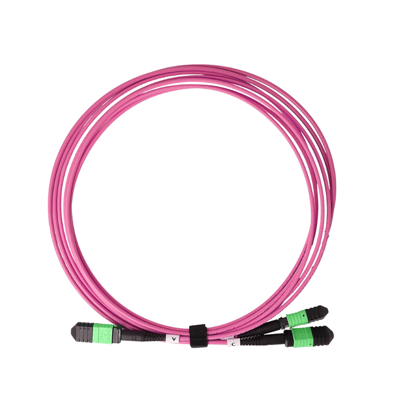
DIMI MPO/MTP Fiber Patch Cord

Choosing MPO/MTP fiber patch cords involves more than just counting fibers. You're looking at connector types (pinned vs unpinned), polarity methods (A, B, or C), insertion loss specs, and whether you actually need elite-grade performance or if premium will do.
Over the past six years, we've tested MPO/MTP assemblies across 200+ data center installations and helped clients spec everything from small office 40G upgrades to hyperscale 400G deployments. This content is based on actual field performance data, failure analysis reports, and pricing from recent RFQs.
DIMI MPO/MTP Fiber Patch Cord Products
-
![MPO/MTP Cable-SM-12/24 Fibers]() MPO/MTP Cable-SM-12/24 FibersKey ParametersConnector Type:MPO/MTP Female to MPO/MTP Female (or Male options available)Fiber Type:OS2 Singlemode 9/125µmFiber Count:12-fiber and 24-fiber configurationsJacket Rating:LSZH (Low Smoke
MPO/MTP Cable-SM-12/24 FibersKey ParametersConnector Type:MPO/MTP Female to MPO/MTP Female (or Male options available)Fiber Type:OS2 Singlemode 9/125µmFiber Count:12-fiber and 24-fiber configurationsJacket Rating:LSZH (Low Smoke -
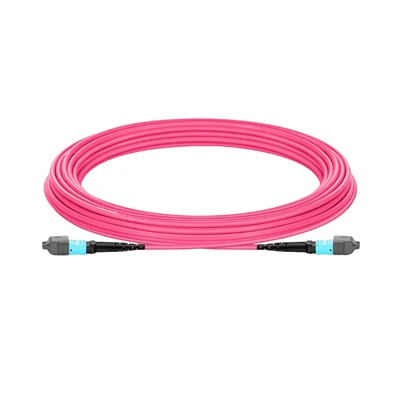
![MTP MPO Cable-OM5-8/12]() MTP MPO Cable-OM5-8/12Key ParametersConnector Type:MPO Female to MPO FemaleFiber Type:OM5 Wideband Multimode 50/125µmFiber Count:8-fiber and 12-fiber options availableJacket Rating:LSZH (Low Smoke Zero Halogen), OFNP and
MTP MPO Cable-OM5-8/12Key ParametersConnector Type:MPO Female to MPO FemaleFiber Type:OM5 Wideband Multimode 50/125µmFiber Count:8-fiber and 12-fiber options availableJacket Rating:LSZH (Low Smoke Zero Halogen), OFNP and -
![MTP MPO Fiber Cable-OM4-8/12]() MTP MPO Fiber Cable-OM4-8/12Key ParametersConnector Type:MPO Female to MPO FemaleFiber Type:OM4 Multimode 50/125µmFiber Count:8-fiber or 12-fiber availableJacket Rating:LSZH (Low Smoke Zero Halogen), OFNP/PVC optionalLength
MTP MPO Fiber Cable-OM4-8/12Key ParametersConnector Type:MPO Female to MPO FemaleFiber Type:OM4 Multimode 50/125µmFiber Count:8-fiber or 12-fiber availableJacket Rating:LSZH (Low Smoke Zero Halogen), OFNP/PVC optionalLength


Key Considerations
Insertion Loss Specs
0.35dB vs 0.5dB actually matters for 100m+ runs. The difference can significantly impact link budget calculations for longer distances.
Connector Endface Quality
Determines long-term stability. Poor endface geometry leads to higher loss and link flapping over time, especially with multiple mate cycles.
Polarity Method
Must match your infrastructure (most networks use Method B). Incorrect polarity is a leading cause of installation delays and link failures.
Lead Time
Stock items ship in 2-3 days, custom lengths take 3-4 weeks. Planning ahead can prevent project delays and rush order premiums.
Testing Certificates
Some applications require it, adds $8-15 per cable. Verify if your industry or project specifications mandate formal certification.
Volume Discounts
Kick in at 50+ units (typically 15-20% off). Larger quantities can yield significant savings, sometimes up to 35% for very large orders.
MPO/MTP Cable Categories & Applications

12-Fiber MPO/MTP
Best for: 40G QSFP+ SR4 connections, basic parallel optics
Key specs: Uses 8 fibers active, 4 unused (or reversed for duplex)
Price range: $18-45 per assembly
Common configs: OM3/OM4 multimode, 1-5 meter lengths
Watch out: Some older gear needs key-up/key-down orientation

24-Fiber MPO/MTP
Best for: 100G applications, future-proofing 40G infrastructure
Why it matters: Two 12-fiber channels in one connector-cleaner cable management
Price range: $42-95
Typical use: Breakout to 2x 40G or 1x 100G depending on transceiver
Polarity note: Method B is standard, but verify your transceiver compatibility

MPO-LC/SC Breakout (Harness)
Best for: Connecting MPO backbone to individual duplex LC/SC equipment
Core feature: Fanout from 12F or 24F MPO to 6 or 12 duplex LC connections
Price range: $65-180 (more terminations = higher cost)
Lengths: Usually 0.5m MPO side, 1.5-3m LC leg side
Quality matters: Cheap breakouts fail at the furcation point-seen it dozens of times
By Performance Grade

Standard Grade
Good enough for short runs under 30 meters where link budget isn't tight. Endface geometry meets basic specs but has more variation unit-to-unit.
We typically see these in office environments and light-duty test setups.

Premium Grade
The sweet spot for most data centers. Consistent endface quality with proper radius of curvature control.
Works reliably for 40G up to 100 meters and 100G up to 70 meters on OM4.

Elite Grade
When you need every tenth of a dB or you're maxing out distance specs. These get individual endface inspection and certification.
Makes sense for long-haul 100G (approaching 150m on OM4) or when rework costs are astronomical. Less than 15% of projects justify the premium.
Quick Spec Comparison
| Cable Type | Fiber Count | IL Grade | Typical Distance | Price Range | Best Application | Common Issue |
|---|---|---|---|---|---|---|
| 12F MM OM3 | 12 | Standard | <50m | $18-35 | Office 40G | Lower margin |
| 12F MM OM4 | 12 | Premium | <100m | $38-58 | DC 40G/100G | Polarity errors |
| 24F MM OM4 | 24 | Premium | <100m | $55-95 | Dense 100G | Cleaning needs |
| 12F SM OS2 | 12 | Premium | <500m | $48-85 | Long campus runs | Cost vs need |
| Breakout 12F→6LC | 12→6 duplex | Premium | Varies | $75-135 | Migration scenarios | Furcation failure |
| Elite 12F OM4 | 12 | Elite | 100-150m | $85-140 | Distance-limited | Overkill for most |
How to Choose the Right MPO/MTP Assembly: 6 Key Decisions
Understanding Your Link Budget Requirements

Why this matters: Every tenth of a dB you save in the patch cord gives you more margin for splices, adapters, or longer distances.
How to figure it out:
- If your total fiber run is under 50m → Standard grade usually works fine
- If you're between 50-100m and running 100G → Premium grade is the safe choice
- If you're pushing OM4 past 100m or OM3 past 70m → Elite grade might be necessary
Need help calculating your link budget?
Our team can walk through it with you: (transceiver power budget - fiber attenuation - connector losses)
Polarity Method Selection
Why this matters: Wrong polarity = non-functional links. Half of installation delays we see come from this.
The three methods explained simply:
-
Method A (straight-through):Fiber 1 → Fiber 1. Needs key-up to key-down flips. Rarely used anymore.
-
Method B (key-up both ends):Uses reversed gender (male-female). This is the standard-probably what you want.
-
Method C (pairs flipped):Fiber 1→12, 2→11, etc. Mainly for specific array cables.
How to decide:
- Check what your existing infrastructure uses (if adding to existing)
- If starting fresh → Go with Method B (industry standard, easiest to expand)
- When buying breakouts → Verify the polarity matches your backbone method
- Not sure? → Method B is the safe default for 95% of applications

Connector End-Face Quality Expectations

What you're actually paying for: The physical geometry of where fiber meets connector. Poor geometry = high loss and link flapping over time.
Quality indicators:
Apex offset: Elite <50μm, Premium <65μm, Standard <75μm
Radius of curvature: Tighter specs = better long-term contact
Fiber height: All grades should be within spec, but variation matters
Practical impact:
- Standard: Acceptable for static installations, questionable if cables get moved often
- Premium: Reliable through multiple mate cycles (20-30+)
- Elite: Minimal performance drift over hundreds of mate cycles
Single-Mode vs Multimode Decision
When to use which:
- Intra-rack or adjacent racks → OM4 multimode (unless you're future-proofing for 400G+ over distance)
- Building-to-building campus → OS2 single-mode
- Existing OM3 infrastructure + 40G → OM3 is fine, don't overthink it
- New 100G deployment → OM4 minimum, OS2 if any run exceeds 100m
- Planning for 400G → OS2 makes more sense unless distances are very short

Pin Configuration (Male/Female)

What you need to know: MPO connectors come with or without guide pins. One end must have pins, the other must not-otherwise they won't mate.
Standard practice:
- Trunk cables: Typically male (pinned) on both ends? No, actually one male/one female
- Patch cords: Usually come in male-female pairs
- Breakouts: Female MPO side (connects to pinned backbone)
How to avoid problems:
- Match the gender of whatever you're connecting to
- When ordering, explicitly specify "male-female pair" or "both female" if custom
- Keep a few spare MPO adapters (male-male, female-female) for field fixes
MPO/MTP Performance Comparison Matrix
| Spec Category | Entry-Level | Standard | Premium | Elite | When It Matters |
|---|---|---|---|---|---|
| Max IL (dB) | 0.5-0.6 | 0.4-0.5 | 0.3-0.35 | 0.20-0.25 | Link budget calculation |
| RL (dB) | >20 | >25 | >30 | >35 | Sensitive optics only |
| Price Range | $15-28 | $28-42 | $42-75 | $75-160 | Your budget reality |
| Endface QC | Visual only | Basic ILM | Full ILM | Individual inspect | Long-term reliability |
| Mate Cycles | 50-100 | 200+ | 500+ | 1000+ | Reconfig frequency |
| Lead Time | 2-3 days stock | 3-5 days | 1-2 weeks | 2-4 weeks custom | Project timeline |
| Typical Use | Test setups | Light production | Data center standard | Distance-critical | Match to application |
| Defect Rate | 1.5-2% | 0.8-1.2% | 0.3-0.5% | <0.2% | Installation confidence |
Recommended Configurations by Use Case

Small Office 40G Upgrade
Typical requirements: Connecting 4-8 switches over 5-20 meter distances
Recommended:
12F OM4 Premium grade, Method B polarity
Quantities:
6-12 assemblies, mix of 3m and 5m lengths
Total cost:
$400-720 for cables + $400-780 for QSFP+ optics
Why this works:
Distance is short enough that premium grade gives plenty of margin, OM4 supports upgrade to 100G later without cable replacement

Data Center Row Build-Out
Typical requirements: 80-120 connections, mostly 3-7 meters, some 15m cross-aisle
Recommended:
12F OM4 Premium for <10m, Elite for >10m runs if budget allows
Mix suggestion:
70% premium + 30% elite strikes good cost/performance balance
Total estimate:
$4,500-8,000 cables + $3,500-7,000 optics
Polarity:
Stick with Method B throughout entire facility-consistency prevents errors

Campus Building Interconnect
Typical requirements: 200-500 meter runs between buildings, need long-term reliability
Recommended:
12F or 24F OS2 single-mode, Premium or Elite grade depending on distance
Configuration:
Probably need weatherproof housings at building entries
Cost breakdown:
$6,000-12,000 for indoor cables + $4,000-8,000 for outdoor-rated assemblies or pre-terminated fiber + $2,000-5,000 for enclosures
Why single-mode:
Distances over 100m make this a no-brainer, plus supports future 400G/800G
Technical Deep-Dive: What Actually Affects Performance
Endface Geometry Standards (IEC 61755-3-31)
The connector endface is where the magic (or problems) happen. Here's what the specs actually mean:

Apex Offset
How far the fiber's highest point is from the center
Elite: <50μm produces most consistent coupling
Premium: <65μm works reliably for most applications
Standard: Up to 75μm-you'll see more variation in IL measurements
Radius of Curvature
The dome shape of the endface
Target: 10-25mm radius (yes, millimeters on a microscopic surface)
Too flat: Poor physical contact = high loss
Too curved: Only touches in tiny area = also high loss

Polarity Methods Explained (No Really, With Diagrams)

Method A (Straight-Through)
Transmit fibers 1-4 on one end → Receive fibers 1-4 on far end
Requires key-up on one end, key-down on other (or adapter flip)
Problem: Easy to mess up, requires careful labeling
When you see it: Older installations, some telecom applications

Method A (Straight-Through)
Uses one male (pinned) and one female (no pins) connector
Fiber roles swap due to physical connector gender flip
Advantage: Both ends key-up (easier to manage), most common in data centers
Cost: Slightly more complex to manufacture but industry standard now

Method C (Array-Based)
Fiber pairs flipped: 1↔12, 2↔11, 3↔10, etc.
Rare use cases: Some structured cabling and specific telecom equipment
As one of the most professional mtp/mpo fiber patch cord manufacturers and suppliers in China, we're featured by quality products and good service. Please rest assured to wholesale custom made mtp/mpo fiber patch cord from our factory.