Most guy-wire "failures" don't begin with the strand snapping. They start quietly at the termination: a clamp that never developed full grip, a connection that's slightly side-loaded, a sleeve crimped with the wrong die, or a grip that's fine on paper but mismatched to the strand in the field. That's why Wire Rope Fittings matter so much. They're the small metal parts that decide whether your guying system holds tension for years or starts slipping, fretting, and loosening after the first hard season.
Wire Rope Fittings: What They Are and Where They Fit
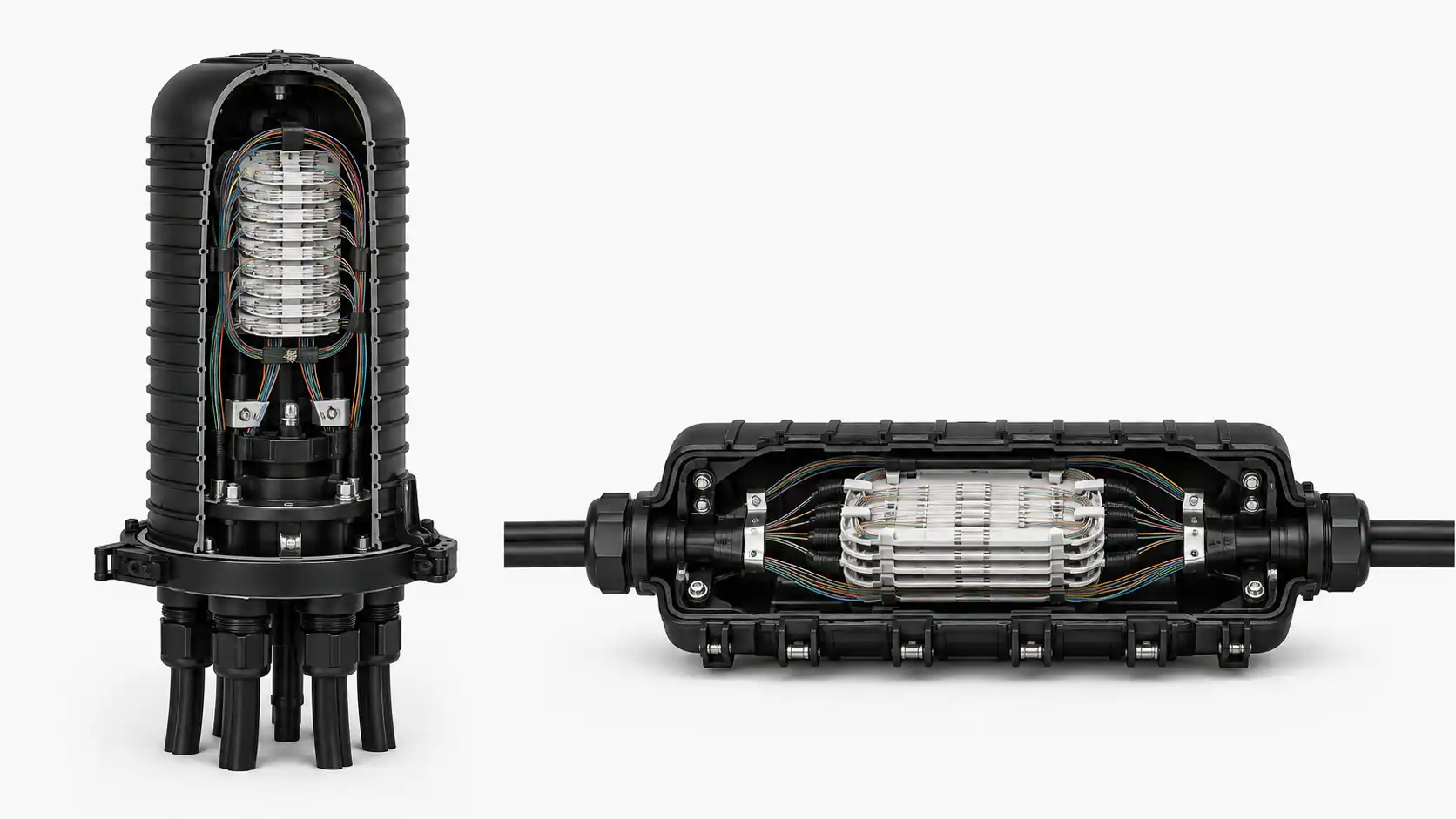
In OPGW systems, wire rope fittings serve to provide the necessary fixing strength for OPGW, preventing deformation that could potentially damage the internal optical fibers.
In a typical guying load path, force flows like this:
Structure attachment → dead-end/grip/clamp → connecting hardware → (optional) adjustment hardware → guy rod/anchor hardware → earth anchor
Wire Rope Fittings is the umbrella term for the metal hardware in that path, especially the parts between the structure and the anchor that grip, connect, or adjust the guy strand.
When you're troubleshooting why a guy won't hold tension, you're usually looking at one of these root causes:
Insufficient grip (strand slips under sustained tension or shock load)
Misalignment / side loading (pins, clevises, plates wear quickly; holes elongate)
Poor installation process control (compression sleeves crimped incorrectly; wedges not seated)
Wrong product for the application (preformed grips used outside intended range; clamp size mismatch)
That's why selection and installation should be treated as a system decision, not a part-number decision.

How Wire Rope Fittings Are Commonly Classified
Guy Wire Hardware: Three Functional Categories
Fastening (gripping) fittings
These touch the guy strand directly and must develop and maintain holding strength.
Common examples include:
- Wedge Type Dead End Clamp
- UT Type Tension Clamp
- NUT Type Tension Clamp
- Compression Dead End Clamp
- Compression Sleeve Dead End
- Preformed Guy Grip Dead End / guy wire dead end grips
Adjusting fittings
Used to set and fine-tune guy tension during installation and later re-tensioning.
Connecting fittings
Used to assemble the load path: U-rings, shackles, clevises, link plates, and anchor plates.
These don't "grip" strand, but they determine whether the load path is straight and stable.
A Practical Selection Process for Wire Rope Fittings
Before you compare brands or ask for quotes, lock down the basics:
Step 1: Confirm strand basics
You need the strand diameter, construction (strand count), lay, and coating type.
Step 2: Decide where adjustment is truly needed
If you expect settlement, seasonal movement, or commissioning re-tensioning, plan for adjustability (often at the lower end).
If your priority is long-term stability with minimal adjustment, choose a termination method that is robust and controllable in the field (process matters as much as product).
Step 3: Match termination type to field capability
Compression solutions can be extremely reliable, but only if the crew has correct tooling, dies, and inspection discipline.
Wedge dead ends can be quick and strong, but only if seating and direction are correct.
Preformed grips are clean and consistent when used within their range, but they are not universal.
Step 4: Check geometry and corrosion environment
Any termination that creates a bent load path will amplify wear.
Coastal/industrial environments demand better corrosion protection and more frequent inspection.
Step 5: Anchor-side hardware is part of the same system
A perfect dead-end clamp won't save a system that's pulling across an anchor plate at a bad angle.
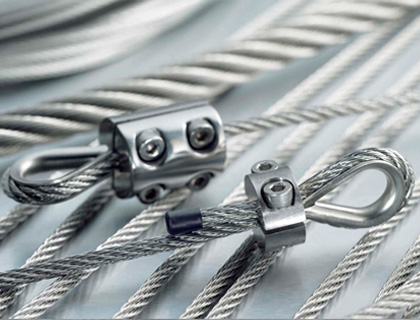
Wire Rope Fittings You'll See Most Often (What They Do and What Goes Wrong)
Wire Rope Fittings for Gripping: Wedge Type Dead End Clamp
A Wedge Type Dead End Clamp holds the strand by forcing it into a tapered seat using wedge action. In simple terms: tension increases the wedging force, which increases grip-when installed correctly.
Where it fits best
Upper guy terminations where fast installation and a compact assembly matter
Situations where you may need to remove and reconfigure hardware
What commonly goes wrong
Wedge not fully seated: it may look "in," but under load it creeps.
Wrong direction: wedge bodies are directional; reversing the load path reduces holding.
Insufficient tail management: short tail length or poor end retention can contribute to slippage.
Field habit that prevents most issues
After initial loading, re-check seating and confirm there's no movement relative to reference marks.
NE-type wedge dead ends (non-adjustable)
Non-adjustable wedge dead ends are commonly used for upper guy attachment where you're not relying on the dead end itself for adjustment.

NUT/UT-related wedge assemblies (adjustable variants exist)
Some wedge-based assemblies incorporate adjustable components. If you're using an adjustable configuration, treat it like an adjustment device: ensure thread engagement and lockout features are correct.

UT Type Tension Clamp: Simple Hardware
A UT Type Tension Clamp is often used as a non-adjustable gripping and connection solution, especially on upper guy attachments. It's appealing because it's straightforward, quick to assemble, and easy to inspect visually.
Where it fits best
Upper guy points where the geometry is clean and alignment is easy
What commonly goes wrong
Side-loading: clevis/pin and clamp alignments drift under tension, causing uneven wear.
"Simple" hardware still needs correct orientation and tightening sequence.
NUT Type Tension Clamp
A NUT Type Tension Clamp (often described as adjustable) is typically used on the lower guy connection where crews need controlled tensioning and later re-tensioning. This is one of the most valuable categories of Guy Wire Hardware because it allows you to correct for real-world conditions-tolerance stack-up, anchor settlement, temperature swings, and initial strand bedding-in.
Where it fits best
Lower end connections where adjustment is expected over time
Builds where commissioning includes a re-tension step after initial loading
What commonly goes wrong
No adjustment left: the assembly is installed with the adjustment near its limit.
Insufficient thread engagement: looks tight, but the load-bearing engagement is inadequate.
No lockout: vibration and cycling gradually back the system off.
Compression Dead End Clamp
A Compression Dead End Clamp relies on a properly crimped sleeve to transfer load from strand to fitting. These can be excellent, especially when you want long-term stability and minimal mechanical fretting.
Where it fits best
Permanent terminations where you can enforce tooling and inspection control
What commonly goes wrong
Wrong die or mismatched sleeve/strand spec
Incorrect crimp sequence (order and spacing matter)
Insufficient crimp length or incomplete compression
No inspection record, making later troubleshooting guesswork
Preformed Guy Grip Dead End and Guy Wire Dead End Grips
A Preformed Guy Grip Dead End (often searched as guy wire dead end grips) uses preformed helical rods to distribute load along the strand. When correctly sized and installed, it can reduce point stresses and simplify installation.
What commonly goes wrong
Size mismatch (strand diameter or construction doesn't match the grip range)
Wrong application (not every preformed family is intended for every type of line or wire)
Improper wrap (incomplete seating or uneven contact)
Connection Hardware That Quietly Makes or Breaks the System

Guy wire anchor plate: keep the load path straight
A guy wire anchor plate and related connecting hardware (clevises, shackles, U-rings) often fail by geometry rather than strength. A plate pulling at a sideways angle will accelerate wear on pins and holes, and the guy will drift off tension as components settle into alignment.
Checklist for anchor-plate geometry
Is the guy line pulling straight through the plate/clevis axis?
Are holes and pins sized correctly and free to rotate (not binding)?
Is the assembly free of twists and unintended bends?
Twin guy assemblies and balancing plates
When two smaller strands are used to replace one larger strand, the balance plate and link hardware must keep forces reasonably even. Two guys are not automatically "balanced."
They're balanced only if:
lengths are matched,
tension is matched,
angles are matched,
hardware geometry doesn't favor one side.
If one side runs tighter, it will carry more load, fatigue faster, and eventually become the "single point" you were trying to avoid.
FAQ
Q: Why does a guy wire lose tension even when the strand isn't broken?
A: The most common causes are:
Micro-slip at the termination (gripping hardware didn't develop full holding power)
Anchor settlement (ground movement reduces effective tension)
Thermal cycling (expansion/contraction over seasons)
Side-loading / misalignment (hardware "walks" into a new position under load)
Improper locking on adjustable assemblies (vibration gradually backs it off)
Q: What is the main advantage of a Wedge Type Dead End Clamp?
A: A Wedge Type Dead End Clamp tightens its grip as tension increases, making it popular for upper guy terminations where compact, fast installation is valuable.
Q: UT Type Tension Clamp vs. NUT Type Tension Clamp: what's the difference?
A: UT Type Tension Clamp: typically non-adjustable, often used at upper attachments. Simple and quick, but sensitive to misalignment.
NUT Type Tension Clamp: typically adjustable, often used at the lower connection where controlled tensioning and later re-tensioning are expected.
Q: What are the telltale signs of a bad compression crimp?
A: uneven crimp pattern or missing crimps
cracks or sharp deformation at sleeve edges
strand damage near sleeve entry
visible slippage marks after loading
Articles you might be interested in
Start your reading journey now!