When people search for GPON in FTTH, they are usually trying to untangle two related but different ideas. GPON (Gigabit-capable Passive Optical Network) is a fiber access technology defined by the ITU-T G.984 standard series. FTTH (Fiber to the Home) is a deployment model in which optical fiber extends all the way to the subscriber premises. In short, FTTH describes where the fiber goes; GPON describes how the shared access network behind that fiber connection is built and managed.
GPON remains closely associated with FTTH because it supports point-to-multipoint fiber access using passive optical splitters, operates at 2.488 Gbit/s downstream and 1.244 Gbit/s upstream as specified in ITU-T G.984.2, and can reach up to 20 km of differential fiber distance between the central office and the farthest subscriber. That combination of bandwidth, reach, and cost efficiency is why GPON has become the dominant access layer in residential and light-business FTTH deployments around the world. According to industry analyses, more than 65 percent of new fiber broadband rollouts in 2024 were still based on GPON technology.

What Is GPON in FTTH?
GPON stands for Gigabit-capable Passive Optical Network. It was first ratified by the ITU-T in 2003 and has been revised multiple times since. The standard specifies the physical layer, transmission convergence layer, and management protocols for a shared fiber access system that carries data, voice, and video over a single optical infrastructure.
FTTH, by contrast, is not a technology standard but a deployment architecture. An operator can build an FTTH network using GPON, XGS-PON, EPON, or even active Ethernet. GPON is simply the most widely adopted choice because it allows one feeder fiber from the central office to serve dozens of subscribers through passive PLC splitters, avoiding the need for powered switching equipment in the field.
In a typical GPON-based FTTH deployment, the operator delivers internet access, VoIP telephony, and IPTV over the same shared fiber path. For suburban residential rollouts and light small-and-medium business (SMB) profiles, that triple-play capability on a single passive infrastructure is often the strongest argument for choosing GPON over alternatives.
GPON Architecture: How a GPON FTTH Network Works
A GPON FTTH network moves traffic from the service provider to many end users through a point-to-multipoint optical design. The downstream signal is broadcast from the central office toward all connected subscribers, while upstream traffic from each subscriber is coordinated through a time-division multiple access (TDMA) scheme defined in ITU-T G.984.3 so that transmissions from different ONTs do not collide.
The process follows a logical path. At the provider side, the OLT (Optical Line Terminal) aggregates traffic from the core network and transmits it into the feeder fiber. That feeder fiber reaches a passive optical splitter, which divides the optical signal and distributes it across multiple drop fibers leading to individual subscribers. At each subscriber location, an ONT (Optical Network Terminal) or ONU (Optical Network Unit) receives the optical signal and converts it to electrical interfaces-typically Ethernet, Wi-Fi, or analog voice ports-that customer devices can use.
Because the splitter requires no electrical power and has no active electronics, the outside plant between the central office and the subscriber is entirely passive. That passive design reduces field maintenance, eliminates the need for remote power feeding, and is one of the primary reasons operators favor GPON for large-scale FTTH rollouts.

GPON Components in FTTH: OLT, Splitter, ODN, and ONT/ONU
OLT (Optical Line Terminal)
The OLT sits at the service provider's central office or exchange. It serves as the control point of the GPON system: it manages bandwidth allocation via Dynamic Bandwidth Assignment (DBA), handles subscriber authentication, and interfaces with the upstream aggregation or core network. When planning a GPON deployment, the OLT's port density, uplink capacity, and management capabilities determine how many PON ports-and therefore how many subscribers-a single chassis can support.
Optical Splitter and ODN
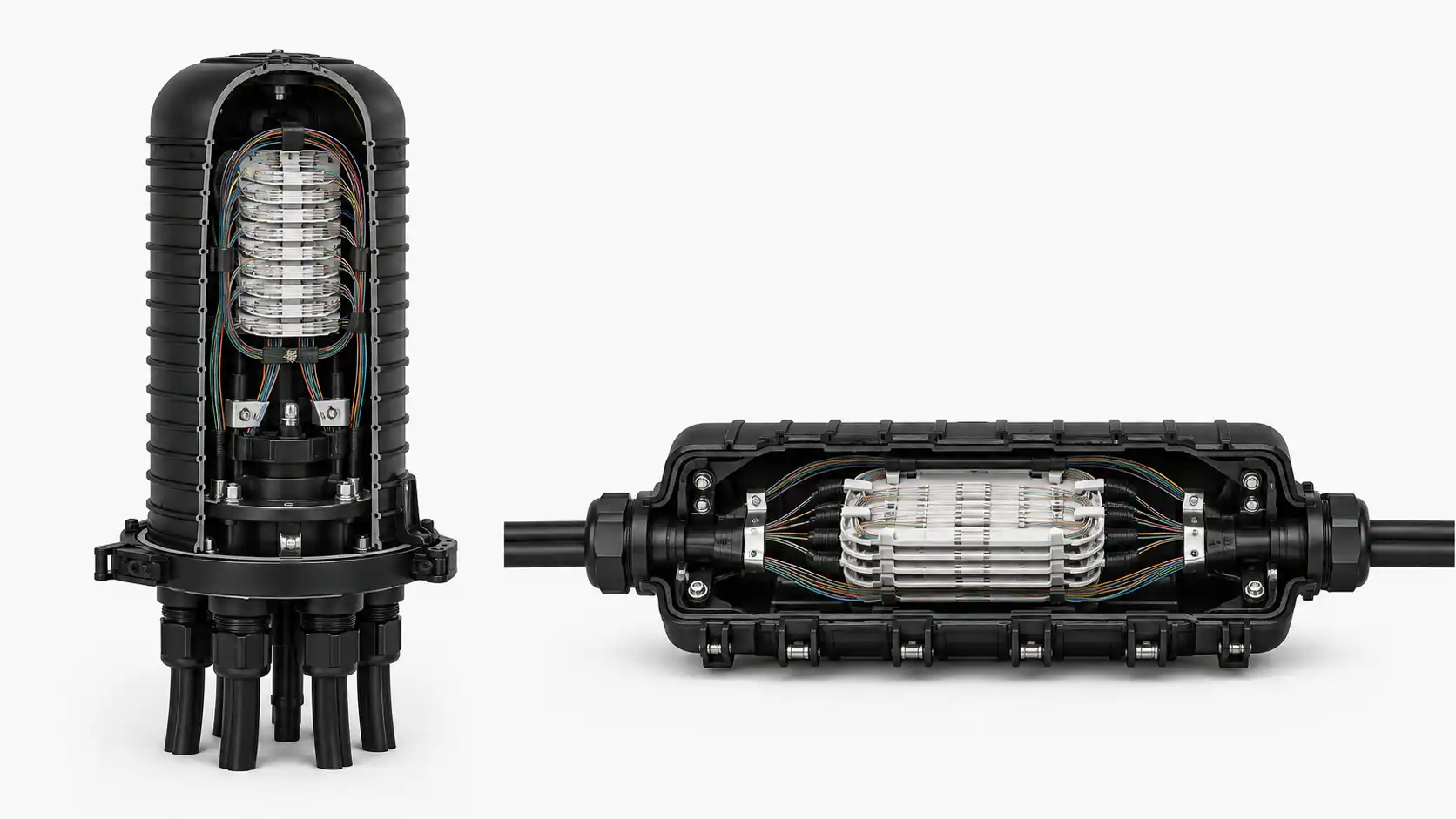
The optical splitter is the component that enables one feeder fiber to serve multiple subscriber fibers. It sits within the broader ODN (Optical Distribution Network), which includes all passive fiber, splice closures, distribution boxes, and related infrastructure between the OLT and the ONTs.
GPON supports split ratios of up to 1:128 according to the G.984 physical layer specification, though 1:32 and 1:64 are the most common configurations in real-world deployments. Higher split ratios serve more subscribers per feeder fiber but introduce greater optical insertion loss, which reduces the available optical power budget and limits reach. Operators must balance split ratio, fiber distance, splice loss, and connector loss as a single design exercise-not choose them independently.
ONT and ONU
Both terms refer to subscriber-side optical termination equipment. In strict ITU-T usage, an ONT is a single-subscriber device located at the customer premises, while an ONU may serve multiple subscribers (for example, in a multi-dwelling unit). In everyday industry discussion, the two terms are often used interchangeably. The ONT or ONU converts the optical signal to Ethernet and other service interfaces, and its management is handled remotely from the OLT via the OMCI (ONU Management and Control Interface) protocol defined in ITU-T G.988.

Why GPON Is Still Widely Used in FTTH Deployments
Despite the emergence of 10G-class PON standards, GPON continues to dominate new FTTH builds in many regions. Several factors explain its staying power.
Sufficient bandwidth for mainstream residential services. Standard GPON data rates cover the majority of residential broadband, IPTV, VoIP, and connected-home use cases. In a 1:32 split configuration, each subscriber has access to roughly 75 Mbit/s of downstream capacity on average-more in practice, because not all users transmit simultaneously. For operators whose service tiers top out at 500 Mbit/s or 1 Gbit/s shared, GPON handles the load without difficulty.
Lower outside-plant operating cost. Because the ODN is entirely passive, operators avoid deploying powered cabinets, battery backup, or climate-controlled enclosures in the field. In suburban and rural rollouts where cabinet locations are expensive or logistically difficult, this advantage can materially lower both capex and ongoing maintenance cost.
Proven point-to-multipoint economics. One OLT port plus one feeder fiber can reach 32 or 64 homes, which is far more capital-efficient than running a dedicated fiber and active port for every subscriber, as active Ethernet requires. This shared-fiber model is the foundation of GPON's cost advantage in residential FTTH, and it is why operators in markets from Southeast Asia to Latin America continue to choose GPON for greenfield builds.
Coexistence-ready upgrade path. The ITU-T designed XGS-PON (G.9807.1) to operate on different wavelengths from GPON, allowing both technologies to share the same ODN fiber and splitters simultaneously. That means an operator can begin migrating high-demand subscribers to XGS-PON without replacing the outside plant or disrupting existing GPON users. The investment in passive infrastructure is preserved, which makes GPON not just a current choice but a sensible starting point on a longer PON roadmap.
Where GPON Has Limits
GPON is not the right answer for every FTTH project, and understanding its boundaries is just as important as understanding its strengths.
Shared bandwidth under pressure. In dense multi-dwelling unit (MDU) environments with heavy concurrent usage-4K/8K streaming, cloud gaming, large file uploads-the shared 2.4 Gbit/s downstream pipe can become a bottleneck, especially at high split ratios. Operators targeting premium business tiers or symmetrical multi-gigabit services will find GPON's asymmetric 2.4/1.2 Gbit/s capacity limiting.
Split ratio, distance, and optical budget are interdependent. A 1:64 split introduces roughly 18–21 dB of insertion loss from the splitter alone, before accounting for fiber attenuation, splice loss, and connector insertion loss. GPON's Class B+ optics provide a maximum optical budget of about 28 dB. In practice, that means a 1:64 split severely constrains reach-sometimes to under 10 km-and leaves little margin for future splices or repairs. Treating split ratio as a standalone decision without modeling the full optical loss budget is one of the most common planning errors in GPON deployments.
Future demand may arrive sooner than expected. Symmetrical high-speed services, 5G small-cell backhaul, and enterprise cloud connectivity are driving bandwidth requirements upward. If an operator already sees strong demand signals in these areas, evaluating XGS-PON from the outset-rather than planning a mid-life upgrade-can avoid disruptive and costly retrofits.
GPON vs. XGS-PON vs. Active Ethernet: A Practical Comparison
The table below summarizes the key differences that matter most for FTTH planning and technology selection.
| Parameter | GPON (G.984) | XGS-PON (G.9807.1) | Active Ethernet (P2P) |
|---|---|---|---|
| Downstream / Upstream | 2.488 / 1.244 Gbit/s | 9.953 / 9.953 Gbit/s (symmetric) | 1G or 10G per subscriber (dedicated) |
| Bandwidth model | Shared (TDMA) | Shared (TDMA) | Dedicated per subscriber |
| Typical split ratio | 1:32 or 1:64 | 1:32 or 1:64 (up to 1:128) | N/A (point-to-point) |
| Max physical reach | 20 km (differential distance) | 20 km | Depends on optics (typically 10–80 km) |
| Outside plant | Passive (no field power) | Passive (no field power) | Active switches in field |
| Symmetry | Asymmetric | Symmetric | Symmetric |
| Coexistence on same ODN | Yes (with XGS-PON via WDM) | Yes (with GPON via WDM) | Separate fiber required |
| Best fit | Residential FTTH, light SMB, suburban/rural rollouts | Multi-gig residential, business services, 5G backhaul | Enterprise campus, high-SLA business, dedicated-bandwidth requirements |
| Relative cost per subscriber | Lowest | Moderate | Highest |

When to choose GPON: The operator's service tiers are residential broadband, basic IPTV, and VoIP; the subscriber density fits a 1:32 or 1:64 split within optical budget; and cost-per-home-passed is a primary decision driver.
When to choose XGS-PON: Symmetrical multi-gigabit services are part of the near-term product roadmap; the operator needs headroom for 5G backhaul or business Ethernet services on the same PON; or a greenfield build should be future-proofed from day one. According to the Fiber Broadband Association's 2024 deployment survey, many North American operators are now building new FTTH networks on XGS-PON while continuing to operate GPON on existing plant.
When to choose Active Ethernet: The project requires guaranteed dedicated bandwidth per subscriber, such as enterprise campus networks or high-SLA commercial buildings, and the project economics justify higher per-subscriber equipment and fiber costs.
Practical Planning Tips for GPON FTTH Projects
Define the service mix before selecting technology
Start by listing the services the network must deliver: residential broadband tiers, IPTV channels, VoIP lines, SMB Ethernet, mobile backhaul. The required bandwidth per subscriber and the symmetry of traffic flows will tell you whether GPON is sufficient or whether XGS-PON should be the baseline. Selecting a PON standard before clarifying the service objective is one of the most common mistakes in FTTH planning.
Model the optical budget as a complete system
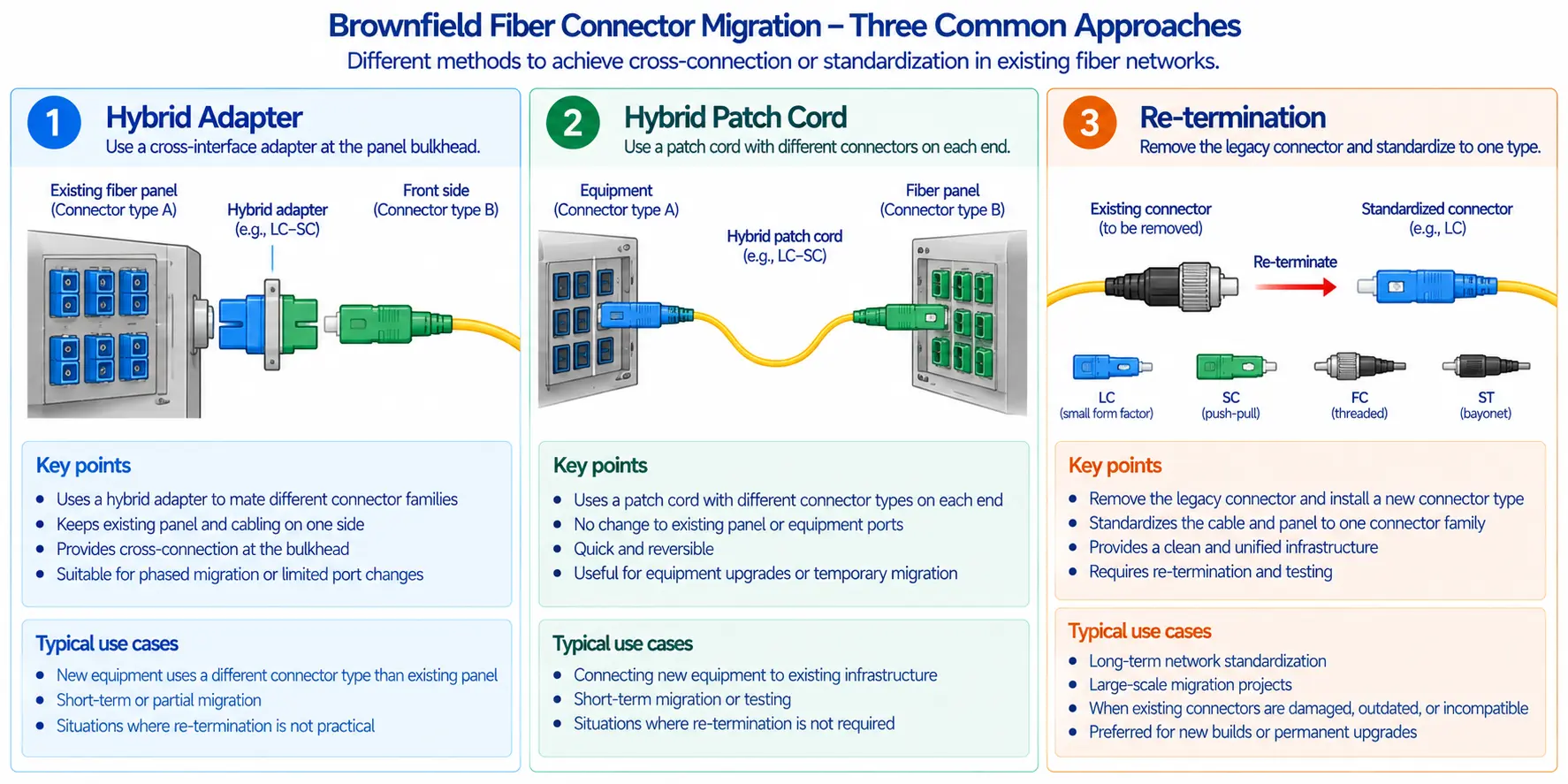
Optical loss accumulates across every element in the path: fiber attenuation (roughly 0.35 dB/km at 1310 nm for standard single-mode fiber), splitter insertion loss, splice loss, and connector loss. A 1:32 PLC splitter alone introduces approximately 15–17 dB of loss. Add 10 km of fiber, a handful of splices, and connectors at patch panels, and the total loss can approach or exceed Class B+ limits. Always model these elements together before committing to a split ratio. For deeper background on how fiber optic splitters affect network design, consult splitter specifications matched to your planned ODN topology.
Plan the upgrade path during initial design
If the service area is likely to need symmetrical multi-gigabit capacity within five to seven years, preserve the option to overlay XGS-PON on the same ODN from the start. That means selecting splitters and fiber that support the XGS-PON wavelength plan (1577 nm downstream, 1270 nm upstream) and ensuring the OLT chassis can accept combo PON line cards. Retrofitting upgrade capability after the network is live is significantly more expensive and disruptive.
Include ONT/ONU lifecycle management
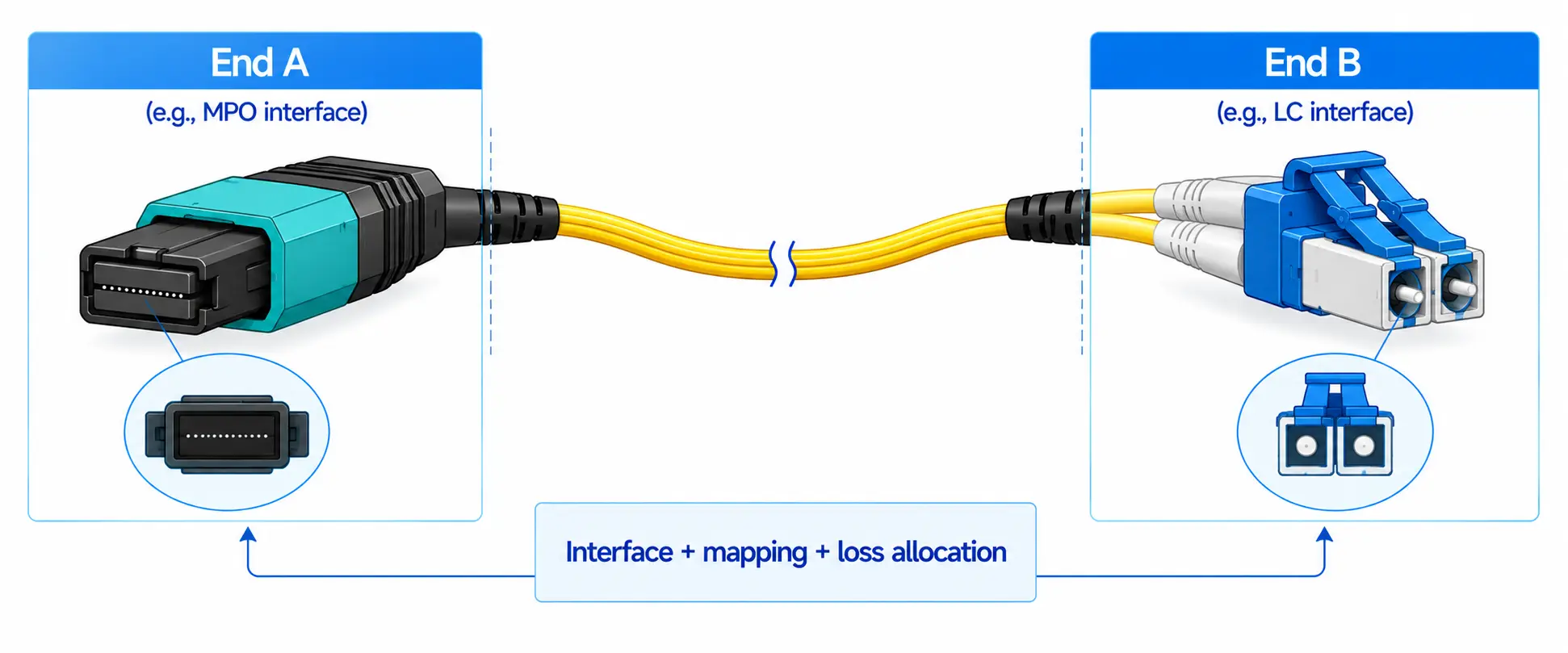
Subscriber-side equipment is not just a box at the edge. Provisioning, firmware management, remote diagnostics, and eventually hardware refresh all need to be planned. As the subscriber base grows, the operational cost of managing thousands of ONTs can exceed the initial capital cost if the management platform and processes are not designed in from the beginning. When selecting ONTs, ensure the fiber optic connectors and form factors match the installation environment-indoor desktop ONTs for single-family homes, SFP-based ONUs for MDU risers, and ruggedized units for outdoor cabinets.
Common Mistakes in GPON FTTH Deployments
Confusing GPON with FTTH is surprisingly common, even in technical discussions. FTTH is the deployment architecture; GPON is one of several access technologies that can serve it. Mixing these terms leads to unclear design conversations, misaligned vendor specifications, and avoidable planning errors. For a broader look at FTTH deployment models including FTTN and FTTB, see this guide to building an FTTH network.
Choosing a split ratio in isolation-without simultaneously accounting for reach, fiber quality, connector count, and future splice allowance-is another frequent error. A 1:64 split may look attractive on a per-subscriber cost spreadsheet, but it can leave the network with no optical margin for repairs, additional splices, or future splitter reconfiguration.
Ignoring the next upgrade step is the third major pitfall. Even when GPON is the right technology today, the passive infrastructure being built will need to last 20 years or more. Projects that do not consider how the ODN will support a future XGS-PON or 50G-PON overlay risk locking the operator into a costly forklift upgrade later.
Frequently Asked Questions
Is GPON the same as FTTH?
No. FTTH describes a network architecture where fiber reaches the subscriber's home. GPON is one specific access technology-defined by the ITU-T G.984 standard-used to deliver broadband services over that fiber. An FTTH network can also be built with XGS-PON, EPON, or active Ethernet.
What is the difference between ONT and ONU?
In ITU-T terminology, an ONT (Optical Network Terminal) is a subscriber-side device serving a single customer, while an ONU (Optical Network Unit) can serve multiple customers-for example, providing service to several apartments in an MDU. In common industry usage, the two terms are frequently treated as synonymous.
Is GPON better than XGS-PON?
Neither is universally better; they serve different requirements. GPON is more cost-effective for residential FTTH where asymmetric bandwidth up to 2.4 Gbit/s shared is sufficient. XGS-PON delivers symmetric 10 Gbit/s shared capacity and is the better choice when multi-gigabit services, business Ethernet, or 5G backhaul are on the roadmap. The two can coexist on the same fiber, so many operators deploy GPON initially and overlay XGS-PON as demand grows.
What split ratio is common in GPON?
The most widely deployed split ratios are 1:32 and 1:64. While the G.984 standard supports up to 1:128, higher splits consume more optical budget and reduce the maximum reach. In suburban residential deployments, 1:32 typically offers a good balance between subscriber density and optical margin. Dense urban areas sometimes use 1:64, but only when the fiber distances are short enough to stay within the power budget.
Is GPON symmetrical?
No. Standard GPON is asymmetric: 2.488 Gbit/s downstream and 1.244 Gbit/s upstream. For applications requiring symmetric bandwidth-such as business cloud backup, video conferencing-heavy environments, or 5G small-cell backhaul-XGS-PON (symmetric 10 Gbit/s) is the more appropriate technology.
Can GPON support IPTV and VoIP?
Yes. GPON was designed from the start to carry triple-play services: data, voice, and video. The GEM (GPON Encapsulation Method) framing supports traffic classification and quality-of-service mechanisms that allow operators to prioritize real-time video and voice traffic over best-effort internet data.
Can GPON be upgraded without replacing all fiber?
In most cases, yes. Because XGS-PON uses different wavelengths from GPON (1577 nm downstream and 1270 nm upstream versus 1490 nm and 1310 nm for GPON), both technologies can share the same fiber and splitters simultaneously using wavelength-division multiplexing. The operator upgrades the OLT cards and replaces the ONTs on a per-subscriber basis, while the passive ODN remains in place. This coexistence capability is one of the strongest arguments for investing in high-quality passive infrastructure during initial GPON deployment.
How far can GPON reach?
The ITU-T G.984 standard specifies a maximum differential fiber distance of 20 km between the OLT and the farthest ONT. The achievable distance in a specific deployment depends on the optical budget class (typically Class B+ at 28 dB), the split ratio, and the total accumulated loss from fiber, splices, connectors, and splitters. Reach extension techniques defined in G.984.6 can push the physical distance further in specialized scenarios.

Conclusion
GPON continues to matter in FTTH because it combines a proven point-to-multipoint architecture, a fully passive outside plant, and service capabilities that still match the majority of residential broadband demand. With more than 540 million GPON FTTH subscribers worldwide and ongoing greenfield deployments across multiple continents, it is far from obsolete. But GPON is best understood as one stage in a longer PON evolution-not as a permanent endpoint. Operators who build their ODN with future coexistence in mind, model their optical budgets rigorously, and plan their upgrade triggers early will get the most value from their GPON investment while keeping the door open for XGS-PON, 25G-PON, and beyond.
If you are planning an FTTH project, the practical starting point is straightforward: define the service mix, validate the split ratio and reach against a complete optical loss budget, and decide whether the network should be designed for today's demand alone or for the next upgrade cycle. For guidance on selecting the right passive components-from fiber optic cable installation to splitter and connector selection-working with an experienced fiber infrastructure supplier can help translate planning decisions into a reliable, upgrade-ready network.