Quality Control from Preparation to Acceptance,A hands-on reference for fiber technicians
What a Fiber Splice Enclosure Actually Does
Fiber optic splicing does not end when the fusion splicer reports an acceptable loss reading. The splice is only complete when the joint has been properly protected, tested, and organized inside a fiber splice enclosure. Understanding this distinction is what separates routine work from genuinely reliable infrastructure.
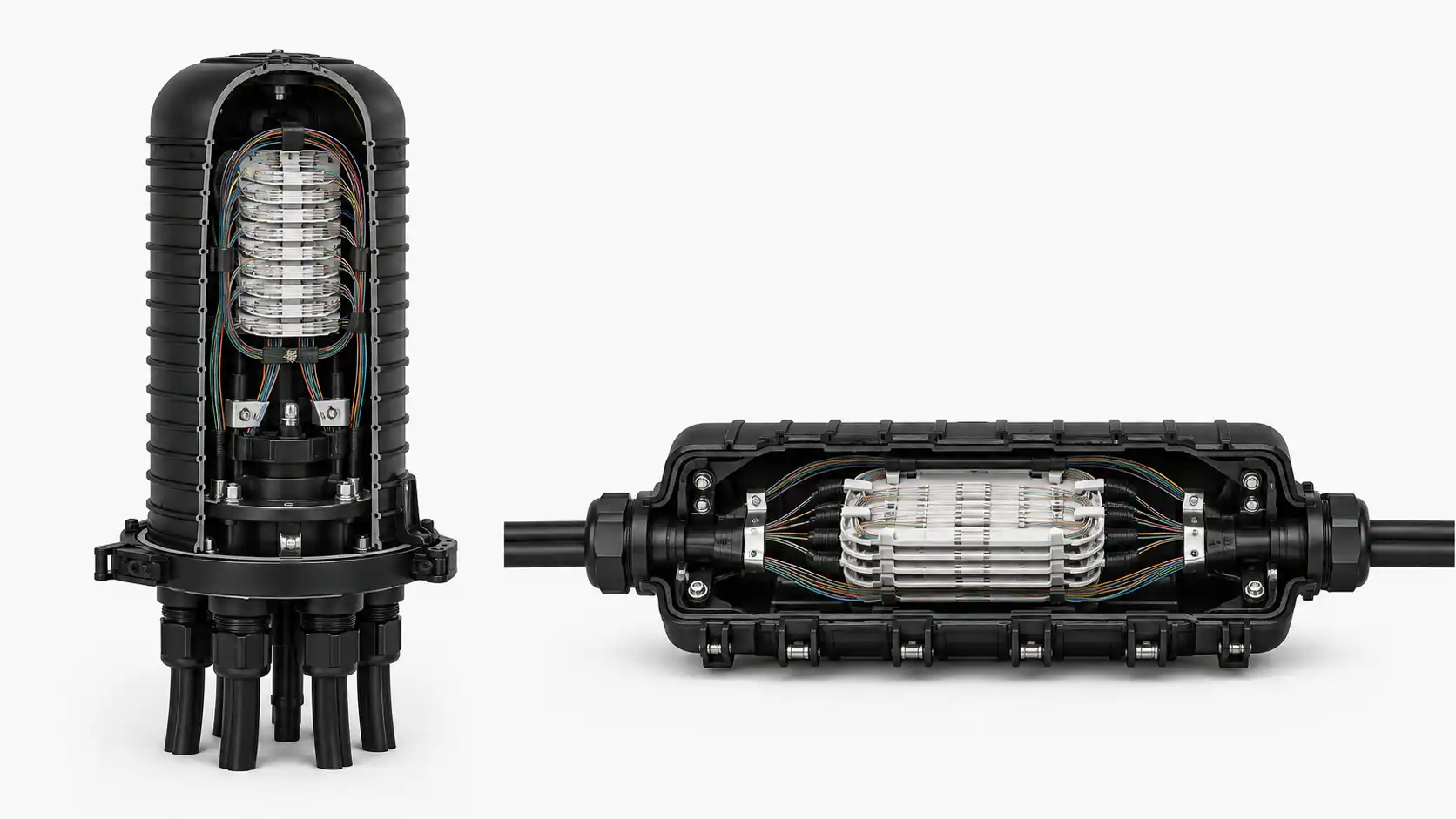
A splice enclosure performs four critical functions: providing a sealed, moisture-proof, dust-proof, and vibration-resistant barrier for exposed fiber splices (outdoor enclosures typically require an IP68 rating per IEC 60529); managing slack fiber to prevent bend-induced attenuation; isolating internal splice points from external cable tension and torsion through dedicated clamping hardware; and maintaining clear fiber routing paths and labeling so that maintenance crews can quickly locate individual fibers when the enclosure is reopened.
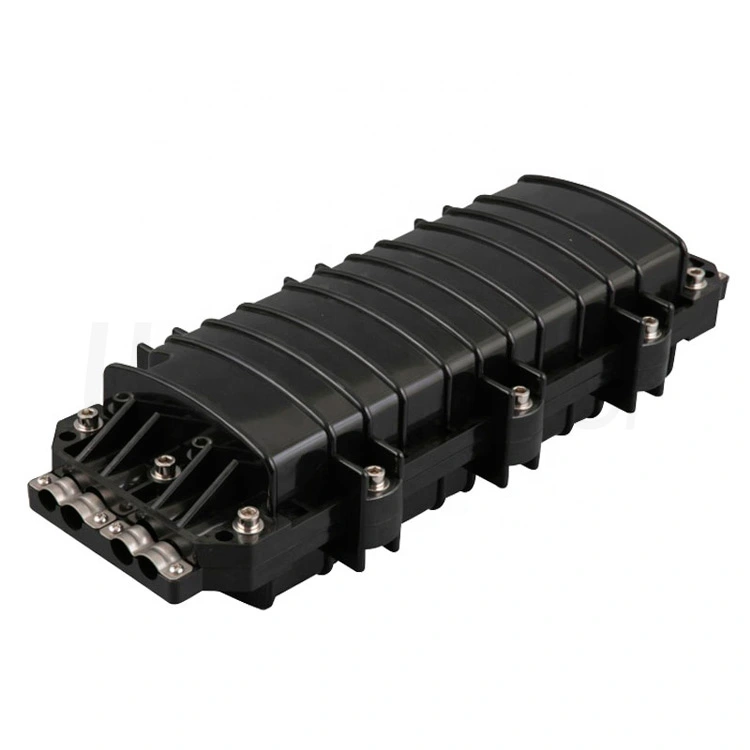
Fiber optic splice enclosures come in various form factors - dome, inline, wall-mount, and others - each suited to different cable counts, routing requirements, and installation environments. The right type should be selected during the design phase, not improvised on-site.
Pre-Splicing Preparation
Verify Enclosure Compatibility
Before splicing fiber cable, confirm that the enclosure capacity (common sizes range from 24 to 144 fibers) matches the actual cable fiber count. Verify the number of fiber splice trays, their stacking arrangement, and the cable entry and exit port layout. If the cable includes metallic armor or a central strength member, ensure the enclosure has the corresponding grounding and anchoring hardware - metallic elements must be properly bonded at both ends, a step that is frequently overlooked. Discovering a capacity mismatch or routing conflict mid-job costs far more than five minutes of pre-work verification.
Tool and Equipment Check
Confirm each item is present and in working order: fiber strippers, ≥99% isopropyl alcohol with lint-free optical-grade wipes, a precision fiber cleaver, a fusion splicer, heat-shrink splice protectors, a heat oven, and an OTDR or optical power meter. Pay special attention to whether the cleaver blade needs rotation or replacement, whether the splicer electrodes and V-grooves are clean, and whether the heat oven functions normally. A quick calibration check before each job is well worth the time.
Slack Fiber Planning
Plan for 1 to 1.5 meters of slack fiber on each side inside the enclosure, adjusted to the fiber splice tray dimensions and routing path. Too little slack forces tight bends that increase macro-bend loss or risk breakage; too much makes coiling difficult and crowds the tray. Decide on the slack length during the planning phase - not while you are already trying to coil fiber into the tray.
How to Splice Fiber Optic Cable: Step by Step
Strip the Jacket and Coating
Use a cable slitter to remove the outer jacket, then strip the buffer coating down to the 125 μm bare glass with precision strippers. For loose-tube cables, separate the buffer tubes from the cable body and secure them at the tray entry point before stripping individual fibers. Strip length is typically 30 to 50 mm - consult the splicer manual for the exact requirement. Apply steady, even pressure: too light leaves coating residue that contaminates the cleave; too heavy can create micro-cracks in the glass. Maintain a bend radius greater than 30 mm throughout.
Clean the Bare Fiber
Wipe the stripped fiber with a lint-free optical wipe dampened with ≥99% isopropyl alcohol, stroking in one direction only. Use a fresh wipe surface each time. Three points matter here. First, cleanliness applies to your tools as well - the cleaver's V-groove and the splicer's alignment stage collect microscopic particles from the stripping process and will re-contaminate fiber if left dirty. Second, do not use compressed air; it can carry moisture that creates new contamination. Third, never touch the bare glass with your fingers after cleaning - skin oils significantly weaken fiber splices.
Cleave with Precision
Achieve a flat, smooth, perpendicular end face in a single stroke using a high-precision cleaver. Target an end-face angle deviation of 0.5° or less (the industry standard requires ≤1°). The bare fiber extension beyond the cleaver clamp must match the splicer's required cleave length - this varies by manufacturer, so check the manual. Inspect the end face with the splicer's built-in camera or a fiber microscope. If you see chips, a lip, or excessive angle, re-cleave immediately. During high-volume splicing of fiber cable, rotate or replace the blade at regular intervals.
Align and Fuse
Load both prepared fiber ends into the splicer V-grooves. The machine automatically aligns, pre-fuses, and completes the main arc fusion. The splicer displays an estimated splice loss immediately after the process. For single-mode fiber, each splice should measure ≤0.1 dB per ITU-T G.652.D. If the reading exceeds 0.15 dB, re-cleave and re-splice. When loss remains high after repeated attempts, investigate end-face quality, cleanliness, and electrode condition systematically rather than simply retrying.
Apply Splice Protection
Slide the pre-loaded heat-shrink splice protector over the joint and place it in the heat oven. The protector shields the fragile bare-glass splice point from mechanical stress, preventing stretch and bend failures. Confirm that the sleeve has fully shrunk with no air bubbles, the reinforcing rod is centered, and both ends are sealed. Avoid overheating, which can deform the sleeve or damage the fiber inside. After cooling, check for any offset or bulging. Use quality splice protection sleeves from reputable suppliers - low-grade alternatives can show failure rates several times higher over a five-year service life.
Route Fiber into Splice Trays
Place each protected splice into its dedicated slot on the fiber splice tray, then coil the slack fiber along the tray's routing channels. Maintain a bend radius of ≥30 mm at all times and avoid crossing fibers. The gold standard for fiber routing: every strand can be individually traced and individually handled without disturbing its neighbors. When stacking multiple trays, ensure the upper tray does not press down on fibers below, and that tray covers do not pinch any strands. Pinch-induced micro-breaks are notoriously hard to locate with an OTDR because they occur so close to the splice point that they appear as a single event. A visual fault locator (VFL) is more effective for catching these.
Test Before Closing
The cardinal rule: never close the enclosure with unresolved problems. Verify every splice before sealing. Reworking in the open state is far cheaper and faster than reopening a sealed fiber splice enclosure - and every reopening increases the risk of accidentally breaking a completed fiber.

Quick-Reference Table
The following threshold values are referenced throughout the splicing process. Keep this table accessible on-site:
| Parameter | Reference Value | Notes |
|---|---|---|
| Strip length | 30–50 mm | Per splicer manual |
| IPA purity | ≥ 99% | Lower purity leaves residue affecting splice quality |
| End-face angle deviation | ≤ 0.5° (std ≤1°) | Re-cleave if out of spec |
| SM splice loss | ≤ 0.1 dB / splice | ITU-T G.652.D; rework if > 0.15 dB |
| Minimum bend radius | ≥ 30 mm | Applies to routing, coiling, and tray storage |
| Slack fiber per side | 1–1.5 m | Adjust to tray size and routing path |
| Enclosure protection (outdoor) | IP68 | Per IEC 60529 |
Checklist
Confirm every item below before sealing the enclosure:
| ☐ | Item | Acceptance Criteria |
|---|---|---|
| ☐ | Cleanliness | All splice points free of secondary contamination; cleaver V-groove and splicer stage cleaned |
| ☐ | End faces | Every cleave inspected and passed - no chips, lips, or angle exceedance |
| ☐ | Splice loss | Every splice ≤0.1 dB; no readings above 0.15 dB left unresolved |
| ☐ | Splice protectors | All heat-shrink sleeves fully shrunk, rod centered, no bubbles or offset |
| ☐ | Bend radius | All fiber in trays and routing paths maintains ≥30 mm radius |
| ☐ | Fiber routing | Each fiber independently traceable, no crossovers; tray clips secured |
| ☐ | Tray stacking | No fiber pinched between stacked trays or under tray covers |
| ☐ | Labeling | Every fiber, splice point, cable entry/exit direction, and tray number marked |
| ☐ | Link testing | OTDR or power meter test completed, data recorded, no anomalous loss points |
| ☐ | Seal readiness | Gasket / O-ring intact; armor grounding confirmed at both cable ends |
Testing and Acceptance
On-Site Quick Tests
The splicer's estimated loss provides a first-pass judgment on each splice. A visual fault locator (VFL) serves as a rapid continuity check and is particularly effective at revealing close-proximity breaks and severe bends. Both checks should be completed before the enclosure is sealed.
Link-Level Testing
An OTDR locates every event along the link - including individual fiber splices, connectors, and breaks - and measures loss and reflectance at each point. An optical power meter paired with a light source verifies end-to-end link loss against the design budget. The two methods complement each other: OTDR excels at pinpointing problems; power-meter testing excels at confirming overall performance. Use both when possible, and archive all test data for future audits.
Handling Anomalies
Common causes of abnormal loss include poor end-face quality or contamination at the splice, excessive bend in the tray, uneven stress inside the splice protector, and tray or cover compression on the fiber. Every anomaly must be located and resolved before the enclosure is sealed.
Common Field Problems
Disorganized Fiber Routing
Tangled slack fiber increases mechanical interference inside the splice enclosure and creates a "touch it and everything moves" situation for the next technician. Field experience shows that many fiber breaks do not occur at the splice itself but during subsequent enclosure re-entries when trays are rearranged. Disorganized routing turns a routine maintenance task into a high-risk operation with significant potential for collateral damage.
Missing Labels
Skipping labels during initial construction feels harmless, but during a capacity upgrade or emergency repair, unlabeled enclosures force technicians to test fibers one by one to identify routing. Label every fiber, every splice, every cable entry and exit direction, and every tray number.
Improper Sealing
A misaligned gasket, unevenly tightened bolts, or an incompletely seated cover can allow moisture to infiltrate over time, corroding splice points and driving up attenuation year after year. For gel-filled cables, seal the cable entry with silicone sealant to prevent gel from migrating into the enclosure. Underground sealed enclosures may require a pressure test after sealing - pressurize the closure and apply leak-detection fluid around all seams to verify integrity.
Testing Only for Continuity, Not Stability
A link that "passes light" is not the same as a link that meets spec. Verify splice loss with an OTDR or power meter, confirm that routing, protection, and sealing are all complete, and pay attention to tensile strength near the splice point. Many long-term failures originate not at the joint but in the adjacent fiber where inadequate protection allowed stress to accumulate.