When you need to terminate fiber optic cables inside an ODF, terminal box, or distribution frame, a fiber optic pigtail cable is the key component that makes it happen. It bridges the gap between bare fiber and a pluggable connector - yet many procurement teams still confuse it with a patch cord, or struggle to determine the right type for their project. Understanding what is a pigtail, how to classify it, and how to choose the right one without overspending or mis-specifying can make a big difference.
What Is a Fiber Optic Pigtail?
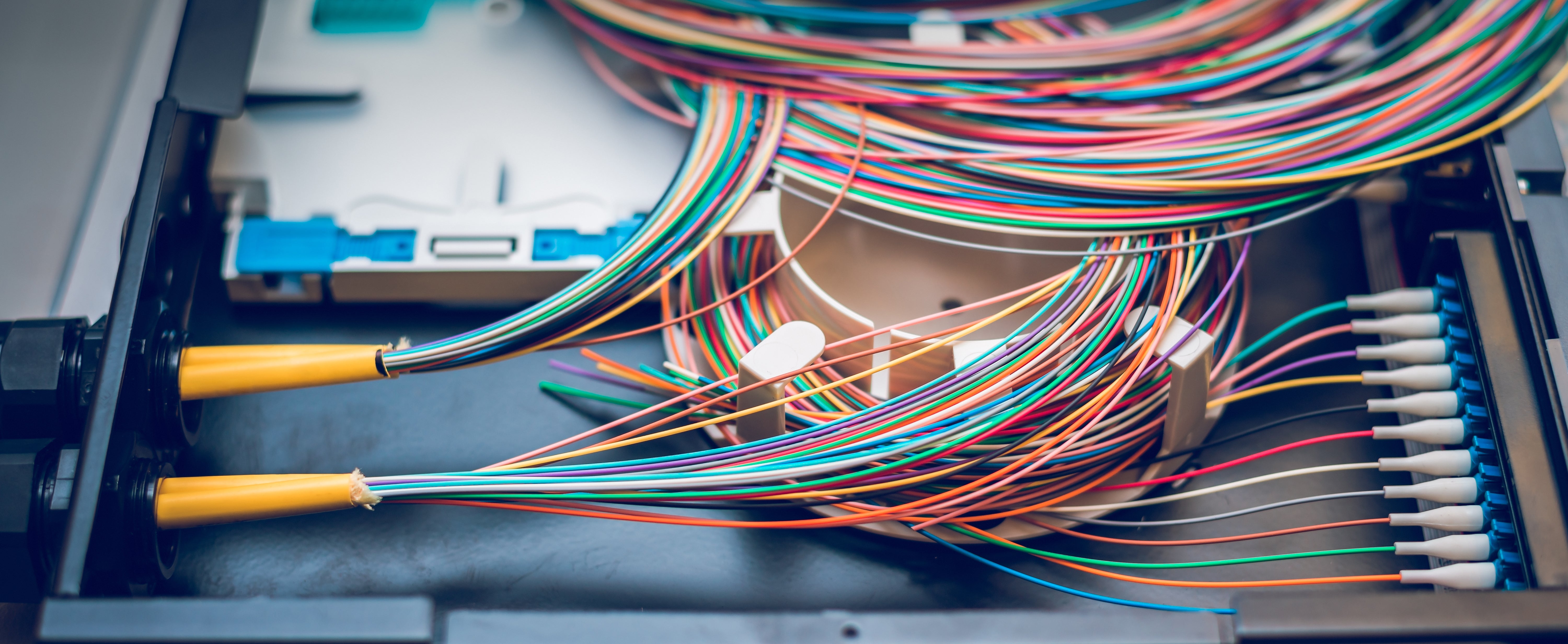
A fiber optic pigtail is a short length of single-fiber cable that comes with a connector pre-terminated on one end, while the opposite end is left as bare fiber. It is commonly used for fiber termination by means of fusion splicing or mechanical splicing inside distribution frames, splice enclosures, or terminal boxes. This type of component helps achieve accurate, reliable, and low-loss connections, making it an essential part of telecom networks, data centers, and other fiber optic communication systems.
Most pigtail cables are manufactured with a 900μm tight-buffered fiber and a PVC outer jacket, in lengths from 1 to 2 meters. Because the connector is factory-terminated and polished under controlled conditions, pigtails deliver better optical performance than connectors terminated in the field. This is the main reason pigtails remain the preferred termination method across professional fiber installations.
Where will you find them? Inside ODFs (Optical Distribution Frames), fiber terminal boxes, distribution boxes, and PON splitter enclosures - anywhere fiber cables need to be terminated and organized for patching. In some regions, particularly the UK and Australia, these components are also referred to as fibre pigtails.

What Is the Purpose of Fiber Pigtail Splicing?
Splicing a fiber pigtail onto a fiber cable converts a raw, unterminated fiber into a connectorized port that can interface with network equipment. Without pigtails, there is no standardized way to connect incoming cables to patch panels, splitters, or transceivers inside an enclosure.
Fusion splicing is the standard method. It uses an electric arc to permanently fuse the two fiber ends together, producing a joint with extremely low loss - typically ≤0.02dB. The alternative, mechanical splicing, holds fibers in alignment without fusing them. It works for temporary repairs or low-volume jobs where a fusion splicer is not on hand, but the loss is higher (0.1–0.5dB) and the joint is less durable.
Pigtail vs. Patch Cord: What's the Difference?
A pigtail has a connector on only one end, while a patch cord - also known as fiber optic jumper cable - has connectors on both ends. This single structural difference determines how and where each is used.
| Fiber Optic Pigtail | Fiber Optic Patch Cord | |
|---|---|---|
| Connectors | One end only | Both ends |
| Cable diameter | Typically 900μm (unjacketed) | Typically 2.0mm or 3.0mm (jacketed) |
| Connection method | Fusion spliced to fiber cable | Plugged directly into ports |
| Primary use | Permanent fiber termination inside enclosures | Flexible cross-connections between ports |
| Can be re-routed? | No (permanent splice) | Yes (plug and unplug) |
Types of Pigtails and How to Choose
There are four classification dimensions that matter for procurement.
Single Mode vs. Multimode
Single-mode pigtails (OS2) use 9/125μm fiber with a yellow jacket. They are built for long-distance transmission and are the standard choice for telecom, FTTH, and WAN projects. If your design documents specify single-mode fiber, or if the link spans across multiple buildings, go with OS2.
For shorter runs inside buildings and data centers, multimode pigtails are the right fit. Two grades are worth considering today: OM3 (aqua jacket, supports 10G up to 300m) and OM4 (aqua jacket, handles 40G/100G up to 150m). The older OM1 and OM2 grades are being phased out across the industry.
Tip: Pigtail fiber type must match the cable it will be spliced to. A single-mode pigtail onto multimode cable, or the reverse, creates a core-size mismatch and unacceptable signal loss.
Pigtail Connector Types
The fiber pigtail connector must match the adapters in your ODF or patch panel. Four types cover the vast majority of installations.
LC is the current default for high-density environments. Its 1.25mm ferrule is half the size of older connectors, which means a standard 1U panel fits 24 LC duplex ports versus only 12 SC ports. For any new network build without legacy constraints, LC is the safe pick.
SC takes a different trade-off - a larger 2.5mm ferrule and push-pull latching, but lower per-unit cost and a simpler handling experience. It dominates FTTH, CATV, and PON deployments globally and is not going anywhere soon in the telecom access space.
FC uses a screw-on metal housing with strong vibration resistance - still found in test labs, industrial controls, and some older telecom sites. ST was the multimode LAN standard for years but has been largely displaced by LC. You will mainly encounter it when expanding or maintaining legacy campus networks.

LC Pigtail vs. SC Pigtail: Which One Should You Choose?
This is one of the most common questions in fiber procurement, because LC and SC connectors together account for the vast majority of deployed connectors worldwide.
The core trade-off is density vs. handling simplicity. LC's 1.25mm ferrule doubles the port count per rack unit, and its latching clip holds firm in tight spaces - ideal for data centers and dense enterprise racks. SC's larger body is easier to grip and manipulate, and its push-pull mechanism needs no tools, which matters in field installations like FTTH cabinets where technicians work at volume. SC pigtails are also generally cheaper per unit.
UPC vs. APC: Two Types That Cannot Be Mixed
UPC (Ultra Physical Contact) connectors have a slightly curved end face and carry a blue color marking. Return loss: ≥50dB. Good enough for Ethernet, Fibre Channel, and most enterprise data applications.
APC (Angled Physical Contact) connectors have an 8-degree angled end face, marked in green. Return loss: ≥60dB. Required for applications sensitive to back-reflections - FTTH/PON, CATV, RF over fiber, and analog video.
The most important point: UPC and APC cannot be mated together. Ever. The mismatched geometry damages both ferrules on contact, and the damage is permanent. Blue to blue, green to green - enforce this on every installation and at every goods-receiving check.
Fiber Count and Special Types
Fiber count ranges from simplex (one fiber, one connector) up to 48-strand ribbon pigtails. Simplex provides maximum splicing flexibility. Bundled pigtails - 6, 12, 24, or 48 fibers with color-coded connectors - cut splicing time and reduce cable management effort on high-count ODF builds. If you are terminating 48 or more ports per frame, bundled pigtails are worth the modest cost premium for the labor hours they save.
Most projects use standard indoor pigtails with PVC jackets. Two upgraded options exist for tougher conditions: armored pigtails (stainless steel inner tube, for cable trays with rodent risk or mechanical exposure) and waterproof pigtails (PE jacket with steel strength members, for outdoor cabinets, towers, or any moisture-exposed location).

5 Common Mistakes When Purchasing Fiber Pigtails
Mixing UPC and APC. Mismatched fiber type. Pigtails too short for the routing path. The distance from the splice tray to the adapter panel inside an ODF is not a straight line - it follows the enclosure's internal routing channels, often around bends and through cable guides. A 1-meter pigtail can end up 10–15 cm short. Standard safe choice: 1.5 meters. Ordering too short forces bends below the 30mm minimum bend radius, which raises loss and risks fiber breakage.
Choosing on price alone. A poorly polished end face or off-center ferrule will push insertion loss and return loss out of spec. Ask suppliers for test data before committing: insertion loss ≤0.3dB, return loss ≥50dB (UPC) or ≥60dB (APC).
Specifying OM1 or OM2 for a new build. Both grades top out below 10G at useful distances. The upfront saving is marginal - maybe a few cents per pigtail - but you will face a full re-termination the moment your bandwidth demand grows. OM3 or OM4 from day one avoids that entirely.
FAQ
Q: How long does a fiber optic pigtail last?
A: With proper installation, a pigtail matches the lifespan of the fiber cable itself - 20 to 25 years. The connector end face is rated for 500 to 1,000 mating cycles, but since pigtail connectors sit inside patch panels and rarely get unplugged, that limit is almost never reached in practice.
Q: Can I cut a patch cord in half to make two pigtails?
A: It works in a pinch, and technicians do it for emergency repairs. But factory pigtails go through controlled end-face polishing and individual optical testing that a field-cut cable cannot match. For production installations, always use purpose-built pigtails.
Q: How many pigtails should I order?
A: Start with the total number of fiber termination points in your design - that is usually the combined port count across all ODFs and terminal boxes. Then add 5–10% for spares. Some splices will fail and need to be re-done, and you will want replacements on hand for future maintenance without having to place a new order.
Q: What is the difference between 0.9mm and 2.0mm pigtails?
A: The 0.9mm version is the standard - most ODFs and splice trays are designed around this diameter. The 2.0mm version wraps an additional jacket layer around the fiber for extra mechanical protection. It is particularly useful when a pigtail runs outside of an enclosure and needs added durability. For typical rack-mounted installations, 0.9mm is the right choice.
Q: What is the role of a pigtail in wiring and fiber networks?
A: A fiber optical pigtail serves as the transition point between raw fiber cable and connectorized equipment ports. In any structured wiring system - whether telecom, enterprise, or data center - pigtails are the component that turns unterminated cable into usable, patchable connections inside enclosures. Without them, there is no standardized interface between the cable plant and the active equipment.
Q: What are the correct practices when using pre-terminated fiber pigtails?
A: Do not remove dust caps until you are ready to plug in.
Clean every connector before each mating.
Follow the enclosure's built-in cable guides when routing.
Coil excess fiber neatly and avoid crossing fibers over each other.
Test every completed link before closing the enclosure.


DIMI Professional Manufacturer
of Customized Fiber Optic Accessories
Our commitment to excellence has positioned us as the preferred partner for network operators, system integrators, and telecommunications companies worldwide who demand precision-engineered products tailored to their specific application requirements.