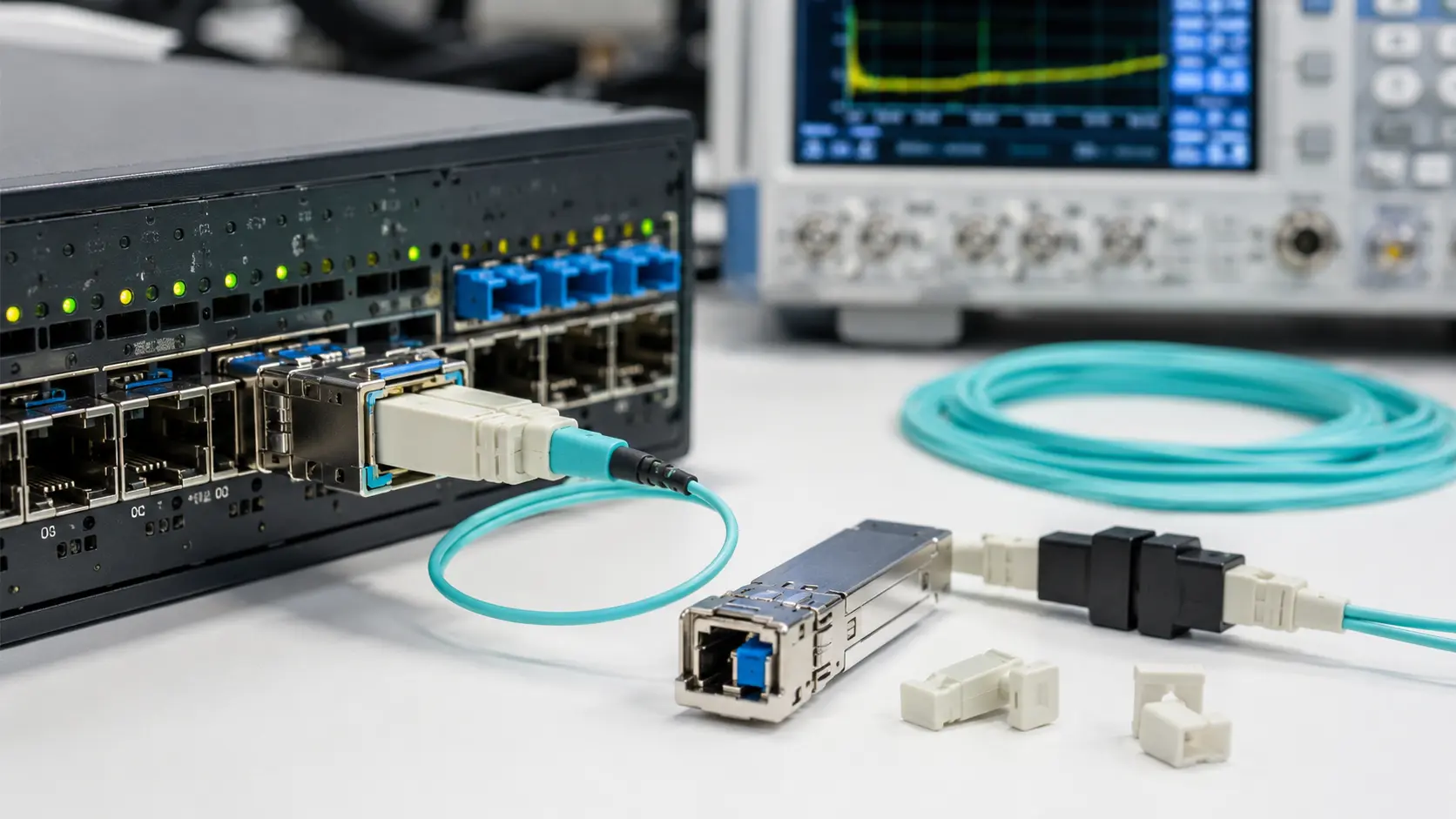
Yes, multimode fiber can still carry a 40G/100G Ethernet migration, but only on short links and only when the design actually matches the cabling plant you already own. If your backbone is MPO/MTP based, 40GBASE-SR4 and 100GBASE-SR4 are usually the most direct path. If everything in the ground is duplex LC, BiDi or SWDM optics can save you a recabling project, but they change what you can do later with breakout and long-term upgrades.
This guide is written from the perspective of a data center cabling engineer who has had to audit brownfield MMF plants before signing off on a speed upgrade. The goal is to help you decide which migration path fits your fiber, not just tell you that several exist.

When Multimode Fiber Still Makes Sense for 40G/100G
Multimode fiber earns its place on short-reach, high-density links - the kind you find inside a single data hall, between rows, or within a cabinet row. For longer cross-campus or metro jumps, the conversation shifts to single-mode before you even open a transceiver catalog.
For planning, two fiber grades do most of the work: OM3 and OM4. Per Cisco's transceiver documentation, 40GBASE-SR4 supports up to 100 meters on OM3 and 150 meters on OM4/OM5; 100GBASE-SR4 supports up to 70 meters on OM3 and 100 meters on OM4. These are the numbers you should be comparing against your measured channel lengths, not your wishful ones. For a deeper breakdown of grade-by-grade reach, see our OM1–OM5 multimode distance reference.
Three conditions tell you MMF is still the right call: links stay inside a building, port density matters, and you want to preserve installed fiber. If any one of those starts slipping - especially reach - it's a signal to stop stretching MMF and start pricing a single-mode path.
Assess Existing Cabling Before Choosing 40G/100G Optics
Most failed upgrades I've seen started with the wrong first question: "Which optic is cheapest?" The right first question is: "What do I actually have in the tray?"
Two branches come out of that inventory:
- MPO/MTP backbone already in place. If you deployed 10GBASE-SR over MTP trunks a few years ago, moving to 40GBASE-SR4 parallel optics is largely a transceiver and patching exercise, not a recabling one. This is the lowest-friction route and the reason MTP trunks were worth paying for originally. Our MTP vs MPO selection guide covers the connector differences that matter here.
- Duplex LC only. Running new multifiber trunks through an active environment is expensive and disruptive. This is where BiDi transceivers and SWDM optics earn their place - they let you reuse the duplex fiber you already have, at the cost of some future flexibility.
One honest warning from brownfield jobs: if you are already pushing past OM3/OM4 reach limits, or if your five-year roadmap crosses 100G, "force MMF to work" is usually a false economy. A single-mode transceiver comparison should be on the table from day one.
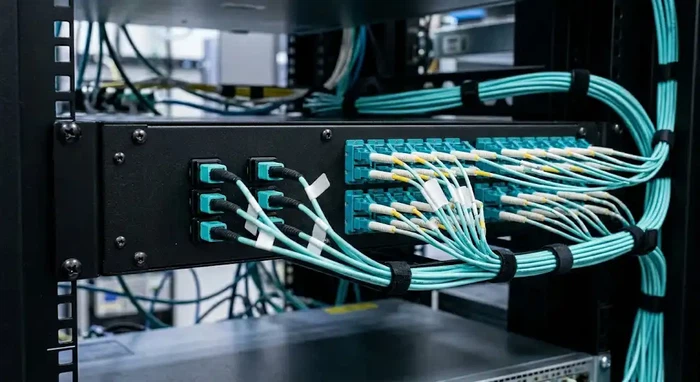
SR4 vs BiDi vs SWDM: Which Upgrade Path Fits Your MMF Plant?
These three options all land at "40G or 100G over MMF," but they solve different problems and trade off differently. Treating them as interchangeable is one of the most common mistakes teams make.
40GBASE-SR4: Parallel Optics on MPO-12
SR4 is a 4-lane 850 nm interface over MPO-12 connectivity, reaching 100 m on OM3 and 150 m on OM4. It's defined in IEEE 802.3ba. Some 40G SR4 modules also support a 4×10G breakout via a parallel-to-duplex breakout cable, which is handy during staged migrations where some ports need to stay at 10G.
Use it when your backbone is already MPO/MTP, your reach is comfortably within OM3/OM4 limits, and you want a standards-aligned path that plays nicely with future 100G SR4 on the same fiber count.
100GBASE-SR4: The Modern 100G MMF Default
If you're reading older material that treats SR10 as the baseline for 100G MMF, that mental model is outdated. The move to 25G-per-lane VCSELs made 100GBASE-SR4 possible over the same MPO-12 connectivity as 40GBASE-SR4, and that's what the installed base has standardized on.
Practically, this means the real planning question for 100G over MMF isn't "can it be done?" but "does my OM3/OM4 plant meet SR4's 70 m / 100 m reach envelope, with connectors clean enough to pass link loss?"
BiDi and SWDM: Duplex-Fiber Reuse Paths
BiDi and SWDM emerged specifically for sites where the optical backbone lacks MTP connectivity and a recabling project is off the table. Cisco's 40G-BiDi and 100G-BiDi modules, for example, use duplex LC multimode and ride the same fiber pair you were running 10G on.
They're compelling when disruption cost is high. They're a poor fit when you need breakout flexibility - parallel optics supports 4×10G or 4×25G breakout, while BiDi and SWDM do not. If breakout is in your design today, or you see it coming, this tradeoff matters.
| Option | Connector | Reach (OM3 / OM4) | Reuses duplex LC? | Breakout? | Best fit |
|---|---|---|---|---|---|
| 40GBASE-SR4 | MPO-12 | 100 m / 150 m | No | Yes (4×10G) | MPO backbone already in place |
| 100GBASE-SR4 | MPO-12 | 70 m / 100 m | No | Yes (4×25G) | MPO backbone, modern 100G rollouts |
| 40G/100G BiDi | Duplex LC | ~100 m / ~150 m (vendor spec) | Yes | No | Brownfield duplex LC, low disruption tolerance |
| 100G SWDM4 | Duplex LC | ~75 m / ~100 m (MSA) | Yes | No | Duplex LC reuse where BiDi isn't available on the platform |
A Decision Framework for Your Migration Path
Walk this in order. Stop at the first branch that fits your environment:
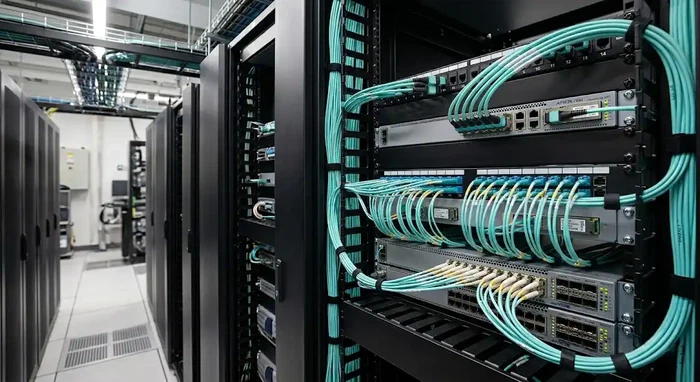
- Is your backbone MPO/MTP? → Plan around 40GBASE-SR4 or 100GBASE-SR4. Verify polarity and clean all endfaces before commissioning. Stock the right MPO/MTP trunk cables for your fiber count and polarity method.
- Duplex LC only, and recabling isn't realistic this cycle? → Price a BiDi path first; fall back to SWDM if your switch platform doesn't offer BiDi at the speed you need.
- Are any links beyond OM4's SR4 reach, or does the roadmap cross 400G within ~3 years? → Stop. Compare against single-mode before you buy anything. The MMF savings usually disappear within one refresh cycle.
- Do any designs require breakout now or likely within 2 years? → Parallel SR4 only. BiDi and SWDM will force you to redesign later.
Common Mistakes in 40G/100G Multimode Upgrades
Patterns I've seen repeat across brownfield jobs:
- Treating SR4, BiDi, and SWDM as interchangeable. They solve different problems. Connector architecture and breakout requirements should drive the choice, not module price.
- Starting with optic pricing instead of cabling reality. The cheapest transceiver on a plant that can't support it is the most expensive mistake on the project.
- Using SR10-era assumptions for 100G. Modern planning is SR4-centric. If someone is still sizing fiber counts for SR10, check whether the design document got updated this decade.
- Reusing duplex fiber without modeling the next upgrade. BiDi saves money today. If the next cycle needs breakout or 400G, that saved money comes back as a full recabling bill - and that's often a worse outcome than doing the MTP pull during the 40G/100G project.
- Ignoring polarity audits on older MPO plants. Polarity convention changes over the years and across installers. Assume nothing until it's tested.

Frequently Asked Questions
Can multimode fiber support 100G Ethernet?
Yes, on short links. 100GBASE-SR4 runs up to 70 m on OM3 and 100 m on OM4 over MPO-12 connectivity. BiDi and SWDM variants extend similar reach over duplex LC. Beyond those distances, single-mode becomes the cleaner answer.
40GBASE-SR4 vs BiDi - which should I pick?
If you already have MPO/MTP trunks, SR4 wins on standards alignment and breakout flexibility. If you only have duplex LC and recabling isn't in the budget, BiDi wins on disruption cost. Neither is universally better.
Can I upgrade duplex LC multimode to 100G without recabling?
In most cases, yes - using 100G-BiDi or 100G-SWDM4 optics. You trade breakout flexibility for fiber reuse, and you should sanity-check your switch platform's transceiver support list before committing.
OM3 or OM4 for 100GBASE-SR4?
OM4 gives you 100 m reach; OM3 gives you 70 m. If your installed OM3 links are all under 70 m with good loss budgets, no upgrade is needed. If you're close to the limit, or planning further upgrades, OM4 is worth the cost differential during new pulls.
When is it worth recabling instead of reusing MMF?
When your roadmap crosses 400G within the next refresh, when breakout designs are coming, or when link distances no longer fit OM4 SR4 reach. At that point, duplex reuse saves you money on this project and costs you more on the next one.
Do I need single-mode for 40G/100G in a data center?
Not for short, dense in-building links - MMF with SR4 or BiDi handles those well. For inter-building, long horizontal runs, or any reach past OM4 SR4 limits, single-mode is the right call.
Selection Methodology in One Line
Pick your 40G/100G path on four axes, in this priority order: connector architecture you already have → measured link distance → breakout requirement now and in 2 years → roadmap beyond 100G. Every other factor - including module list price - ranks below these four. A plan built on those four axes tends to survive its first audit; plans built on transceiver pricing tend not to.
Conclusion
Multimode fiber is still a valid foundation for 40G/100G Ethernet migration - provided the design respects the plant you already have. MPO/MTP backbones take the SR4 path. Duplex LC environments lean toward BiDi or SWDM. Long reach or an aggressive upgrade roadmap points toward single-mode before the money is committed.
The most useful thing you can do this week isn't compare transceiver prices. It's walk the cabling: fiber grade, connector type, channel length, polarity. Once those four facts are written down and verified, the right migration path is usually the obvious one.