ABS and LGX describe package formats around a PLC splitter, not different splitting technologies. The practical choice is therefore mechanical and operational: choose an ABS-box format when the enclosure already provides protected space, fixation, and pigtail routing; choose an LGX-style cassette when the cabinet or rack is designed around a compatible modular slot and front-access service.
Neither package label proves lower insertion loss, better reliability, or universal compatibility. Compare the complete assembly, the connections it adds to the optical path, and the way technicians will install and replace it.
ABS vs LGX PLC Splitter: Quick Comparison
| Decision point | ABS-box format | LGX-style cassette | What to verify |
|---|---|---|---|
| Mechanical integration | Splitter body is retained inside a protected enclosure space. | Module is inserted into a compatible cassette slot, shelf, or chassis. | Actual dimensions, retention method, clearances, and mounting drawing. |
| Fiber presentation | Input/output leads typically leave the package and must be routed, stored, spliced, or connectorized as specified. | Interfaces are commonly presented at a module face, while internal leads remain inside the cassette. | Connector schedule, lead construction, adapter arrangement, port numbering, and access. |
| Installed space | Can work well in a dedicated cavity, but routing volume includes every lead and service loop. | Needs the correct module envelope plus room for connectors, patch cords, and service access. | Populated-enclosure fit, not only bare-module dimensions. |
| Replacement boundary | May be simple if leads are connectorized and accessible; may require re-splicing if the splitter is fusion-spliced into the plant. | Can support module-level exchange when the chassis and patching architecture were designed for it. | Exact disconnect sequence, outage boundary, spare strategy, and labeling. |
| Connection count | Depends on whether the design uses splices, adapters, or direct connectorized leads. | Front-access adapters create deliberate mating points that must be included in the channel design. | Every splice and mated connector pair in the actual optical path. |
| Interchangeability | An "ABS PLC splitter" label does not define footprint, lead exit, or mounting. | An "LGX" label does not guarantee fit in every LGX-style chassis. | Approved drawing, sample, module/chassis compatibility, and revision control. |

What Actually Changes When the Package Changes?
The PLC circuit performs the optical splitting function. Changing from an ABS-box package to an LGX-style cassette mainly changes how that optical component is integrated into the enclosure and maintained in the field.
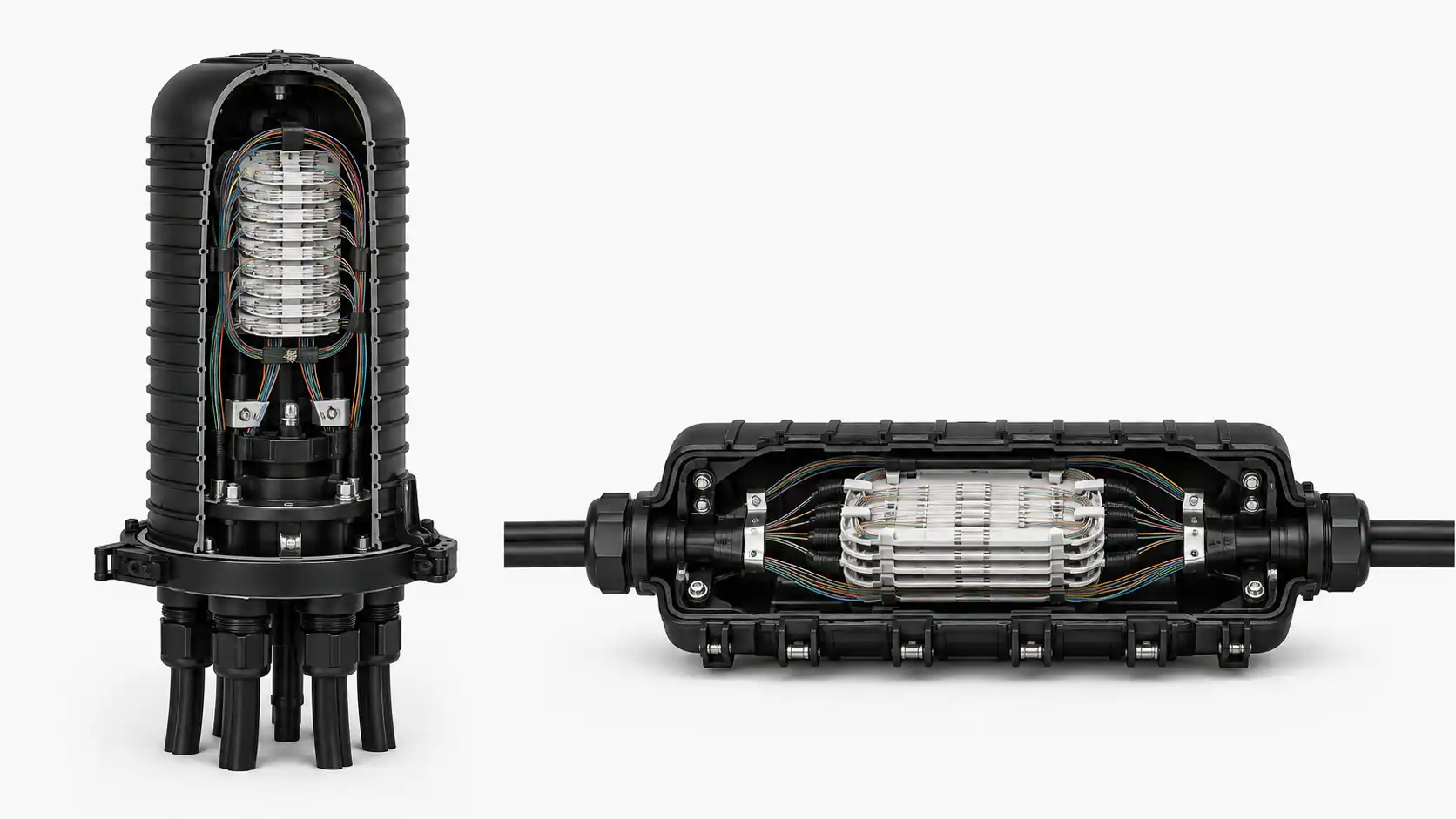
For an ABS assembly, the enclosure must manage the splitter body and the fiber leads around it. That means the design has to reserve a stable mounting location, route input and output fibers without trapping them under covers or hinges, preserve bend control, and leave enough working room for cleaning or retermination where connectors are used.
For an LGX-style cassette, the module and chassis become a mechanical system. The important questions shift toward slot compatibility, insertion and retention, front-panel adapter layout, connector clearance, port identification, and whether a technician can remove the module without disturbing adjacent services.
This is why package selection should not start with "Which one is better?" Start with the enclosure drawing and the maintenance model. The correct format is the one that fits those two constraints with the fewest unmanaged interfaces.
Enclosure Fit: Measure the Installed Configuration, Not the Empty Box
A splitter can fit dimensionally and still be difficult to install. Before approving either format, check the enclosure in its most crowded planned state.
- Mounting and retention: identify the holder, tray, bracket, slot, rail, fastener, or other feature that keeps the package from moving during installation and service.
- Lead exit direction: confirm where fibers leave the package and whether the route crosses a door, seal, splice tray, cable-entry zone, or another module.
- Connector working space: allow technicians to grasp, inspect, clean, and reconnect the intended interface without pulling on neighboring fibers.
- Fiber-storage volume: count the pigtails and service loops that must be stored at the selected split ratio. The package body alone is not the installed volume.
- Cover and door clearance: verify that the enclosure closes normally after all leads, adapters, and labels are in place.
- Label visibility: port identification should remain readable after the enclosure is fully populated.
If the project uses an LGX chassis, approve the specific cassette and chassis combination. "LGX" is a useful form-factor description, but it is not enough evidence for mechanical interchangeability. If the project uses an ABS box, approve the body dimensions, lead exits, fixation method, and the full routing mock-up.

Replacement Strategy Can Change the Better Choice
The same package can be easy or difficult to replace depending on how it is connected to the rest of the network.
ABS with connectorized leads
If the splitter leads terminate on accessible connectors, the replacement boundary may be limited to labeling, disconnecting, removing the old body, installing the approved replacement, cleaning and reconnecting the interfaces, and confirming the port map. The enclosure still needs enough slack and access to perform those steps without loading neighboring fibers.
ABS with fusion-spliced leads
If input or output fibers are fusion-spliced, replacing the splitter changes the splice plan. Working fiber length, splice-tray capacity, outage scope, re-splice access, and post-work testing become part of the maintenance procedure. A compact package is not automatically the fastest field replacement.
LGX-style cassette
A modular cassette can simplify replacement when the cabinet was designed for module removal and the optical interfaces are presented at controlled connection points. That advantage disappears if the replacement cassette does not match the slot, port arrangement, connector configuration, or documented fiber map. Treat the cassette part, chassis interface, and port map as one controlled assembly relationship.

Does ABS or LGX Change the Optical Budget?
The package name by itself does not determine splitter loss. Optical performance has to be checked on the exact assembly or approved product data. What the package choice can change is the number and location of splices and mated connector pairs in the complete channel.
For example, an ABS design may be fusion-spliced directly into an enclosure, or it may use connectorized pigtails and adapters. An LGX cassette normally presents serviceable interfaces through its module architecture. These are different connection topologies. The engineering task is to draw the real path and include every splitter, splice, adapter, and connector pair in the project loss budget rather than assigning a "better loss" assumption to a package type.
For the broader splitter-selection process, see DIMI's PLC splitter guide. Exact product values should always come from the approved data for the assembly being purchased.
When ABS Is Usually the More Practical Direction
An ABS-box splitter is often the cleaner integration choice when the enclosure already has a protected internal area for the splitter body and the project controls fiber routing inside that enclosure. It is especially reasonable when technicians are comfortable working with the selected pigtail or splice arrangement and the enclosure does not need a standardized front-access module.
Before choosing it, verify that compact packaging is not being achieved at the expense of serviceability. The dense installed condition should still allow identification, cleaning, testing, and replacement without disturbing unrelated fibers.
When LGX Is Usually the More Practical Direction
An LGX-style cassette is often a better fit when the rack or cabinet intentionally uses modular slots, front-access adapters, standardized port presentation, and replaceable field modules. This can make inventory and service procedures easier to organize because the technician interacts with a defined module boundary.
The critical condition is compatibility. Do not order an LGX PLC splitter from a drawing that shows only a generic cassette. Verify the actual chassis opening, retention method, connector face, port sequence, and clearance around neighboring modules. A mechanically similar module can still create installation or mapping problems.
RFQ and Supplier Comparison: Normalize the Configuration First
Procurement searches such as "ABS box PLC splitter supplier" or "LGX PLC splitter supplier" identify a sourcing direction, but they do not define a purchase specification. Before comparing quotations, put the same configuration fields in every RFQ:
- split configuration and required optical specification reference;
- package format and approved dimensions or drawing;
- mounting or chassis interface;
- input and output connector type and polish, or splice termination;
- lead construction and required length where exposed pigtails are used;
- LGX front-port/adapter layout where applicable;
- port numbering and input/output map;
- required test record and acceptance method;
- labels, packaging, and traceability requirements;
- approved-sample and change-notification requirements where the project uses them.
Compare price only after these fields are aligned. Otherwise, a lower quote may simply describe a different connection architecture or service boundary.
DIMI's fiber optic splitter product family is the commercial page for product and configuration inquiries; this article is intended to support the enclosure and maintenance decision rather than replace that product-selection page.
Incoming and Field Acceptance Checks
- Match the delivered package and label to the approved part description and drawing.
- Check the physical fit in the intended enclosure, shelf, or chassis before bulk installation.
- Confirm input/output identification and port order against the approved map.
- Inspect and clean connector end faces before mating connectorized assemblies.
- Verify that installed routing does not trap, sharply redirect, or load pigtails when covers and doors are closed.
- Test the optical path using the project acceptance method and preserve the result with the installed port record.
- Record any approved deviation so that later replacement parts are selected against the as-built configuration, not the original catalog description.
For a high-ratio example where package selection also interacts with optical budget and port mapping, see the 1×32 PLC splitter selection guide.
Bottom Line
Choose between ABS and LGX by tracing four things: mechanical fit, fiber presentation, connection count, and replacement boundary. ABS works best when the enclosure itself controls the package and pigtails. LGX works best when a compatible modular chassis controls the module and front-access interfaces.
Keep the optical specification separate from the package assumption, verify the real installed configuration, and make the approved drawing and port map part of the purchasing and maintenance record.
FAQ
Q: Does an LGX PLC splitter fit every LGX chassis?
A: No universal fit should be assumed from the label alone. Verify the cassette dimensions, retention features, connector face, port arrangement, and the exact chassis or shelf drawing.
Q: Does an ABS PLC splitter always have lower insertion loss than an LGX splitter?
A: No. Package format alone does not establish optical performance. Compare the exact assembly specification and then include the actual splices and connector pairs in the complete channel loss budget.
Q: Can an ABS splitter be replaced without fusion splicing?
A: Yes, if the installed design uses accessible connectorized leads and the replacement assembly matches that interface. If the splitter is fusion-spliced into the plant, the replacement procedure includes splice work.
Q: Is LGX always easier to replace?
A: It can be easier when the cabinet was designed for modular exchange, but only if the replacement cassette is mechanically and optically compatible and the patching can be isolated without disturbing adjacent services.
Q: Which package is better for a fiber distribution box?
A: The enclosure design decides. An ABS box can be effective where the distribution box provides protected fixation and pigtail storage. An LGX-style module can be effective where the box or cabinet includes a compatible cassette slot and front-access service model. Approve the populated enclosure rather than choosing by product name alone.