


Based on the structural design between optical fiber and its protective layer, fiber optic cables are mainly divided into two major types: loose tube and tight buffered. Understanding the characteristics and differences between these two technologies is crucial for selecting the appropriate fiber optic solution.
What is Loose Tube Fiber Optic Cable?
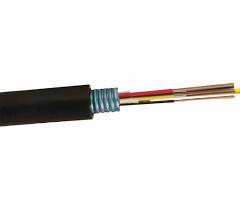
Loose tube fiber optic cable is a structural design where optical fibers are loosely placed inside protective tubes with larger diameters. In this design, there is space between the fiber and the tube, typically filled with water-blocking gel or dry water-blocking materials.
Structural Characteristics of Loose Tube
The typical structure of loose tube fiber cable includes the following layers:
Fiber Core: The innermost layer is the optical fiber itself, approximately 250 micrometers in diameter (after coating).
Loose Tube: The fiber is placed in a plastic tube (usually PBT material) with an inner diameter of approximately 2-3 millimeters, allowing the fiber to move freely within the buffer tube.
Filling Material: The tube is typically filled with water-blocking gel or dry water-blocking powder to prevent moisture intrusion.
Central Strength Member: The cable center usually has a steel wire or fiberglass reinforced plastic (FRP) as a tensile element.
Outer Jacket: The outermost layer is a polyethylene (PE) or polyvinyl chloride (PVC) jacket, providing mechanical protection.
This loose design allows the fiber to move freely within the tube. When the cable is subjected to external stress, the fiber itself does not directly bear the tension.
What Are the Advantages of Loose Tube Fiber?
Loose tube fiber optic cable demonstrates numerous advantages in outdoor and long-distance applications due to its unique structural design:
Environmental Adaptability
The loose tube structure allows fibers to expand and contract freely with temperature changes, avoiding microbending losses caused by thermal expansion and contraction. This makes loose tube fiber particularly suitable for outdoor environments, capable of withstanding temperature ranges from -40°C to +70°C.
Waterproof Performance
The filling gel or water-blocking material inside the tube effectively prevents moisture from penetrating longitudinally along the cable. Even if the outer jacket is damaged, it can protect the fiber from moisture effects. This is particularly important for buried or aerial applications.
Higher Fiber Density
A single loose tube can accommodate multiple fibers (typically 6-12), enabling the entire cable to contain a large number of fibers within a relatively small diameter, making it ideal for high-capacity backbone networks.
Lower Transmission Loss
Due to the loose relationship between the fiber and the tube, the impact of external stress on the fiber is minimized, thereby maintaining low attenuation and excellent transmission performance.
Stronger Mechanical Protection
The loose tube structure can absorb and disperse external mechanical stress, protecting the fragile internal fibers from damage caused by impact, pressure, and bending.
Long-Distance Transmission
Due to its excellent environmental stability and low-loss characteristics, loose tube fiber is the preferred solution for long-distance backbone networks, metro networks, and outdoor cabling.
What is Tight Buffered Fiber Optic Cable?
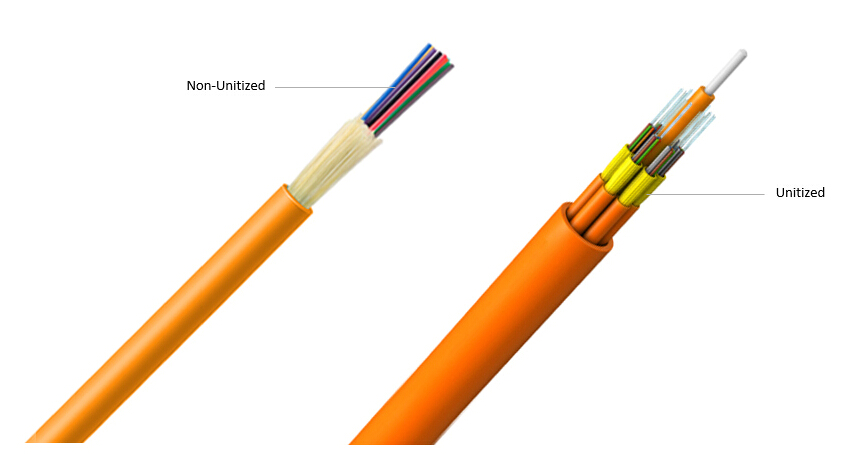
Tight buffered fiber optic cable adopts a completely different design philosophy, where each fiber is tightly wrapped in a layer of buffer material. This buffer layer is usually made of thermoplastic or thermosetting plastic, directly applied over the fiber's coating layer, bringing the overall diameter to approximately 900 micrometers.
Structural Characteristics of Tight Buffer Fiber
Fiber: Standard single-mode or multimode fiber with a coating layer diameter of approximately 250 micrometers.
Tight Buffer Layer: A plastic layer tightly wrapped directly around the fiber, increasing the total diameter to 900 micrometers, providing immediate mechanical protection.
Aramid Yarn: Serves as a tensile strength member, surrounding the tight buffered fiber.
Outer Jacket: Flame-retardant PVC or LSZH (Low Smoke Zero Halogen) material, meeting indoor cabling fire safety requirements.
The tight buffer design eliminates the gap between the fiber and the protective layer, making the cable more compact and easier to terminate and install.

What Are the Advantages of Tight Buffered Cable?
Tight buffered fiber optic cable demonstrates unique advantages in indoor applications and short-distance connections:
Simplified Termination Handling
The buffer layer of tight buffer fiber can be directly stripped without the need to handle gel or clean the fiber, making connector installation faster and simpler. This significantly reduces the complexity and time cost of field installation.
Smaller Bend Radius
The tight buffer layer provides direct mechanical support, allowing smaller bend radii (typically 10 times the cable diameter), which is very valuable in space-constrained indoor environments.
Crush and Impact Resistance
The tight buffer layer provides immediate mechanical protection for the fiber, capable of resisting trampling, squeezing, and accidental impacts, suitable for cabling within buildings.
Flame Retardant Performance
Tight buffered fiber cable is typically manufactured using flame-retardant materials, meeting strict indoor fire safety standards (such as OFNP, OFNR ratings), which is crucial for applications such as data centers and office buildings.
Convenience
Due to its compact structure and ease of handling, tight buffer fiber is particularly suitable for patch cords, equipment interconnections, and distribution frame applications, enabling rapid deployment and reconfiguration.
Operational Flexibility
Tight buffered cable is easier to route, secure, and manage, performing excellently in dense cabinet and pathway environments, facilitating daily operations by maintenance personnel.
Differences Between Loose Tube and Tight Buffered Fiber
Structural Design Differences
Loose Tube: Fibers move freely within larger tubes, with waterproof filling inside, and multiple fibers share one tube.
Tight Buffer: Each fiber is wrapped in a tight buffer layer, with no additional space or filling, resulting in a more compact structure.
Application Environment Differences
Loose Tube: Primarily used in outdoor environments, including direct burial, conduit, and aerial applications, as well as long-distance backbone networks.
Tight Buffer: Primarily used in indoor environments, such as in-building cabling, data centers, LANs, and short-distance interconnections.
Environmental Adaptability Differences
Loose Tube: Has excellent temperature adaptability and waterproof performance, capable of withstanding extreme weather and humid environments.
Tight Buffer: Relatively weaker environmental adaptability, primarily designed for controlled indoor environments, not suitable for direct outdoor exposure.
Installation and Termination Differences
Loose Tube: Termination is relatively complex, requiring tube stripping and gel cleaning, typically requiring dedicated distribution boxes or splice closures.
Tight Buffer: Simple and fast termination, connectors can be installed directly, suitable for rapid field deployment.
Fiber Density Differences
Loose Tube: Can accommodate hundreds of fibers in a single cable (through multiple tubes), ideal for high-capacity applications.
Tight Buffer: Typically contains fewer fibers (generally 2-24), suitable for small to medium-scale networks.
Mechanical Performance Differences
Loose Tube: Isolates external stress through loose structure, protecting fibers from cable-level tension effects.
Tight Buffer: Provides direct mechanical protection through tight buffer layer, better suited to resist localized pressure and impacts.
Cost and Maintenance Differences
Loose Tube: Initial cost may be higher, but total cost of ownership is lower in outdoor long-distance applications, with less maintenance required.
Tight Buffer: Unit length cost is typically lower, but better suited for environments requiring frequent access and reconfiguration.
Fire Safety Requirements Differences
Loose Tube: Typically does not require special flame-retardant ratings, as it is primarily used outdoors.
Tight Buffer: Must comply with strict indoor fire safety standards, such as OFNP (plenum), OFNR (riser), etc.
How to Choose the Right Fiber Optic Cable Type?
Choose Loose Tube Fiber If:
Outdoor cabling or long-distance transmission is required
Facing extreme temperature changes or humid environments
High fiber density backbone network is needed
Cable requires direct burial, aerial, or conduit installation
Budget allows and long-term reliability is prioritized
Choose Tight Buffer Fiber If:
Cabling inside buildings or data centers
Fast and simple installation and termination is required
Space is limited and small bend radius is needed
Frequent access and reconfiguration is required
Strict indoor fire safety standards must be met
Loose tube fiber optic cable and tight buffered fiber optic cable each have their unique advantages and applicable scenarios. Loose tube fiber becomes the ideal choice for outdoor and long-distance applications with its excellent environmental adaptability, waterproof performance, and high-capacity characteristics; while tight buffered fiber dominates in-building cabling and short-distance connections with its simple installation, excellent indoor performance, and flexibility.
In actual network design, these two types are often complementary. A typical network architecture might use loose tube fiber for outdoor backbone networks, then convert to tight buffered fiber through distribution boxes at building entry points for indoor distribution.
FAQ
Q: What is the purpose of gel filling in loose tubes? Can it be replaced with dry cable?
A: The main purpose of gel filling is to prevent moisture from penetrating longitudinally along the cable, protecting the fiber from moisture effects. Additionally, it provides cushioning and lubrication for the fiber, reducing mechanical stress. Modern technology has developed dry loose tube cable that uses water-blocking powder or water-blocking tape instead of gel, with the same waterproof effect and easier installation and maintenance. Dry cables do not require gel cleaning during termination and are becoming increasingly popular, especially in applications requiring frequent access.
Q: How important is the bend radius of fiber optic cable?
A: Bend radius is very important. Excessive bending can lead to: increased optical signal attenuation, microcracks inside the fiber, decreased long-term reliability, and in severe cases, even fiber breakage. The minimum bend radius for loose tube cable is typically 15-20 times the cable outer diameter, while tight buffered cable can achieve 10 times.
Q: What does the color coding of fiber optic cable mean?
A: Fiber optic cables use color coding to identify different fibers and tubes. The standard 12-color coding sequence is typically: blue, orange, green, brown, gray, white, red, black, yellow, violet, pink, aqua. In loose tube cable, tubes use these colors, and fibers within the tubes also follow the same color sequence. In tight buffered cable, each tight buffered optical fiber directly uses these colors. This standardized color coding simplifies fiber identification, documentation, and troubleshooting.
Q: What type do ADSS and OPGW cables belong to?
A: ADSS (All-Dielectric Self-Supporting) and OPGW (Optical Ground Wire) both belong to specially designed loose tube structure cables. ADSS cable uses high-strength aramid yarn as the bearing element, made entirely of non-metallic materials, suitable for aerial installation on high-voltage lines; OPGW integrates optical fibers into overhead ground wires, with an outer layer of metal conductors and an internal loose tube fiber unit.


