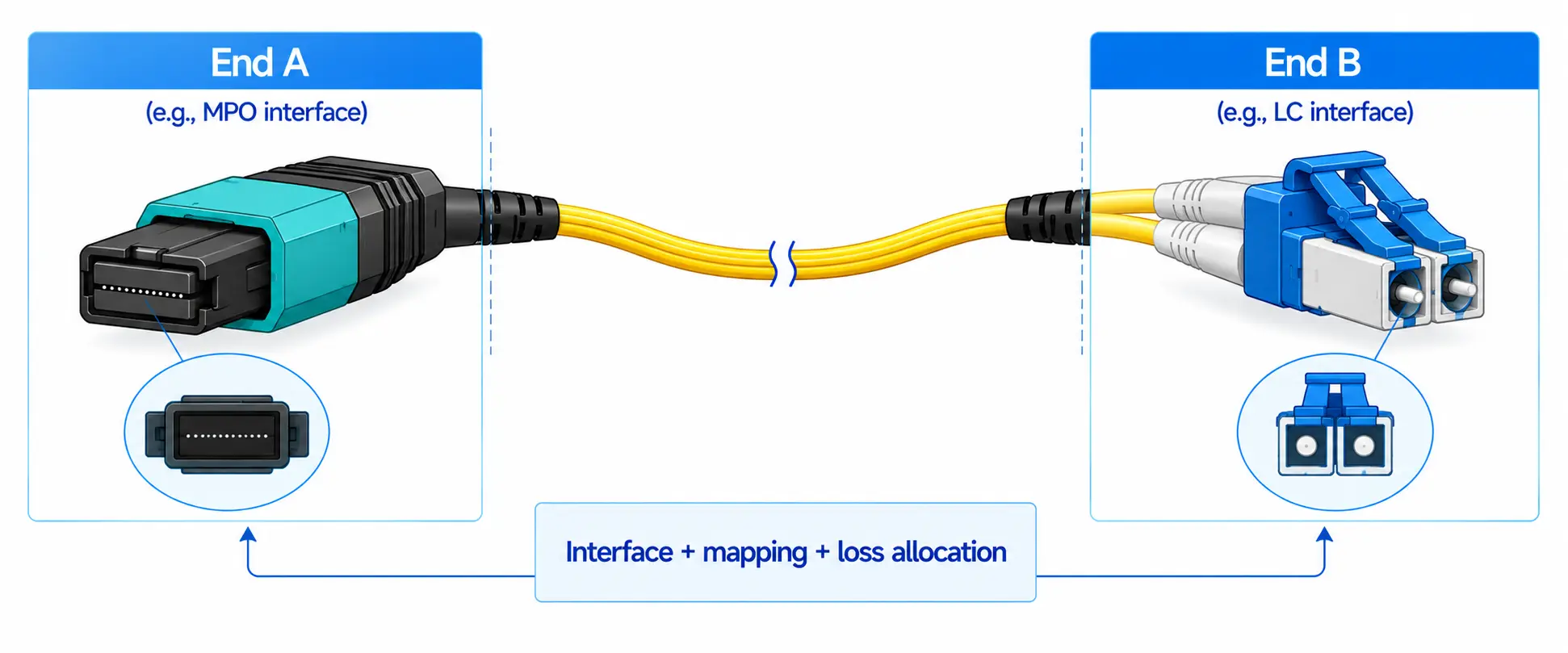
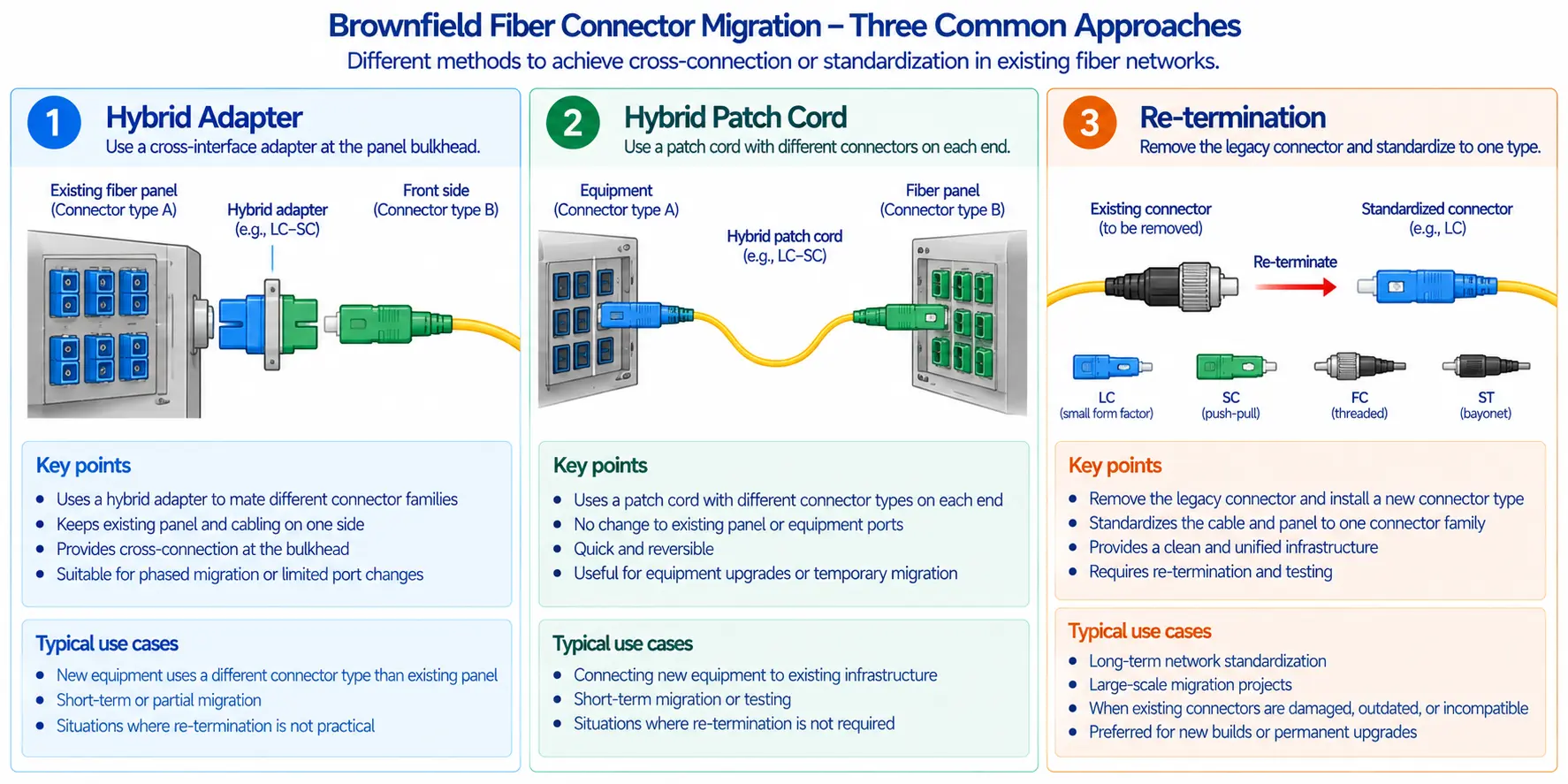
A QSFP28 module does not have one price. The optical interface, reach, switch coding, temperature rating, warranty, order quantity and supplier all move the number, sometimes by three or four times for a module that is still labeled "100G QSFP28."
Short-reach SR4 modules are usually the least expensive optical option. CWDM4 and LR4 cost more because they multiplex four wavelengths over duplex single-mode fiber. Extended-reach ER4 and ZR4 modules cost more still, and OEM-branded optics can carry public list prices many times higher than compatible alternatives, though that premium often shrinks once you account for a buyer's actual contract terms.
So the real question isn't:
How much does a QSFP28 module cost?
It's:
How much will each tested, accepted, and supported 100G port actually cost to deploy?
This guide breaks the price down by optical type, explains why two "identical" QSFP28 quotes can differ by 3x, and walks through the one metric that actually predicts total project cost: landed cost per accepted port.

Price Research Methodology and Disclosure
The price ranges in this guide were reviewed the week of July 21, 2026, using public single-unit and "as low as" listings from compatible-optics resellers and OEM channels. They reflect commercial-region public pricing before tax, freight, customs, or negotiated contract terms unless stated otherwise. Prices move quickly in this market, so treat every figure here as a directional reference point to sanity-check a quote, not as a locked-in number to send to a supplier.
2026 Price Snapshot by Module Type
The table below groups indicative public price ranges by optical type and temperature grade. Use it to spot a quote that looks unusually high or low, not as a final number.
| Module type | Commercial temp (typical range) | Industrial temp (typical range) | Cabling required |
|---|---|---|---|
| DAC (copper, fixed cable) | $30–$80 per assembly | - | None, integrated |
| AOC (active optical cable) | $60–$150 per assembly | - | None, integrated |
| SR4, 100 m | $90–$160 | $250–$400 | OM3/OM4 MPO/MTP parallel fiber |
| CWDM4, 2 km | $180–$260 | $400–$600 | Duplex LC single-mode fiber |
| LR4, 10 km | $280–$420 | $500–$750 | Duplex LC single-mode fiber |
| Single-lambda DR/FR1/LR1 | $250–$420 | Varies by platform | Duplex LC (MPO for DR breakout) |
| ER4, ~30–40 km | $900–$1,600 | Project-dependent | Duplex LC, tighter optical budget |
| ZR4, ~80 km | $1,800–$3,500+ | Project-dependent | Duplex LC, specialized design |
OEM-branded equivalents commonly carry public list prices several multiples higher than the ranges above. That public list price is frequently not what a contract customer actually pays, so it should never be compared directly against a compatible supplier's advertised price without normalizing for volume, warranty, and support terms first - more on that below.
Why the Same "100G QSFP28" Label Hides Very Different Products
SR4, CWDM4, LR4, single-lambda, and ZR4 modules all plug into the same QSFP28 cage and speak 100 Gigabit Ethernet, but they are built around fundamentally different optical architectures. Comparing their prices as if they were interchangeable is the single most common mistake in QSFP28 procurement.

| Module type | Media and connector | Typical reach | Main purchasing implication |
|---|---|---|---|
| DAC | Twinax copper, fixed cable | Up to a few metres | Usually cheapest for same-rack links |
| AOC | Fixed optical cable | Up to ~100 m | Lighter short-reach alternative to copper |
| SR4 | OM3/OM4 MMF, MPO/MTP | 70 m (OM3) / 100 m (OM4) | Cheapest module, but needs parallel-fiber cabling |
| CWDM4 | SMF, duplex LC | 2 km | Avoids MPO cabling, uses two fibers |
| LR4 | SMF, duplex LC | 10 km | Standard choice for longer campus/DC links |
| DR | SMF, duplex LC or MPO (breakout) | 500 m | Single-lambda PAM4; confirm FEC location with vendor |
| FR1 | SMF, duplex LC | 2 km | Single-lambda 100G architecture |
| LR1 | SMF, duplex LC | 10 km | Single-lambda; platform support varies |
| ER4 | SMF, duplex LC | ~30–40 km | Needs a closer optical-budget review |
| ZR4 | SMF, duplex LC | Up to ~80 km | Specialized, highest price, strictest design checks |
These distance and connector figures line up with Cisco's own 100G QSFP-100G modules data sheet, and the underlying 100GBASE-SR4 physical layer is formally defined in IEEE 802.3bm-2015. CWDM4's 2 km duplex single-mode specification comes from the CWDM4 MSA technical specification, while the single-lambda DR/FR/LR family is defined by the 100G Lambda MSA group.
Module-by-Module Pricing Breakdown
SR4: the budget module with a cabling catch
SR4 is usually the cheapest optical QSFP28 module because it uses simple VCSEL-based multimode optics over an OM3 or OM4 multimode fiber run, connected through an MPO/MTP interface rather than the DWDM-style multiplexing that drives up CWDM4 and LR4 pricing.
The catch is cabling. SR4 only makes financial sense when parallel multimode fiber is already installed, or when the facility is being built out. If the site is wired with duplex single-mode fiber instead, converting the path to MPO trunks and cassettes can erase the entire savings on the module itself - and choosing the right connector matters here, which is why it's worth reading a practical MTP vs. MPO selection guide before specifying the cabling plant.
CWDM4: the duplex-fiber middle ground
CWDM4 multiplexes four wavelengths onto a single duplex LC single-mode pair, the same kind of coarse wavelength-division multiplexing described in this WDM technology overview. Its module price sits above SR4, but where duplex single-mode cabling already exists, CWDM4 frequently produces a lower total project cost than tearing out that plant to run MPO-based SR4.
LR4: longer reach isn't automatically better value
LR4 also multiplexes four wavelengths over duplex single-mode fiber, but supports links up to 10 km instead of CWDM4's 2 km. Confirm the exact standard, transmit power, and loss budget before buying - a 10 km-rated module on a 500 m link usually means paying for optical margin the deployment doesn't need. Since both CWDM4 and LR4 run over the same connector type, it's worth checking a comparison of OS1 and OS2 single-mode fiber before assuming the existing plant will support the longer reach without a recheck of the loss budget.
Single-lambda DR, FR1 and LR1: where the FEC claims need care
Single-lambda modules carry the full 100G signal on one wavelength using PAM4 modulation instead of four separate wavelengths, which simplifies the optical design and supports newer breakout architectures. It's common to see pricing guides claim these modules "depend on host FEC" - but that's an oversimplification worth correcting. Cisco's own data sheet for the QSFP-100G-LR-S module describes the signal as carried over a single wavelength using onboard PAM4 modulation and FEC, meaning standard DR/FR1/LR1 optics typically perform FEC on the module itself. Host-side FEC configuration becomes more relevant for specific extended-reach single-lambda variants, not as a blanket rule across the whole single-lambda family. Confirm the FEC architecture with the switch vendor for the exact part number you're buying, rather than assuming one answer applies to every single-lambda module. If a project is also evaluating a future move to higher densities, a QSFP-DD technical overview is useful context for how single-lambda pricing trends carry forward into 400G.
ER4 and ZR4: when the premium is justified
ER4 and ZR4 serve extended-reach links, and their higher price reflects genuinely more demanding optical components and lower production volumes, not just a longer number on a spec sheet. For these links, procurement should follow the network design rather than lead it - confirm total fiber attenuation, connector and splice loss, and dispersion before pricing anything. A quick refresher on the difference between insertion loss and return loss is worth the ten minutes before calculating the optical power budget for a 40 km or 80 km run.
Why Two "Identical" QSFP28 Quotes Can Differ by 3x
Once the optical type is fixed, four things still move the price: switch coding, temperature grade, warranty terms, and order quantity.
Switch coding and platform qualification. A supplier may program the module's EEPROM for a specific Cisco, Arista, Juniper, Dell, HPE, or NVIDIA platform, which affects whether the switch accepts the module cleanly or throws unsupported-optic alarms. A generic, unqualified module can look cheaper on paper than one that's been tested and coded for your exact switch and software version - but it's not the same product.
Temperature grade and extra features. Industrial-temperature modules, dual-rate operation, OTN support, and extended DOM functions all add validation and component cost. The industrial-temperature listings in the price snapshot above cost noticeably more than commercial-grade parts at the same optical spec, which is exactly why comparing "100G SR4" prices without checking the temperature rating is misleading.
Warranty, RMA and support. A module quote may cover hardware only, or it may include pre-shipment platform testing, advance replacement, and dedicated troubleshooting. A slightly higher unit price can lower total operational cost if the supplier replaces failed units quickly instead of requiring a slow international return.
Order quantity and lead time. Public single-unit pricing rarely reflects what a qualified production order actually costs. Ask suppliers to separate sample price, pilot-batch price, and production-quantity price - a lower quote isn't always a volume discount; it can just as easily mean a shorter warranty or a different, cheaper component inside.
OEM vs. Qualified Compatible vs. Generic/Broker Optics
| Sourcing option | Acquisition cost | Support ownership | Best fit |
|---|---|---|---|
| OEM-branded | Highest | Equipment vendor and authorized channel | Support-contract networks, approved-parts policies, critical backbone links |
| Qualified compatible | Lower | Shared between optics supplier and internal team | Cost-sensitive production deployments with a real acceptance process |
| Generic compatible | Low | Mainly the buyer | Labs or noncritical use, after testing |
| Broker/used/refurbished | Potentially lowest | Limited or unclear | Controlled secondary use where provenance can be checked |
OEM optics earn their premium when a support contract requires approved components, when the link sits on a critical production backbone, or when the deployment is too small for third-party qualification work to pay off. Qualified compatible modules make sense at the other end of that spectrum: large numbers of standard 100G links, a defined internal acceptance process, and a supplier who can prove exact platform coding, DOM/DDM support, and traceable production records. Many networks land somewhere in between - OEM optics on the links that must never go down, qualified compatible optics everywhere else.
What "compliant," "interoperable," and "supported" actually mean
These are three different claims, and a pricing conversation should never blur them together: a module can follow an MSA or IEEE spec, successfully link up with a switch, and still fall outside that switch vendor's formal support policy. Juniper's own documentation on transceiver and cable support states plainly that its technical assistance center provides full support for Juniper-supplied optics, but does not support third-party modules that Juniper hasn't qualified or supplied itself - customers are expected to work directly with their optics vendor on those parts. Before comparing prices, decide who owns troubleshooting if the switch vendor asks for an approved optic to be swapped in.
The Metric That Actually Matters: Cost Per Accepted Port
The advertised module price is not the number that predicts total project cost. The number that matters is the cost of every port that actually passes acceptance testing and goes into production:
Landed cost per accepted port = (module cost + cabling and adapters + freight, duties and tax + validation labor + spare inventory + RMA/replacement handling cost + support cost) ÷ number of ports that pass acceptance.
Here's how that plays out with real numbers. A network team needs 50 new 100G SR4 links (100 module endpoints) between core and distribution switches, with OM4 MPO cabling already in place.
| Supplier A | Supplier B | |
|---|---|---|
| Module price | $120 × 100 = $12,000 | $95 × 100 = $9,500 |
| Failure rate | 2% (2 units DOA) | 15% (15 units DOA) |
| Replacement process | Advance replacement, no charge | Return-then-replace, buyer pays freight (~$150/unit incl. freight and expedite) |
| Extra validation/troubleshooting labor | 8 hrs × $80/hr = $640 | 24 hrs × $80/hr = $1,920 |
| Total landed cost | $12,640 | $13,670 |
| Cost per accepted port (100 ports) | $126.40 | $136.70 |
Supplier B's sticker price was 21% lower, but the higher failure rate and slower RMA process pushed its landed cost per accepted port above Supplier A's. This is the calculation worth running before any bulk order is approved, not after.
A 6-Step Process for Comparing QSFP28 Quotes
- Define the link. Switch models at both ends, port type, actual distance, fiber type, connector, and breakout requirement.
- Lock the exact optical standard. SR4, CWDM4, LR4, DR, FR1, LR1, ER4, ZR4, DAC, or AOC - calculate the optical power budget first for anything beyond a short, simple link.
- Give suppliers the full switch context. Exact model, NOS version, required vendor part-number emulation, FEC settings, and DOM/DDM requirements.
- Normalize commercial terms. Same quantity, currency, Incoterm, warranty, and test scope across every quote - a lower EXW price can lose to a delivered price once freight and customs are added.
- Order samples and test them on the real platform - every switch family, OS version, optical type, and temperature grade in the deployment, not one module in one port.
- Approve the bulk order only once the sample configuration is documented: exact coding, temperature range, firmware revision, warranty, and test-report requirement all specified in the PO.
Sample Testing: The Non-Negotiable Minimum
Before approving a production order, run each sample through:
- Vendor-code and part-number recognition on the target switch, plus DOM/DDM readout accuracy
- Correct FEC mode and link recovery after a cold boot and after a port shutdown/restart
- Sustained bidirectional traffic testing across the expected frame-size range, including all lanes in breakout mode
- Module temperature and adjacent-port behavior in a fully populated switch, plus a retest after a network OS upgrade
- Sample vs. production EEPROM and firmware consistency, checked across more than one production carton
Common Pricing Mistakes to Avoid
- Comparing different optical interfaces as if they're interchangeable. SR4, CWDM4, and LR4 all say "100G QSFP28," but they use different fiber systems for different distances.
- Comparing an OEM list price to a bulk compatible quote. Neither number reflects the buyer's real terms until freight, coding, testing, and contract discounts are normalized on both sides.
- Ignoring the cable plant. A cheaper MPO module can produce a more expensive deployment if the building is already wired for duplex LC.
- Treating MSA compliance as vendor support. A standards-compliant module can still sit outside the switch manufacturer's formal support policy.
- Buying in bulk before testing. Coding, firmware, FEC, and breakout configuration can all fail even when the module fits the cage mechanically.
- Forgetting to code the spares. A spare module only helps if it carries the same coding and optical spec as the failed port.
FAQ About QSFP28 Pricing
Q: How much does a QSFP28 module cost?
A: It depends on optical type, reach, coding, temperature grade, quantity, and warranty. Compatible short-reach modules can start below $100; long-reach and OEM-branded products can cost several times that. Treat any online price as a dated reference point, not a final quote.
Q: Why are OEM QSFP28 modules more expensive?
A: The premium can cover approved-platform status, authorized distribution, vendor support, and an established RMA channel. Public reseller prices also often differ from the price a contract customer actually pays, so the visible gap shouldn't be calculated without checking the buyer's real agreement.
Q: Are third-party QSFP28 modules reliable?
A: They can be, when the supplier controls sourcing, EEPROM coding, and production testing, and the modules are validated on the target switch and software version. There's a real difference between a qualified compatible supplier and an untraceable marketplace listing.
Q: Does the QSFP28 price include the fiber cable?
A: Usually not for removable transceivers - a complete link normally needs two modules plus a separate cable. DAC and AOC products are the exception, since they're complete assemblies with integrated ends.
Q: What's the price difference between SR4 and LR4?
A: SR4 is typically cheaper at the module level because it's built for short parallel-multimode links. LR4 reaches 10 km over duplex single-mode fiber using wavelength multiplexing. The full project comparison has to include cabling too - an LR4 deployment over existing duplex SMF can end up cheaper overall than rebuilding a path for MPO-based SR4.
Q: Can a QSFP28 module work in a QSFP+ port?
A: No. A QSFP28 module can't create a 100G link in a QSFP+ port, because the older port doesn't provide the required 25G-per-lane host interface. Fitting mechanically doesn't mean it's electrically compatible.
Q: How many samples should be tested before a bulk order?
A: There's no fixed number - the sample plan should cover every switch family, software version, optical type, temperature range, and breakout mode in the deployment, with more than one unit tested per configuration.
Bottom Line
The cheapest module isn't necessarily the cheapest deployment. Define the link and lock the optical standard first, request technically identical quotes, normalize the commercial terms, test real samples on the real platform, and calculate landed cost per accepted port before signing off on the bulk order. That sequence - not the number on a single-unit listing - is what actually determines what a 100G port costs.